
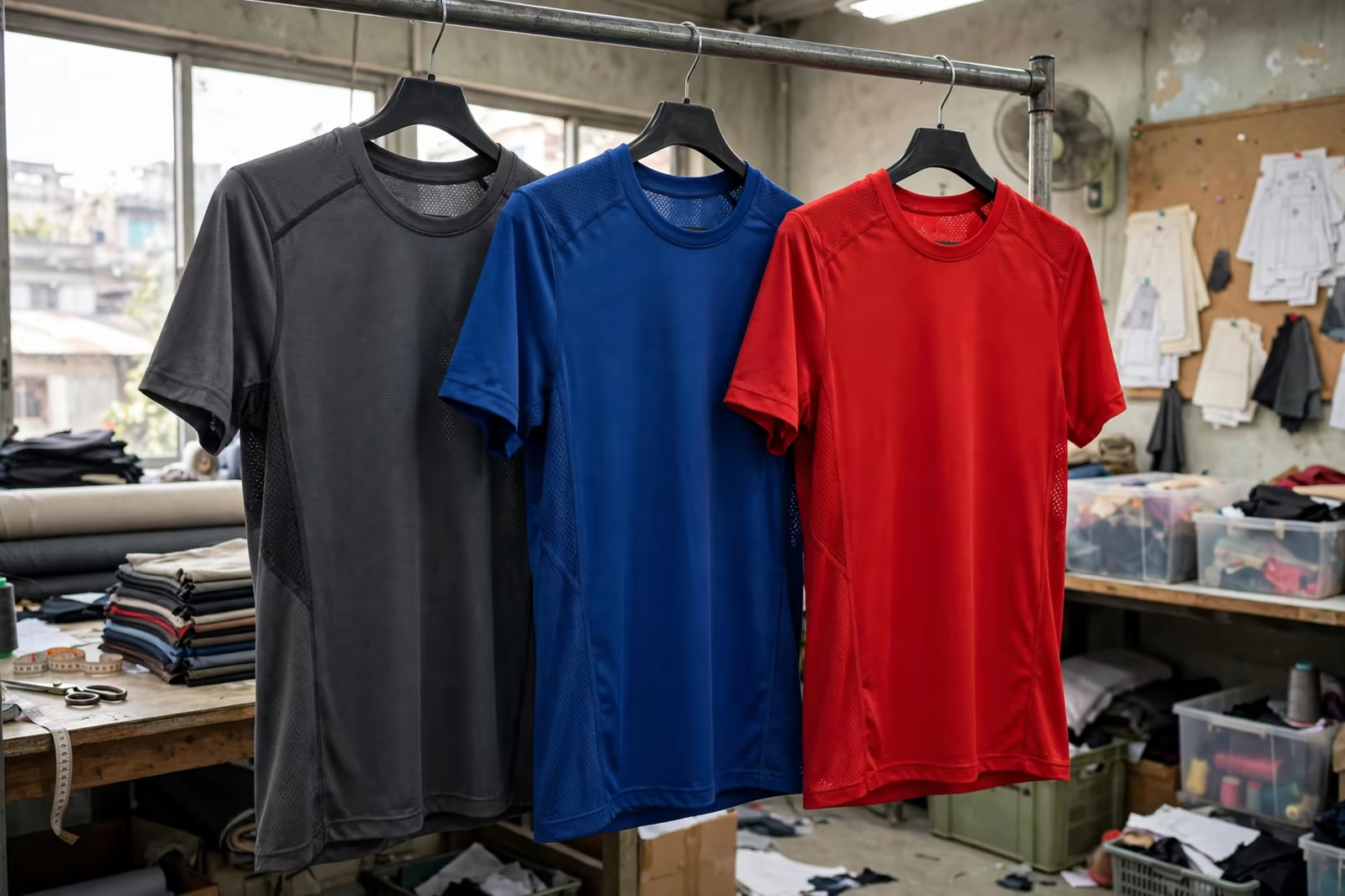
When the conversation turns to activewear, a different Asian name enters the frame. Indonesia has sewn for the world’s sports brands for decades, sits close to the synthetic fabric ecosystems of East Asia, and carries a performance reputation that basics sources are measured against. Bangladesh, meanwhile, keeps expanding from its knit basics heartland into training and performance ranges. For activewear and basics together, how do they compare?
The sourcing teams behind this guide work in Bangladesh, producing activewear and basics to order for buyers in the USA, the UK, Germany, Canada and Australia. Indonesia’s performance pedigree is treated with respect here, because buyers splitting ranges between the two deserve to know exactly where each earns its place.
The range in question spans products like our performance training t-shirt, the regions on our market area page, and a start through our get a quote page.
Where Each Industry Starts
Indonesia’s textile and garment sector grew alongside global sportswear, with factories practised in technical construction, synthetic fabrics and the exacting standards of performance brands. Its mills and its region supply polyester and blended fabrics readily, and its workforce knows bonded seams, laser details and ergonomic pattern work as ordinary crafts.
Bangladesh’s industry starts from knit basics at the world’s deepest scale and has been climbing the technical ladder deliberately: performance jerseys, training wear, gym and team ranges now produced in factories whose core disciplines, consistency, shade control, repeat accuracy, were drilled on basics.
The honest summary: Indonesia starts nearer the top of the technical range, Bangladesh starts with the stronger basics engine and a growing performance offer. Programmes should be placed by which starting point the product actually needs, not by habit or by last season’s answer.
Fabric Ecosystems: Synthetics Against Knit Depth
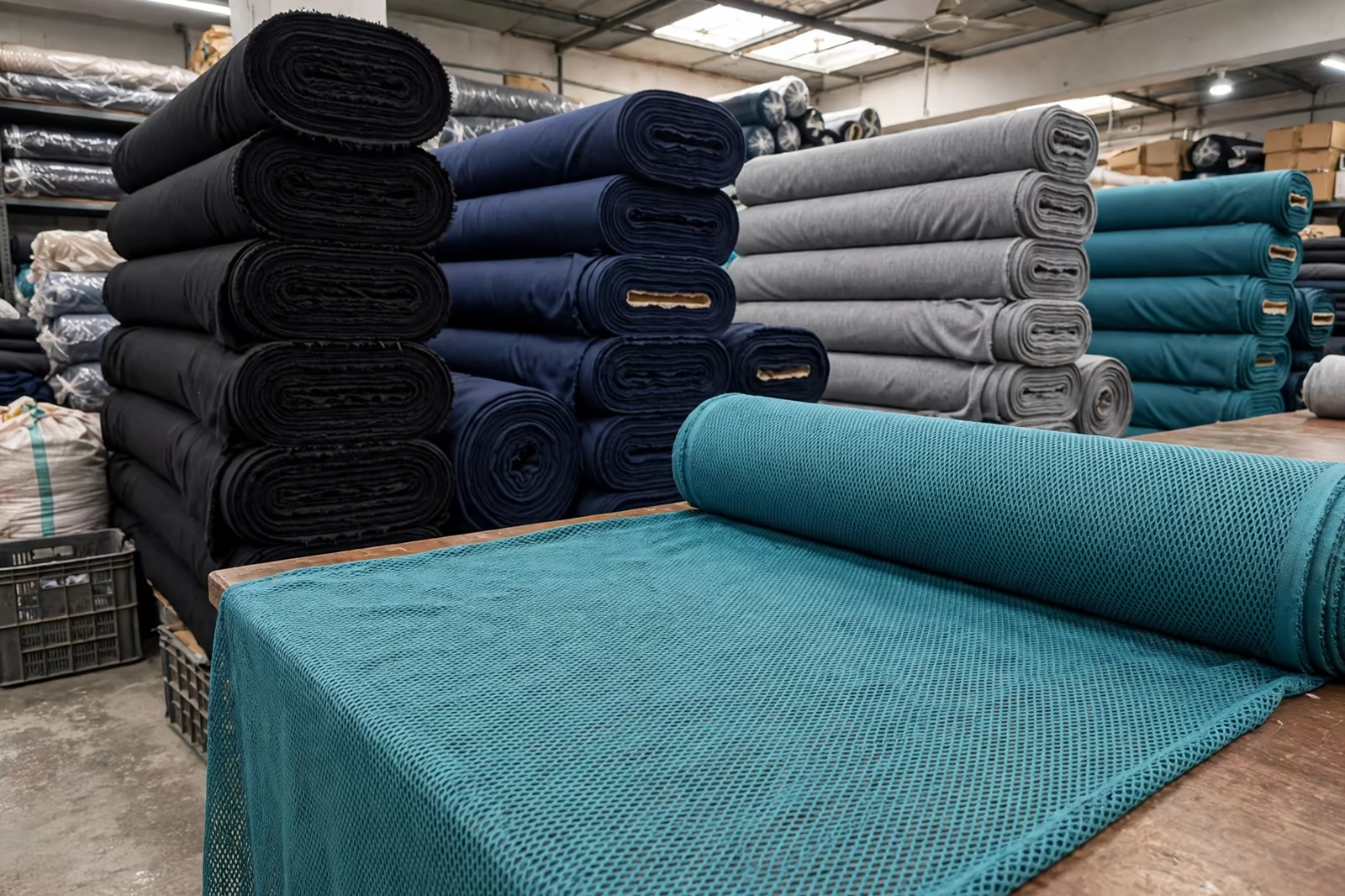
Activewear is fabric before it is sewing. Indonesia’s advantage is access: synthetic yarns, mesh, interlock and technical finishes flow through its regional supply chains as standard materials, so a performance fabric brief usually starts from available cloth.
Bangladesh knits and dyes its core knit fabrics domestically at scale, cotton and cotton-rich programmes entirely, and sources technical synthetics through established import channels for performance orders. Core performance fabrics, moisture-management polyester, elastane blends, are routine here; highly specialised constructions may begin with imported fabric and its extra planning step.
Buyers should therefore brief fabric-first in both countries: name the construction, the finish and the test standard, then ask each factory to show the fabric in hand before any price conversation. The answers reveal more than the brochures.
Finishes deserve the same directness. Moisture management, anti-odour and sun-protection finishes are applied chemistry with testable performance, not adjectives; ask which finish, from which supplier, verified by which test, in either country, and let the reports rather than the range names carry the claim onto your label.
Cost on Basics and on Performance
On basics, the comparison is not close for long: Bangladesh’s economics on tees, fleece and core jersey programmes are generally well ahead, its whole industry priced around them. Indonesian basics carry the cost level of a more diversified, higher-wage industry, and most buyers feel it on standard programmes.
On technical performance styles, the gap narrows and can close: Indonesia’s fabric access and practised construction reduce development friction and failure costs, while Bangladesh answers with sharp sewing economics on performance styles within its proven fabric set. The landed comparison then depends on how exotic the fabric and construction really are.
Programmes mixing both, a basics core with a performance capsule, are increasingly split for exactly this reason, each half placed where its own arithmetic wins.
One more line belongs in the arithmetic: development cost. Technical styles consume sampling rounds, lab tests and pattern work before a single bulk garment exists. Where a factory’s fabric access shortens those rounds, its higher unit price may still land cheaper by launch; where the style is standard, the sharper unit price wins outright. Cost the programme to the shelf, not to the sewing line.
Minimums and Programme Scale
Scale expectations follow each industry’s clientele. Indonesian performance factories, trained by global brands, are accustomed to substantial technical programmes with detailed development stages; smaller buyers can find the door heavier there, though mid-size exporters welcome growing performance labels seriously.
Bangladesh’s programme factories run on production-run minimums built for volume; on our own lines the standard minimum is 1,200 pieces per style in up to two colours, covering basics and performance styles alike. A training range feeding clubs, gyms or retail across a season fits that scale naturally.
The buyer’s task is matching ambition to appetite: a developing performance label should ask both countries how its third-season volumes will be treated, not only how its first order prices.
Construction Skills and Technical Detail
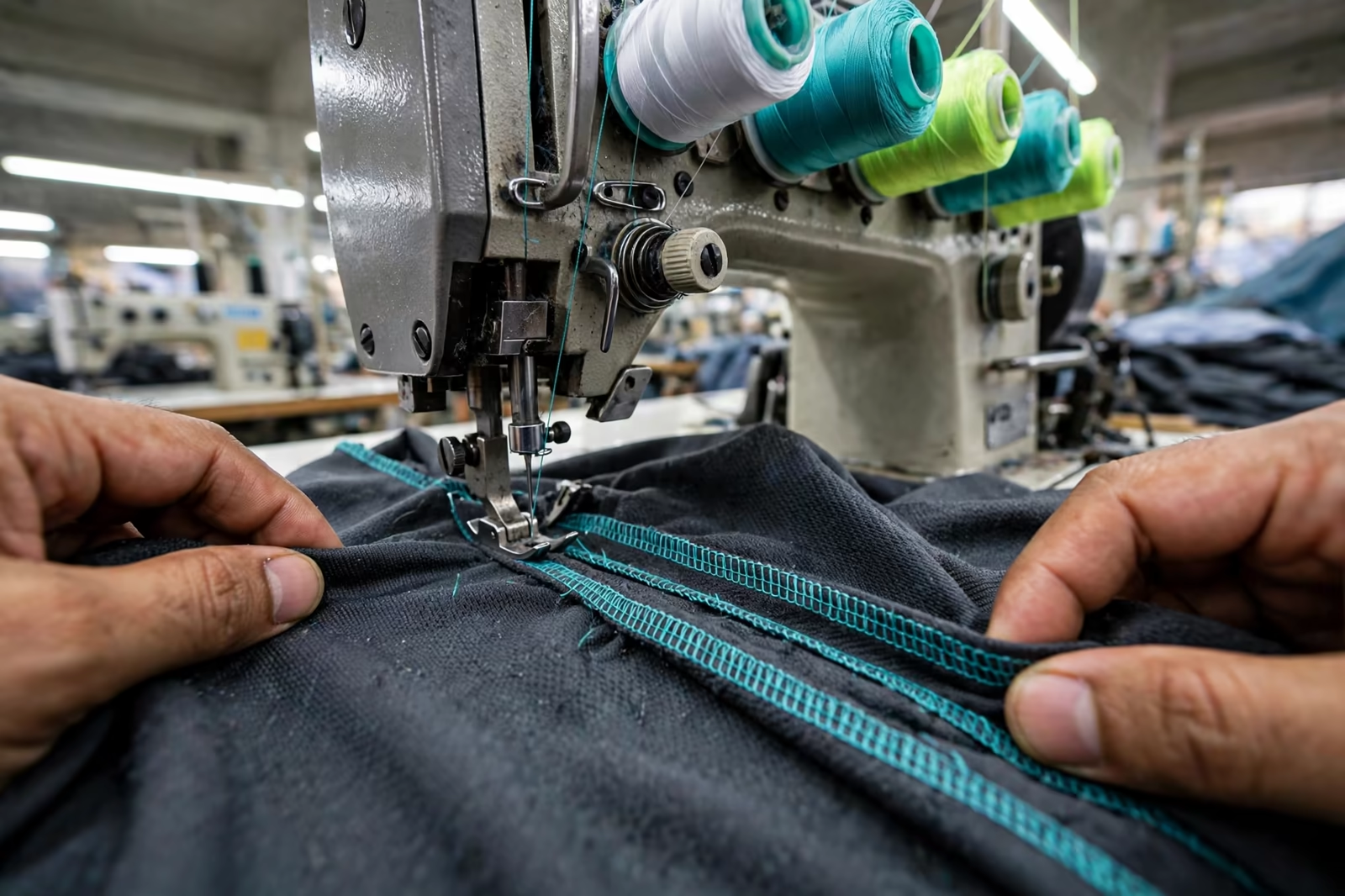
Performance garments punish weak construction: flatlock seams that must not chafe, bindings that must stretch and recover, prints that must move with the fabric. Indonesian factories serving sports brands carry these skills as standard practice, audited by demanding technical buyers for years.
Bangladeshi activewear production applies the same disciplines within its ranges: flatlock and coverstitch work, stretch-appropriate printing, and pattern grading across performance size sets, verified through the same testing buyers apply anywhere. The depth of ultra-specialist work, complex bonding, seamless programmes, is thinner here and should be sampled before it is assumed.
The sampling rule therefore matters most on this comparison: a performance sample, washed and stretched and worn in testing, separates real capability from catalogue language in either country within one round.
Basics Depth: The Other Half of the Range
Comparisons of activewear countries often forget that most ranges are half basics: the training tee sits beside the plain tee, the gym hoodie beside the core fleece. On that half, Bangladesh’s depth is the story: colourways, size curves and repeats produced with a consistency that performance-only sources rarely match at the price.
Indonesia sews basics competently, but its economics and factory appetites point elsewhere; basics volumes placed there usually pay for capability the garments do not use. Buyers with combined ranges feel this as a slow margin leak across the plain half of the rail.
The combined-range buyer is therefore this comparison’s most natural dual-sourcer: the performance capsule placed on technical merit, the basics body placed on programme economics, and the rail reading as one brand to the customer.
Duties and Routes to Your Market
Trade treatment differs by destination and should be priced per market. Bangladesh’s apparel enters the European Union duty-free under Everything But Arms for qualifying goods, a meaningful edge on EU programmes; Indonesia trades with the EU under standard terms while its own agreement discussions continue, so duty belongs in the Indonesian landed cost for Europe.
For the USA and other markets, both face broadly standard treatment, and freight, price and capability decide. Shipping routes from both are mature, with Indonesia well placed for Pacific-facing logistics and Bangladesh for the established Asia to Europe and Atlantic lanes.
As throughout this series, confirm the current position for your exact product and market before the programme is costed, not after the samples delight you.
Working Style and Buyer Experience
Indonesia’s export factories are seasoned in brand programme culture: technical packs of great detail, strict lab testing, and corporate compliance systems, reflecting the sports industry clients who trained them. Communication runs professionally in the formats global brands expect.
Bangladesh’s merchandising culture is built around high-volume buyer traffic, milestone reporting, and documentation discipline, with basics programmes run almost as routines. Buyers moving a range between the two will notice different textures, technical-corporate against programme-systematic, and both work when the programme fits.
What decides satisfaction in either place remains the specific factory: its lab discipline, its honesty about fabric sourcing, and its reporting through production. Country averages are for shortlists, not for contracts.
Risks and Watchlists
Indonesian programmes watch cost movement, a large domestic market competing for factory attention, and regional logistics across an archipelago geography. Its established exporters manage these routinely, but buyers should confirm which island, which port and which fabric source a programme truly runs on.
Bangladeshi programmes watch the familiar list: peak-season capacity, festival periods, and the imported-fabric step on specialised performance styles, where fabric arrival gates the cutting date. Early fabric commitment converts that risk into a schedule, which is how experienced buyers here handle it.
Programmes split across both countries place each risk where it is smallest, performance capsules exposed to Indonesian economics, basics volume inside the Bangladeshi system, which is the practical conclusion of this whole comparison.
How Buyers Split Ranges in Practice
The working pattern is a two-column range plan. Column one lists styles by technical demand: fabric specialisation, construction complexity, testing burden. Column two lists them by volume and price sensitivity. Styles extreme on the first column go to technical merit; styles extreme on the second go to programme economics; the middle is sampled both ways.
Shared standards keep the split invisible to customers: one tech pack language, one testing regime, one labelling system across both sources. Where buyers let standards fork by country, returns and reviews soon teach the cost of it.
Review the split each season. A performance style that becomes a volume staple migrates toward economics; a basics style that gains technical features migrates toward merit. The range, not the flag, should lead.
Frequently Asked Questions
Which country is better for activewear, Bangladesh or Indonesia?
For highly technical performance styles, Indonesia’s sports-brand heritage, synthetic fabric access and practised technical construction give it the edge, and complex programmes should start there. For performance basics, training tees, gym and team ranges in core fabrics, Bangladesh produces competitively at far stronger prices, especially for Europe under duty-free access. Sample both for anything between those poles.
Why is Bangladesh cheaper for basics?
Its industry is organised around knit basics at the world’s deepest scale: domestic knitting and dyeing for core fabrics, factories tuned to repeat programmes, and cost levels set by that specialisation. Indonesia’s more diversified, higher-cost industry prices basics above that level. On standard tees, fleece and jersey programmes the gap is usually decisive; on technical styles it narrows considerably.
Can Bangladesh handle moisture-wicking and stretch fabrics?
Yes, core performance fabrics such as moisture-management polyester and elastane blends are routine in Bangladeshi activewear production, knitted or sourced to order and tested to buyer standards. Highly specialised constructions may start from imported fabric, adding a planning step. Judge by samples and test reports for your exact fabric rather than by general claims, ours included.
How do duties differ for Europe?
Bangladeshi apparel enters the EU duty-free under the Everything But Arms arrangement for least-developed countries, provided rules of origin are met. Indonesia currently trades under standard EU terms for apparel while trade agreement discussions continue, so duty forms part of its landed cost to Europe. For the USA both face broadly standard treatment. Confirm the current position for your product before costing.