
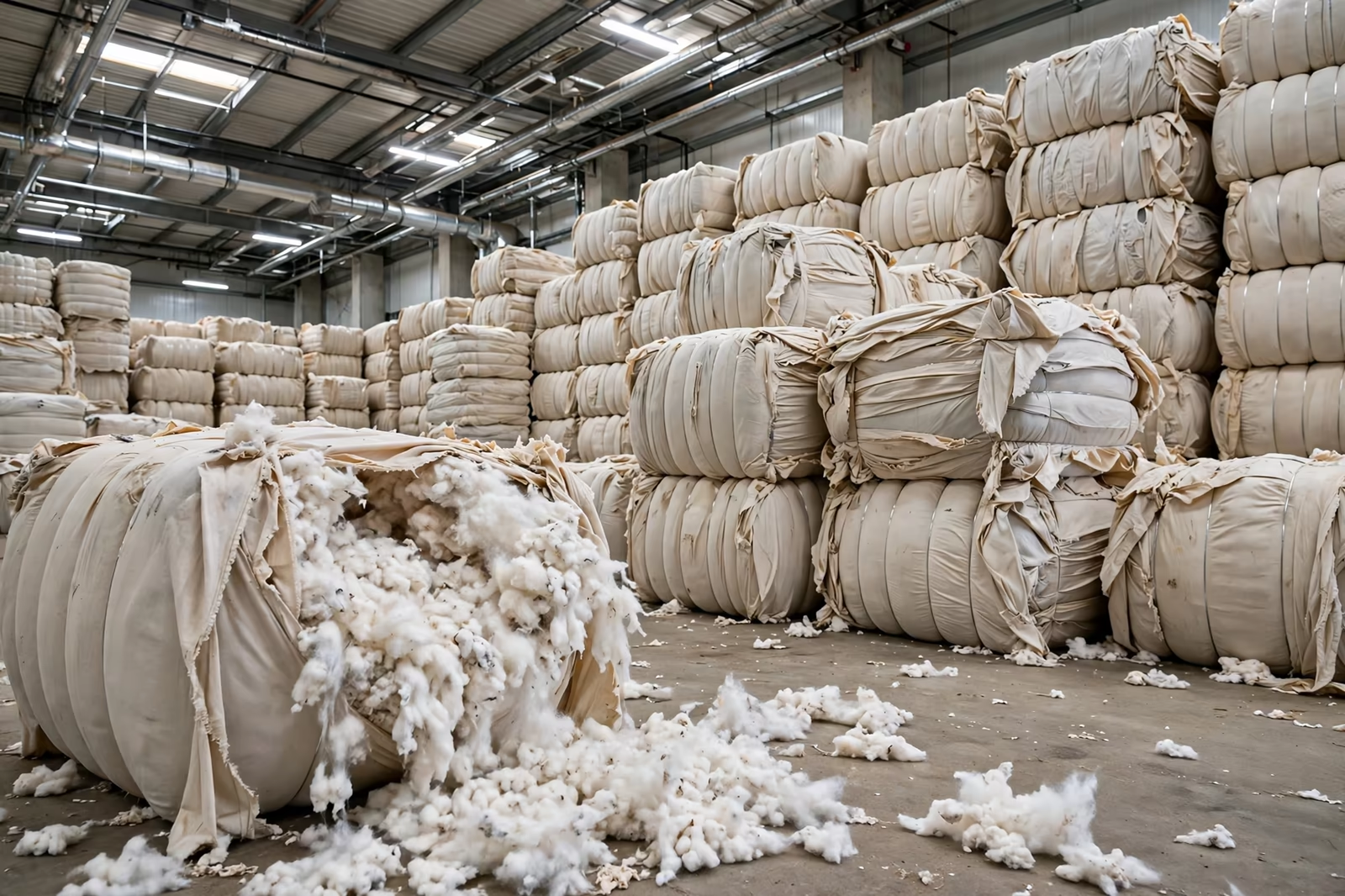
Egypt enters the Europe-bound cotton conversation carrying one of the most famous fibres on earth. Its long-staple cotton has a name buyers have trusted for generations, and its factories sit a short Mediterranean crossing from European ports. Against it stands Bangladesh, the volume cotton basics machine on the far side of Asia. For cotton apparel to Europe, which deserves your programme?
The sourcing teams behind this guide work in Bangladesh, producing cotton apparel to order for buyers in the USA, the UK, Germany, Canada and Australia. Egypt’s cotton story is respected here rather than dismissed, because buyers choosing between a famous fibre and a famous basics industry deserve an honest map of both.
Cotton programmes start from ranges like our cotton t-shirts manufacturer page, the regions on our market area page, and a conversation through our contact page.
The Fibre Story: Famous Cotton Against Cotton System
Egyptian cotton’s reputation is earned at the fibre level: long staples that spin into fine, strong, smooth yarns, giving fabrics a softness and lustre that premium buyers prize. For shirting, fine jersey and any product where the fibre itself is part of the sales story, Egypt holds a card few origins can match.
Bangladesh’s cotton story is a system story: imported raw cotton from several origins, spun, knitted and dyed domestically at enormous scale, tuned to the workhorse fabrics of the basics trade. The fibre is specified per programme, standard staples for value lines, better yarns where the product asks, rather than inherited from one famous harvest.
The practical consequence: if your product sells its fibre, Egypt’s name works for you at the shelf. If your product sells value, consistency and print surface at volume, the system behind it matters more than the fibre’s birthplace, and that is Bangladesh’s home ground.
One caution travels with the famous name. Genuine long-staple Egyptian cotton is a defined agricultural product with a protected identity at home, yet garments worldwide have carried the words loosely. The fibre’s value is real only when the content is verified, a theme the compliance section below returns to, because European labelling law judges the garment, not the legend.
Geography: A Shorter Crossing
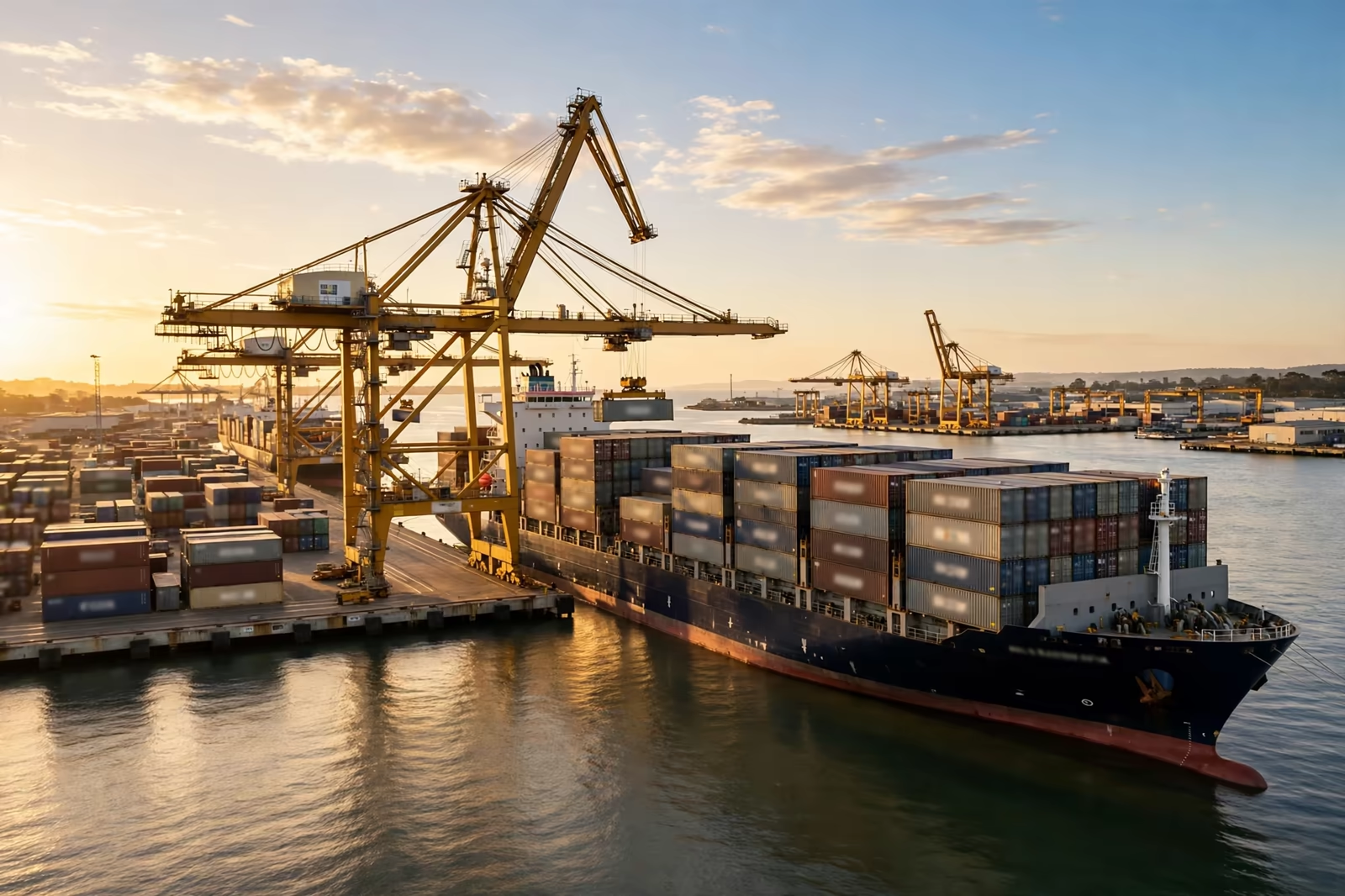
Egypt’s Mediterranean position shortens the European leg considerably compared with any Asian source: sailings to southern European ports are brief, and the Suez corridor keeps its factories on the world’s busiest trade route. For European buyers, that proximity trims both transit and uncertainty, though it does not approach the road-freight intimacy Turkey offers.
Bangladesh ships the long sea route this blog’s comparisons have described before, planned in fuller cycles. The difference shows up in replenishment behaviour rather than in the first delivery: nearer sources forgive late decisions; distant sources reward early ones.
Buyers should also note that shorter is not automatically smoother: port performance, sailing frequency and documentation practice at the specific factory matter as much as the map distance, in both countries. Ask each supplier how they actually ship, through which ports and on what rhythm, before the map persuades you.
Cost and Programme Economics
On volume cotton basics, Bangladesh’s economics are generally the sharper of the two, its industry organised around exactly these programmes, its fabric system feeding them at scale. Egyptian production, influenced by its fibre heritage and cost structure, tends to price for the value of its cotton and its proximity rather than for a race to the bottom on basics.
That makes the comparison programme-shaped rather than absolute. A premium cotton line can absorb, and justify, Egyptian economics inside its retail price. A promotional or core basics line lives on unit cost, and the arithmetic usually walks it to Bangladesh.
Duties into Europe must be confirmed per programme in both cases: Egypt trades under its association arrangements with the EU, Bangladesh under the Everything But Arms preferences treated elsewhere on this blog, and the exact treatment depends on product and origin evidence, as always.
Minimums and Programme Scale
Scale behaviour differs with industry shape. Egyptian apparel capacity is more concentrated, with premium and fibre-led programmes sitting comfortably in established textile groups, while very large basics volumes are fewer factories’ natural work. Buyers with modest premium programmes are often warmly sized there.
Bangladesh’s basics factories are organised for production runs, with standard minimums that assume real volume; on our own lines the minimum is 1,200 pieces per style in up to two colours. A core European basics programme spread across stores and seasons fits that scale without stretching it.
As ever, the mismatch is the mistake: the giant basics order inside a premium fibre house, or the tiny fine-cotton capsule inside a volume basics line. Match the programme’s size to the factory’s appetite in whichever country you choose.
Product Fit by Category
Egypt’s strengths gather around its fibre: fine cotton shirting, premium jersey, underwear and home-adjacent cotton goods where hand feel is the argument, plus a long tradition in yarn and fabric exports feeding other countries’ factories.
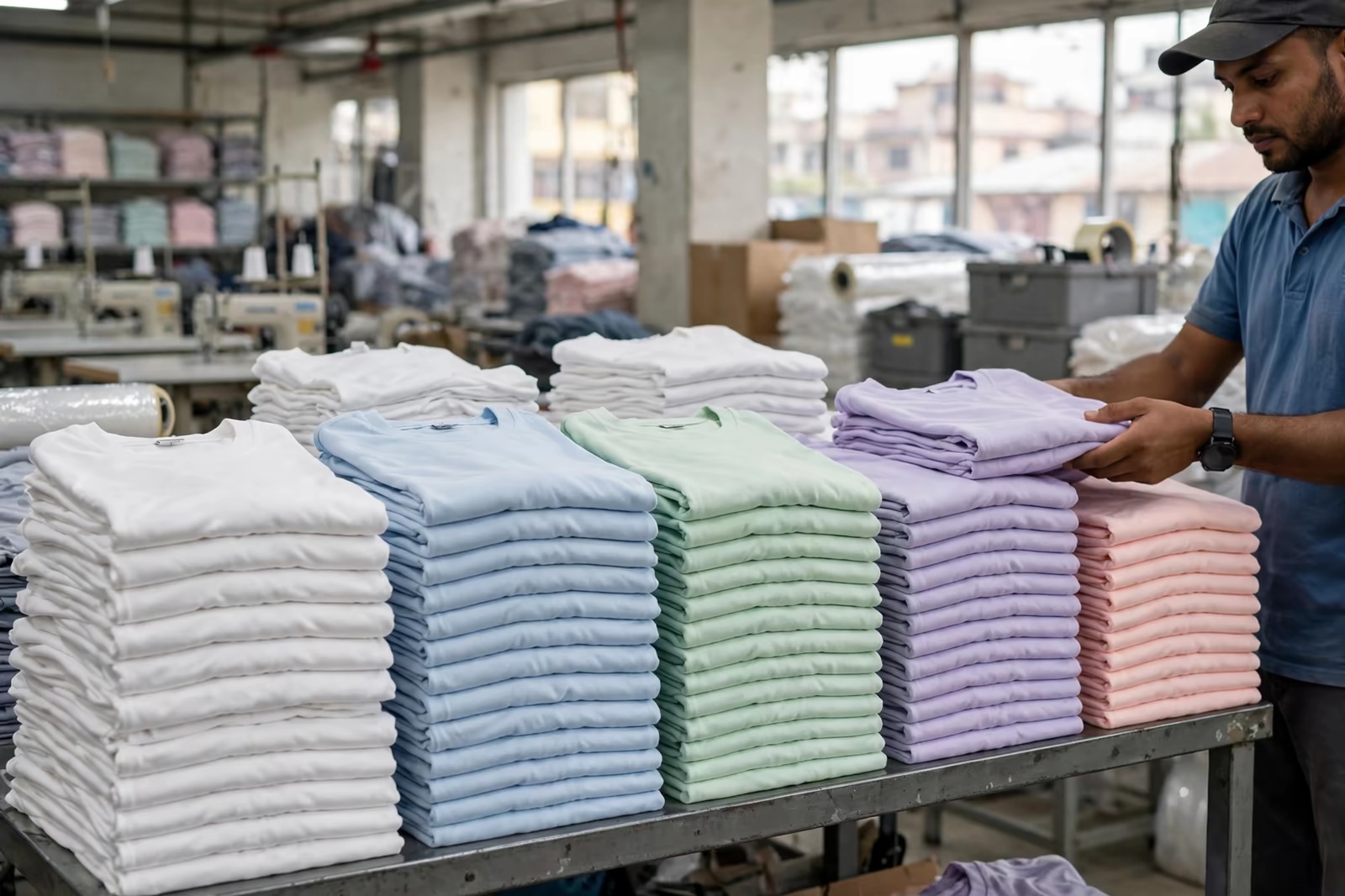
Bangladesh’s strengths gather around the programmed basics: t-shirts, polos, fleece and hoodies in depth, printed and embroidered programmes, colourways repeated across seasons, and woven staples alongside the knits. A range that must be wide, decorated and repeated sits naturally inside this system.
Between the two there is honest overlap in standard cotton jersey. The deciding questions are whether fibre fame or programme economics leads your product, and how your replenishment pattern behaves, the same questions this comparison keeps returning to.
Fabric Base and Vertical Depth
Egypt’s industry grew from its fields outward, ginning, spinning and weaving its own cotton, with knitwear built on that base. Fabric judgement there is fibre-led and deep, particularly in fine counts and premium qualities, though its overall apparel machine is smaller than Bangladesh’s.
Bangladesh’s base is broader in the basics directions: knitting, dyeing and finishing capacity across every workhorse fabric, printing and embroidery floors at production scale, and a trims ecosystem serving all of it. Development for an unusual premium fibre may be slower here; development for a new basics colourway or print is routine.
Buyers developing fabric should therefore brief differently: take fibre-led development to the fibre country, programme-led development to the programme country, and judge each factory’s lab and mill partners directly in both.
Quality, Compliance and Buyer Comfort
European buyers apply the same standards in both countries: social and safety audits, product testing for the destination market, labelling and fibre-content accuracy. Egyptian long-staple claims deserve a particular buyer discipline, since the fame of the fibre has historically attracted loose labelling in the wider market; honest factories welcome fibre verification, and buyers of premium cotton should use it.
Bangladesh’s export sector is organised heavily around international buyer traffic, with inspection availability and documentation practice built for it. Egyptian export factories are experienced with European requirements through their association-era trade, though the surrounding service depth varies more by region and factory.
As in every comparison on this blog, the audit decides: the factory’s certificates, its testing habits and its export record outweigh the reputation of its cotton or its coastline.
Risks and Resilience on Both Sides
Egyptian programmes watch currency movement, which has repriced its exports more than once, and the regional logistics around the Suez corridor, where wider shipping disruptions can lengthen even short routes. Buyers there should hold quotation validity and routing conversations open rather than assumed.
Bangladeshi programmes watch peak-season capacity and the festival calendar, managed through early booking and the industry’s depth of alternative mills and factories. Its longer route is predictable rather than fragile, which experienced buyers treat as a planning fact.
Split programmes again convert country risks into scheduling problems: premium cotton capsules carrying Egyptian exposure, core volume carried where the basics system absorbs shocks best. Neither country’s risk list disqualifies it; each simply writes a different page in the buyer’s risk register.
Working With Each: Style and Rhythm
Egyptian programmes often run through long-established, sometimes family-held industrial groups with strong textile identities; relationships there can be deep and fabric conversations unusually knowledgeable. Bangladeshi programmes run through merchandising systems tuned to high-volume buyer traffic, milestone reporting and documentation in buyer formats.
Sampling reflects the same shapes: fibre and fabric development is a pleasure where the fibre is native; basics sampling, shade work and print development move quickly inside the Bangladeshi system. Neither rhythm is a defect, and a buyer who knows which rhythm their programme needs will brief better in both places.
Currency and cost movements in both countries shift quotations over time, another reason programme buyers re-quote per season instead of defending last year’s map.
Sampling Notes for Cotton Buyers
Samples tell the fibre story faster than brochures. From Egypt, judge the hand feel and lustre against your price promise: if the premium fibre does not announce itself in the hand, the retail story built on it will not survive the shelf either. Send the sample through wash testing early, since long-staple claims live or die there.
From Bangladesh, judge the basics disciplines: shade consistency across the sample set, print quality where decoration is planned, and measurement fidelity against the spec. Basics samples should look boring in the best way, identical, accurate, repeatable, because that is precisely what the bulk must be.
In both countries, keep the approved samples as the contract’s physical memory, and test production against them rather than against recollection.
Frequently Asked Questions
Is Egyptian cotton really better than other cotton?
Its long-staple fibre genuinely spins into finer, smoother, stronger yarn, which is why premium shirting and fine jersey prize it. For standard basics fabrics, well-specified cotton from several origins, spun and knitted properly in Bangladesh, performs indistinguishably in wear and wash. The fame is real but product-specific: it matters most where the fibre is the product’s selling point.
Which country is better for cotton basics to Europe?
For volume cotton basics, t-shirts, polos, fleece and printed programmes, Bangladesh usually wins on programme economics, fabric system depth and repeat consistency, with duty-free EU access under Everything But Arms for qualifying goods. Egypt suits premium cotton lines where its fibre and shorter Mediterranean route justify its pricing. Many European buyers run both, premium cotton from Egypt, core basics from Bangladesh.
Does Egypt get preferential access to the EU?
Egypt trades with the EU under association arrangements that provide preferential treatment for many goods, while Bangladesh’s apparel enters duty-free under the Everything But Arms scheme. Exact duty treatment depends on the product classification and rules-of-origin evidence in both cases, so confirm the position for your specific programme before costing it, with your customs adviser.
Should I verify Egyptian cotton claims?
Yes, politely and routinely. The fibre’s fame has encouraged loose labelling across the wider market, so buyers paying a premium for long-staple Egyptian cotton should verify fibre content through testing, as they would any premium claim anywhere. Reputable Egyptian factories expect and welcome the check, and it protects your label’s promise to your own customers.