
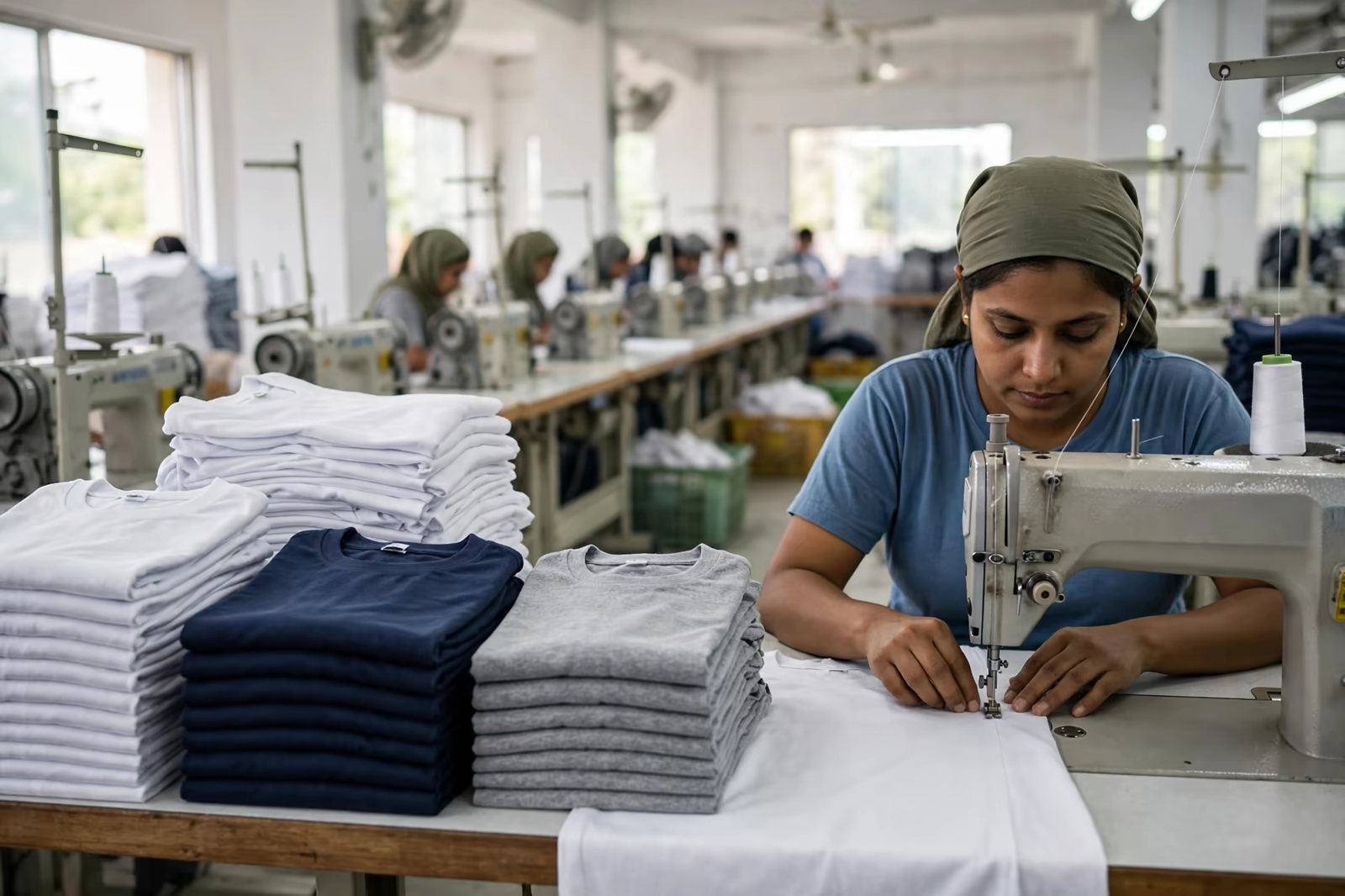
Three countries dominate the world’s cotton t-shirt supply conversation, and most buyers will source from at least two of them across a career. Bangladesh, India and Pakistan each grow or spin cotton, each knit and sew at scale, and each will happily quote your next tee programme. The useful question is not which country is best, but which fits your programme, your market and your way of working.
The sourcing teams behind this guide work in Bangladesh, producing cotton t-shirts to order for buyers in the USA, the UK, Germany, Canada and Australia. This comparison is written fairly, because buyers who split programmes across all three countries are common, and a guide that caricatures two of them would fail the buyers who know better.
T-shirt sourcing sits inside the range on our cotton t-shirts manufacturer page, the regions on our market area page, and the order framework on our MOQ and production page.
The Three at a Glance
Bangladesh built its industry on knitwear volume: t-shirts are its signature product, produced by factories whose whole craft, cutting, sewing, printing, packing, is tuned to basics at scale. Consistency across large orders and sharp economics for standard programmes are its calling cards.
India brings the widest spread: a vast cotton base, enormous variety from budget basics to premium fashion, and regions specialising in everything from knitwear in the south to woven and embellished work elsewhere. Its domestic market absorbs much of its capacity, so export buyers meet a broader range of factory types and attentiveness.
Pakistan’s strength is vertical cotton integration: ginning, spinning, knitting and dyeing under strong local control, with denim and home textiles as famous siblings to its knitwear. Its tee programmes benefit when fabric quality and yarn control lead the buyer’s priorities.
All three, importantly, are mature export industries with decades of buyer traffic behind them. None is a gamble; each is a specialisation. The comparison that follows therefore runs factor by factor, because the answer changes with the factor, and the buyer who sees that early sources better than the buyer loyal to a single flag.
Cotton and Fabric: Where Each Starts
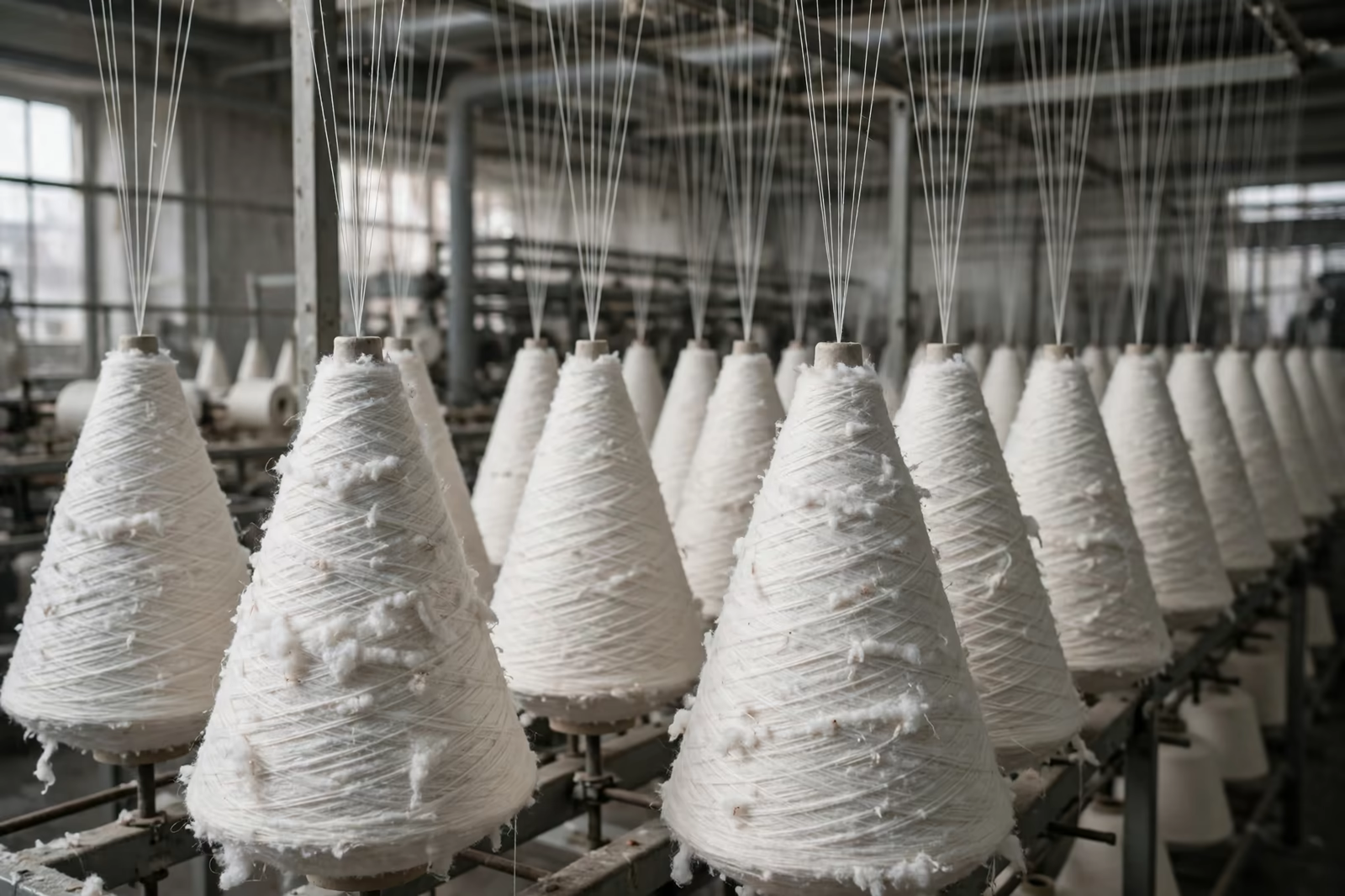
India and Pakistan both grow cotton domestically, giving their mills a home fibre base and their buyers a story of local content. India adds deep man-made fibre and blended fabric capability, useful for programmes mixing cotton with performance yarns.
Bangladesh imports much of its raw cotton and spins, knits and dyes domestically at national scale, so its fabric story is transformation rather than harvest. For the buyer, the practical difference is small on standard cotton jersey: all three knit good cloth. It grows on special fibres and unusual blends, where India’s breadth and Pakistan’s yarn depth each open options Bangladesh may import for the purpose.
Fabric development speed follows the same pattern: standard qualities are quick everywhere; exotic developments favour the wider Indian base; yarn-led quality programmes favour Pakistan’s integrated mills; repeat basics favour the practised Bangladeshi route.
Cost Structure on a Standard Tee
On a standard cotton t-shirt in volume, Bangladesh is most often the sharpest of the three, its factories’ efficiency and focus on basics translating into prices buyers struggle to match elsewhere at the same consistency. That is the centre of its global position and the reason basics programmes gravitate here.
India prices across the widest range: some regions and factory types compete near Bangladeshi levels on basics, while fashion-oriented and smaller factories price for their flexibility and design content instead. Pakistan commonly sits competitively on fabric-led quality, where its yarn and dyeing economics work in the buyer’s favour.
Price, though, is one line of the landed calculation. Duties by destination, freight routes, rejection risk and reorder reliability all move the real comparison, and a fair buyer runs the full arithmetic per market rather than comparing ex-factory numbers alone.
Product Fit: What Each Does Best
Choose Bangladesh when the programme is knit basics at meaningful volume: promotional tees, retail basics, uniform and workwear tees, printed programmes, where the whole factory system is built for exactly this garment and repeats of it.
Choose India when the programme leans fashion: frequent style changes, embellishment variety, mixed fabric stories, smaller fashion drops, or when the range spans categories a single Indian supplier cluster can cover together.
Choose Pakistan when the fabric is the headline: heavyweight jersey, yarn-dyed work, denim-adjacent programmes, or where vertical yarn-to-garment control answers the buyer’s quality questions most directly. Many buyers run all three choices at once, programme by programme, which is the correct level at which to make this decision.
Minimums and Programme Scale
Scale expectations differ by factory more than by country, but patterns exist. Bangladesh’s basics factories are built around volume programmes, with standard minimums that suit real production runs; on our own lines the standard minimum is 1,200 pieces per style in up to two colours, a typical figure for this segment. India’s range spans the extremes, artisan workshops taking very small work and giant exporters wanting programmes; Pakistan sits between, fabric-led minimums following its mills.
The buyer’s question is therefore matching, not ranking: bring a volume basics programme to a volume basics factory, a small fashion test to a factory that courts them. Mismatched scale, the tiny order in the giant factory, the huge order in the small one, produces most of the horror stories blamed on countries.
Growth path matters too. A brand expecting to scale should start where its third-year volumes will be welcome, rather than re-sourcing as it grows.
Compliance, Audits and Buyer Comfort
All three countries contain world-class compliant factories and, like everywhere, weaker ones; the country name guarantees nothing, the factory audit decides. Buyers should apply the same verification everywhere: social and safety audits, product testing for their market, and certificate checks against issuers.
Where the countries differ is in the buyer’s surrounding comfort: the depth of international buying infrastructure, inspection availability and export documentation practice. Bangladesh’s export sector is heavily organised around exactly this buyer traffic; India’s scale offers every service level at a price; Pakistan’s export community is experienced though thinner in some regions.
The practical rule survives every comparison: audit the factory, not the flag.
Communication and Working Style
Day-to-day experience differs in texture. Bangladeshi export factories run large merchandising teams practised in the rhythms of European and North American buyers, high email volumes, strict milestone reporting, and documentation in the buyer’s formats. The relationship feels systematic, which suits programme buyers.
India’s variety includes everything from highly corporate exporters with full digital systems to family workshops of genius and chaos alike; the buyer chooses their texture by choosing their factory tier. Pakistan’s exporters are typically relationship-led and technically strong, with fabric conversations of unusual depth.
None of these textures is a defect. They are working styles to match your own, and the match matters more after the third order than the price gap did on the first.
Printing and Decoration Compared
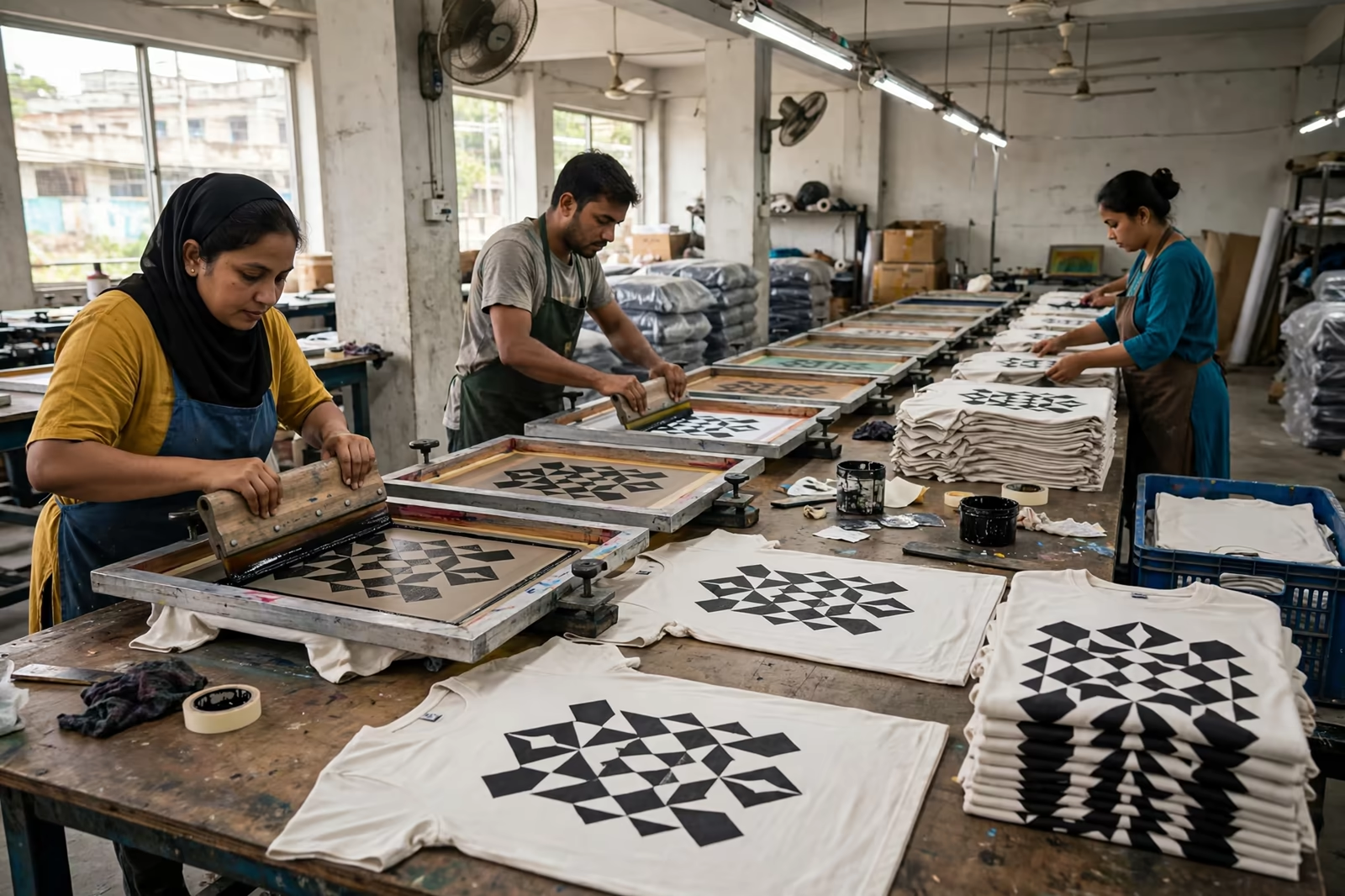
Printed tees are a large share of the world’s tee programmes, and all three countries print at scale, with different centres of excellence. Bangladesh’s screen printing industry handles high-volume basics printing, chest prints, promotional work, with the manual long-table craft and machine printing side by side, and embroidery is equally at home here.
India adds unusual breadth in embellishment, hand techniques, sequin and fashion decoration alongside industrial printing, suiting ranges where decoration is the design. Pakistan prints competently within its fabric-led programmes, strongest where print and heavyweight fabric meet, as in workwear and denim-adjacent ranges.
For a printed basics programme, in other words, all three can execute; the deciding factors return to fabric, cost, scale and the factory’s own print floor, which buyers should see in samples before believing in brochures.
Routes to Market and Duty Considerations
Destination duties can reorder the whole comparison. European programmes weigh each country’s preference status and rules of origin; North American programmes weigh standard duty treatment and freight economics; the same tee programme can crown a different winner per continent. This blog’s duty guide treats the European arrangements in detail.
Freight adds its own geography: all three ship worldwide through established routes, with transit patterns differing by port and carrier network rather than by quality. Buyers should cost the full route to their warehouse, peak season behaviour included, before letting a small ex-factory gap decide a programme’s home.
The mature approach is a small matrix, your programme types against the three countries, refreshed when duties, freight or your range changes, rather than a loyalty declared once and defended forever.
Risks and Resilience in Each Country
Honest comparison includes how each source behaves under stress. Bangladesh’s risks concentrate in logistics and peak-season capacity, managed by early planning and the industry’s depth of alternative factories and mills when one link fails. Its political and weather disruptions make headlines occasionally, as they do for most sourcing countries, and the export sector’s scale is itself a form of insurance.
India’s scale diversifies risk across regions, though buyers concentrated in one state feel that state’s strikes, weather or power issues undiluted; its large domestic market can also pull factory attention inward during local demand surges. Pakistan’s buyers watch energy supply and currency movement more closely, factors its experienced exporters have learned to plan around and price honestly.
No country’s risk profile disqualifies it; each simply assigns the buyer a different watchlist. Programmes split across two countries convert most of these risks from threats into inconveniences.
Frequently Asked Questions
Which country is cheapest for basic cotton t-shirts?
For standard cotton tees at volume, Bangladesh is most often the sharpest on price with strong consistency, which is why basics programmes concentrate there. India spans the widest range, from competitive basics regions to premium fashion pricing, and Pakistan is often competitive where fabric quality leads. Always compare landed cost for your destination, duties and freight included, rather than ex-factory price alone.
Which country should I choose for fashion t-shirts with frequent style changes?
India’s breadth usually fits fashion-led programmes best: wide fabric choice, embellishment variety and factories set up for smaller changing drops. Bangladesh serves fashion basics and printed programmes very well at volume, and Pakistan suits fabric-led designs. Many brands split the range, fashion pieces in India, core basics in Bangladesh, which this comparison exists to encourage.
Does cotton origin matter for t-shirt quality?
Less than yarn and fabric quality do. India and Pakistan grow cotton domestically; Bangladesh imports raw cotton and spins and knits domestically. A well-made Bangladeshi tee from quality yarn outperforms a poor tee sewn beside the cotton field every time. Judge fabric specifications, yarn quality and factory testing rather than the fibre’s birthplace.
Can I source from more than one of the three?
Yes, and most experienced buyers do. Split by programme: volume basics where basics are the national craft, fashion where variety lives, fabric-led styles where vertical mills answer best. Keep specifications and testing standards identical across countries so your range stays consistent, and let each country’s factories do the work they are built for.