
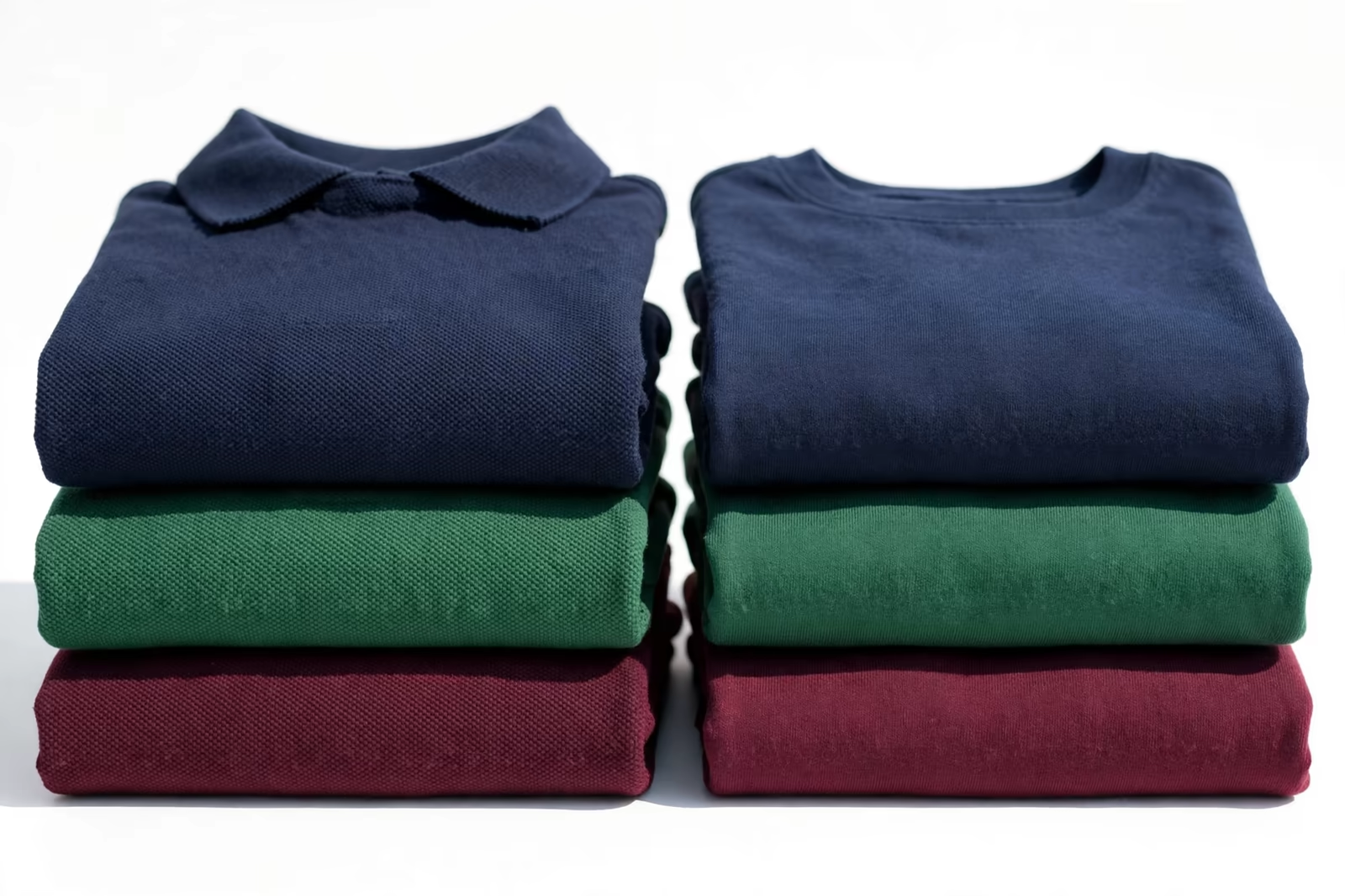
Back-to-school is the apparel season with a built-in paradox: the customers are children, who grow; the buyers are parents, who guess; and the deadline is a school bell that rings on a fixed morning whether the uniforms are ready or not.
Suppliers and school shops that master it share one skill: timing. Orders placed against the growth curve, sizes forecast from last year’s exchanges, and stock staged before the late-summer rush decide the whole season. This guide plans it, for schools, retailers and uniform suppliers sourcing from a clothing manufacturer in Bangladesh for the USA, the UK, Germany, Canada and Australia.
Everything in the category is perishable in a special way: a uniform that fits in June is a rumour by September. The planning below treats growth as the central fact it is.
The Buying Calendar Parents Actually Follow
Suppliers plan in seasons; parents buy in panics. Understanding the real rhythm of family purchasing, early planners, the August majority and the first-week emergencies, shapes everything from stock depth to staffing.
- A minority buy early, often for the best sizes and the organised schools
- The majority buy in the final weeks of the holiday, all at once
- Replacement and growth purchases continue through the first term
- Second children inherit sizes and change the household’s demand pattern
- Price sensitivity peaks exactly when size availability matters most
The season is therefore two seasons: a forecast one, which rewards preparation, and a surge one, which punishes it. Stock and sizes must be planned for both.
Schools shape the calendar more than they admit. A uniform policy announced late, or changed without warning, moves thousands of family purchases into the same panicked fortnight and empties shelves that evidence said were deep enough. The suppliers who sleep in August are the ones whose schools published their lists before the previous term ended.
Sizes: The Growth Problem in Numbers
Children’s sizing is the only apparel curve that moves while it sits in the stockroom. A size run bought against this year’s class list is wrong by the holidays’ end, because the class itself has grown out of the measurements it was bought from.
- Buy against age bands with growth headroom, not against spring measurements
- Weight the curve toward the sizes children grow into, not out of
- Hold exchange depth in the boundary sizes where growth lands mid-season
- Record exchange reasons; they are the truest growth data in the business
- Separate new-intake stock from replacement stock in the plan
The exchange record deserves its reputation: every swapped garment is a measured fact about how this population actually grows, and suppliers who keep it forecast next year from evidence.
The Core Uniform Range
The back-to-school range is deliberately narrow and deep: a few garments in school colours, bought repeatedly, judged on durability by the harshest testing regime in clothing, a child’s school week.
- The polo shirt is the modern uniform’s centre: the kids polo shirt
- The everyday tee for sport and under-layers: the kids t-shirt
- Trousers, skirts and shorts built for playground physics
- Knitwear and sweat layers for the cold terms
- PE kit in house colours, planned with the same seriousness
- Name labels and identification designed in, because loss is a system
Our standard minimum of 1,200 pieces per style in up to two colours, set out on the MOQ and production page, suits school programmes exactly: schools and their suppliers order depth in few styles, which is the shape factories serve best.
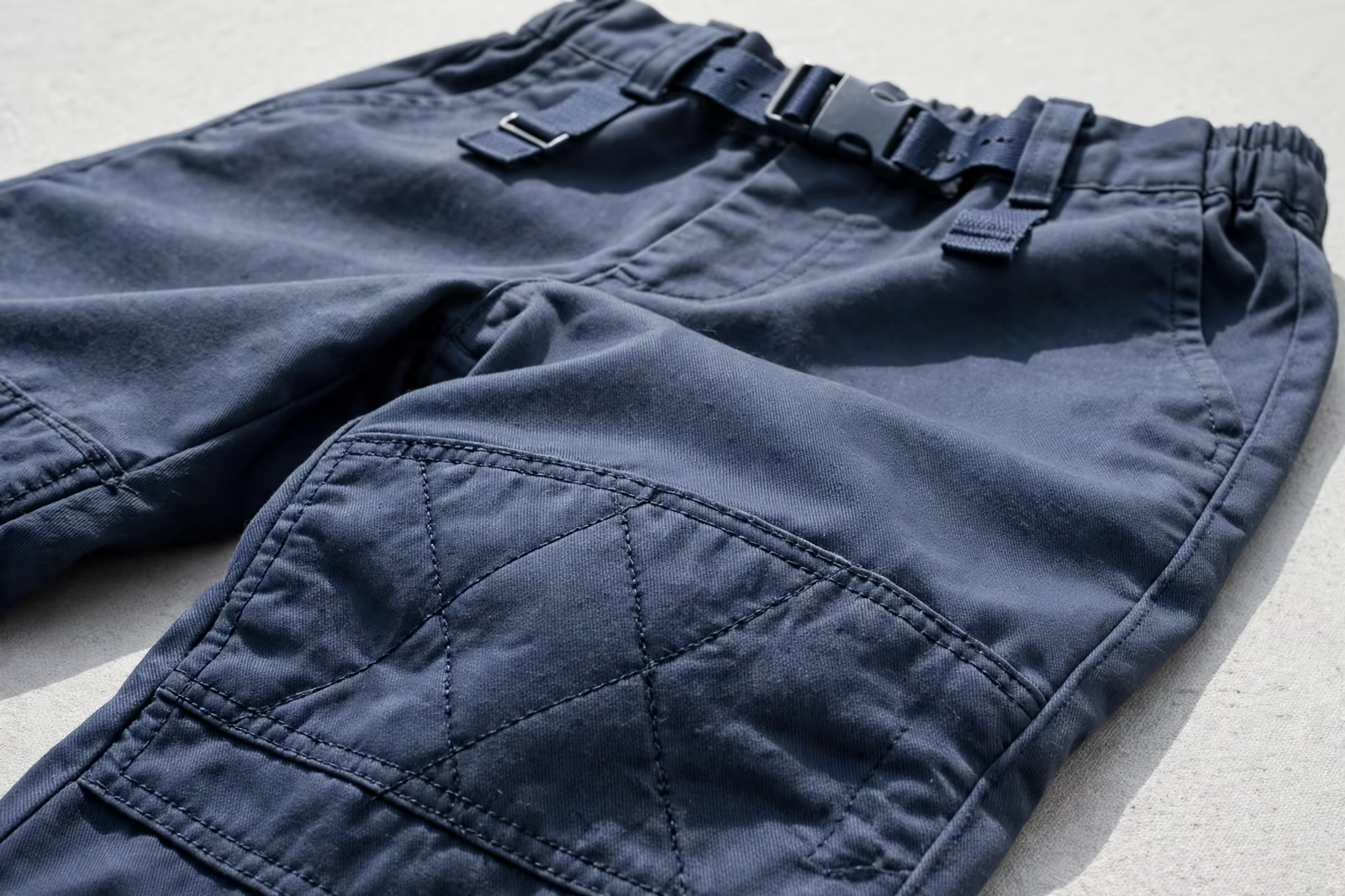
Durability: The Subject Parents Actually Grade
No garment in a family’s budget is audited like a school uniform. It is worn daily, washed weekly, attacked by playgrounds, art rooms and dinners, and expected to look respectable in the school photograph. Its specification is written by that life.
- Colourfastness that survives the year’s washing without fading unevenly
- Knees, elbows and seams reinforced where the wear actually happens
- Easy-care behaviour: washing simple, drying fast, ironing optional
- Stain-tolerant colours and finishes chosen with the dinner hall in mind
- Growth features: adjustable waists and hems that can be let down
Parents forgive a higher price for a garment that survives to be handed down. They forgive nothing about one that fails by half-term, and they tell each other, which makes durability the category’s real marketing. A supplier’s reputation here is quite literally worn in public, five days a week, by its smallest and most honest customers.
Safety and Compliance for Children’s Clothing
Children’s apparel carries the strictest rulebook in the industry, and back-to-school ranges sit squarely inside it: drawstring and cord rules, flammability requirements for certain categories, labelling and fibre content, and chemical restrictions in the major markets.
- Cord and drawstring designs checked against each market’s rules
- Nightwear-adjacent items held to their own stricter standards
- Labels carrying fibre, care and origin information accurately
- Small parts, buttons and fastenings secured for the youngest sizes
- Compliance designed into the sample, never inspected in at the end
These are the market’s published rules, applied as design inputs. A supplier fluent in them protects the school’s name as surely as its own, which is why the conversation belongs at the range stage, not the shipping stage. Factories fluent in children’s ranges carry this knowledge as routine, and buyers should test it in the first conversation rather than the last.
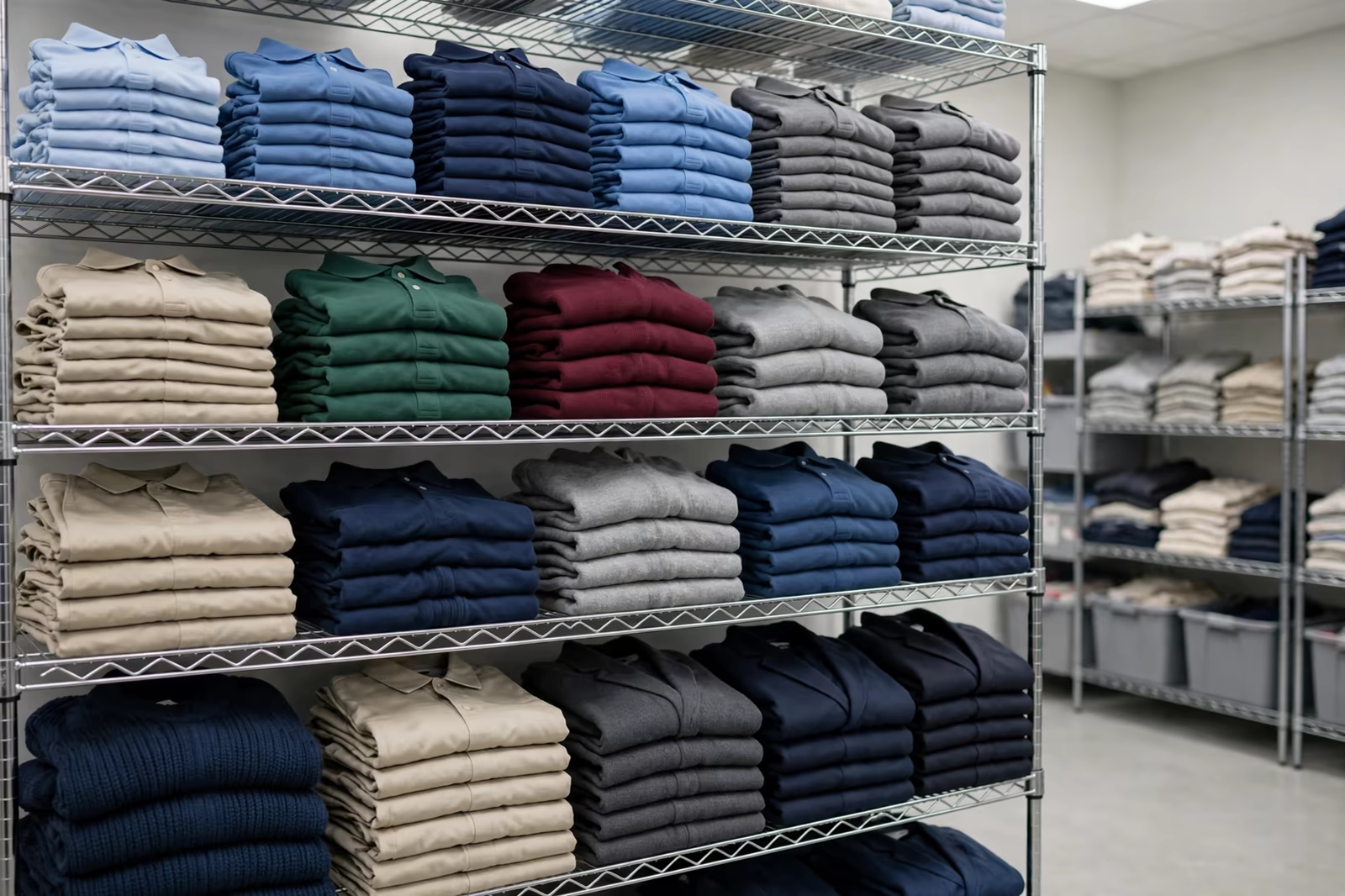
Stocking the Surge
The final weeks before term are a logistics event as much as a retail one. Stock must be in the right sizes, in the right place, findable by stressed parents in minutes, with the exchange system ready behind it.
- Full size runs staged before the surge, not replenished during it
- Boundary sizes doubled where the exchange data says growth lands
- Sizing help at the point of sale: charts, guidance and patience
- Online size tools fed by the same exchange evidence
- A named owner for the first-week emergency stock and its rules
The surge rewards one quality above all: calm. It is manufactured months earlier, in orders placed against evidence, and it is spent in a fortnight by parents who will remember exactly who had their child’s size.
The School’s Side of the Programme
Schools are the programme’s third party alongside supplier and parent, and their decisions, uniform policy, colour discipline, approved supplier lists, decide whether the season runs as a system or as a scramble. The programmes that work treat the school as a partner in the planning.
- Uniform policy published early, with changes announced a year ahead
- One colour standard, specified properly, so every batch matches
- Supplier arrangements that guarantee the size depth the policy creates
- Support schemes for families for whom the full kit is a burden
- A feedback loop from the school office to the supplier after each season
The colour standard is the quiet hero of that list. A school red specified loosely is five reds by October; specified as a proper standard with an approved sample held by both sides, it is one red all year, in every photograph.
Hand-Me-Downs and the Second Life
Uniforms are the original circular clothing: outgrown long before they are outworn, passed between siblings, sold in school second-hand sales, and kept as the emergency spare in a hundred drawers. Suppliers who design for that second life build garments whose value compounds.
- Construction that survives a second and third owner gracefully
- Name-label spaces designed to be relabelled cleanly
- Timeless school colours that outlast fashion’s rotations
- Repair-friendly design: buttons replaceable, hems adjustable
- Second-hand channels supported by the school, normalising reuse
There is a commercial truth inside the sentiment: the parent buying for a first child chooses the garment that the second-hand rail proves survives. Durability, displayed by strangers’ children, is the most credible advertising the category owns.
The Season’s Tail: First Week and Beyond
The bell rings, and the season is not over. The first weeks of term generate their own demand: the lost jumper, the growth spurt that arrived in October, the second set bought by parents who have now learned the laundry arithmetic the hard way.
- Replacement stock held in the proven sizes through the first term
- Lost-property reality planned for: children mislay uniforms at industrial scale
- The mid-season review: what ran out, what gathered dust, what exchanges taught
- Second-set promotions timed to the moment parents understand the wash cycle
- Next year’s order drafted while this year’s lessons are still warm
That last habit closes the whole system. The supplier whose next order is sketched before the current season’s receipts are cold owns the evidence while competitors are still guessing, and the season improves the way compound interest does: quietly, then suddenly.
Measuring a Child Honestly
Between the size chart and the child stands a measurement problem unique to the category: the subject moves, exaggerates, and is measured by an adult who loves them and therefore rounds generously. Programmes that solve it convert returns into data instead of drama.
- Measure in the shop where possible, by staff who do it daily
- Publish measuring guidance parents can follow at home truthfully
- Build the growth allowance into the advice, not the guesswork
- Keep the fitting note with the sale, so exchanges start informed
- Design size labels around age and height together, not either alone
None of this is glamorous, and all of it is decisive. The difference between two uniform suppliers is rarely the polo shirt; it is the percentage of children wearing the right size in the third week of term, and that figure is manufactured here, one honest measurement at a time.
Frequently Asked Questions
When should back-to-school stock be ordered?
Early enough that production, freight and warehousing finish before the buying surge begins, which means the decisions belong to the first part of the year. The fixed school start date is a gift to planners: use it, count backwards, and let last year’s exchange data set the sizes.
How do we forecast sizes when children keep growing?
From age bands with growth headroom and from your own exchange records, which show precisely where this population’s growth lands. Weight the curve toward sizes children grow into, hold depth in the boundary sizes, and treat every exchange as next year’s forecasting data. Keep those records by school and by year, because growth patterns belong to populations, not to national averages.
What makes a school uniform worth a higher price?
Survival. Colour that holds, knees and seams that last, easy care that behaves, and growth features that stretch the garment across more of the year. Parents calculate in cost per term and hand-me-down value, and a durable uniform wins that arithmetic against a cheap one replaced twice.
Which compliance rules matter most for school ranges?
Cord and drawstring safety, labelling accuracy, and the stricter standards that apply to any nightwear in the range, with each market’s published rules checked at the design stage. Compliance built into the sample costs little; compliance discovered at shipment costs the season.