

Goods can be perfect and still fail to move. Every apparel shipment travels inside a paper envelope of documents, and when that envelope is wrong, containers sit, payments stall and bargain prices turn expensive. This guide walks through the export documents that actually matter for clothing, what each one proves, and the errors that cost buyers the most.
The documentation desk behind this guide prepares shipment papers daily for apparel leaving Bangladesh to buyers in the USA, the UK, Germany, Canada and Australia. The set is not long, but each document answers a different authority: the bank, the customs officer, the carrier and the buyer.
The documents connect to the regions on our market area page, the framework on our terms and conditions page, and starting an order through our get a quote page.
The Commercial Invoice: The Price Story
The commercial invoice is the shipment’s financial summary and the document customs values your goods from. It names the seller and buyer, describes the goods in customs-usable language, gives quantities, unit prices and total value, states the currency and the trade term, and carries the order references both sides agreed.
Its audience is triple: customs assesses duty from it, the bank matches payment against it, and the buyer’s accounts team books stock from it. An invoice that serves one audience and confuses another creates queries at exactly the wrong moment.
Descriptions matter more than formatting. “Men’s cotton t-shirts, knitted” clears in ways that style names and marketing phrases do not; where a shipment mixes fibre compositions, the invoice separates them, because classification and duty follow the fibre, not the fashion.
HS Codes: The Numbers Behind the Descriptions
Beside every invoice description sits a classification code from the Harmonized System, the international catalogue that assigns each product a number and, with it, a duty treatment. Knitted cotton t-shirts, woven shirts and fleece hoodies all live at different addresses in that catalogue, and the address follows fibre, construction and garment type.
The exporter proposes the code from the garment’s facts; the importer’s customs authority has the final word at destination, and the importer’s broker usually confirms classification in advance for new product types. Disagreement discovered at the border means reclassification mid-clearance, with duty recalculated live.
Buyers should hold one classification per recurring style, agreed once and reused, printed consistently on invoices across shipments. A style that changes codes between shipments invites exactly the profiling attention nobody wants.
The Packing List: The Physical Story
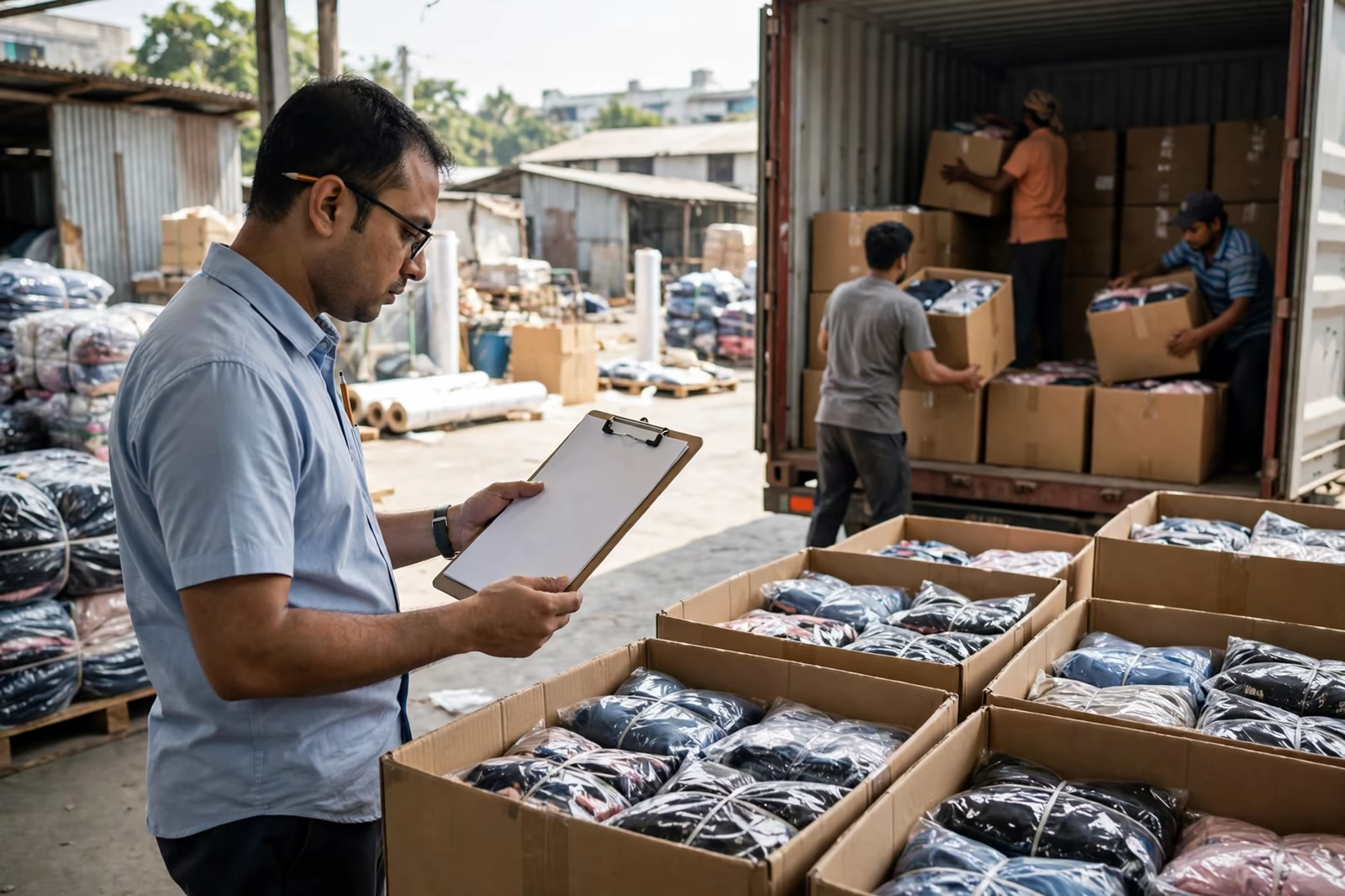
If the invoice tells the money story, the packing list tells the physical one: how many cartons, what each carton holds by style, size and colour, the gross and net weights, and the carton dimensions. Customs inspections, warehouse receiving and shortage claims all start from this document.
Its cardinal rule is that it must be the packing, not the plan. A list typed from the order instead of the finished cartons is the single most common document defect in apparel, and it surfaces when a warehouse counts cartons that were consolidated differently at the end.
Good factories build the list from the loading itself, carton by carton, and the buyer’s receiving team then finds the document boring in the best sense: everything matches. Read it against your purchase order on receipt; discrepancies found on paper are cheap, discrepancies found on shelves are not.
Certificate of Origin: The Passport
The certificate of origin states where the goods were made, and in preferential trade it is money: duty-free and reduced-duty claims under schemes such as Everything But Arms rest entirely on origin being proved in the prescribed form. For the European Union, origin is normally declared by the exporter through the REX system as a statement on origin attached to the invoice.
Origin is also stricter than intuition. The garment’s origin follows the rules of the destination scheme, typically where the substantial transformation, for apparel usually the making-up, happened; fabric from elsewhere does not move the garment’s origin if the sewing happened in Bangladesh, and the reverse logic applies too.
Errors here are uniquely expensive because they surface at destination customs, after freight is spent, with duty demanded at full rate until proof is repaired. Treat origin paperwork with the same seriousness as the goods.
The Bill of Lading or Air Waybill: The Travel Document
The bill of lading for sea freight is carrier contract, receipt and title document in one: whoever lawfully holds it controls the cargo. It names shipper, consignee and notify party, the vessel and ports, container and seal numbers, and the freight terms. The air waybill does the transport work for air freight without the title function, cargo released to the named consignee on identification.
Under letter of credit payment, the bill of lading is the star document of the presentation, and its every field is checked against the credit’s wording: ports, dates, consignee phrasing, freight notation. A clean on-board bill, issued without carrier reservations about the cargo’s condition, is what banks and buyers both want to see.
The telex release and express bill variants exist to move release faster than paper can travel; agree which form your shipment uses before loading, because switching mid-voyage is where documents go missing.
Beyond the Core Four
Around the core sit the supporting papers that specific routes, products and buyers demand. Inspection certificates where a third-party check was ordered. Weight and measurement certificates for consolidated cargo. Beneficiary certificates and shipping advices under letters of credit, confirming shipment details to the buyer in the credit’s exact wording.
Children’s products add the destination’s safety documentation, test reports and tracking labels for the American market being the strictest example. Preference claims add their origin declarations. Certain buyers ask for fumigation or materials declarations on wooden packaging, and some destinations request consular or chamber attestations on origin documents.
None of these is exotic, but each must be known at order stage, priced into the paperwork plan, rather than requested while the container is on the water and the issuing office is a week of emails away.
Who Issues What, and When
The factory’s documentation desk drafts the invoice, packing list and shipping instructions; the carrier or its agent issues the bill of lading from those instructions; origin statements come from the exporter under its registration; certificates from chambers or inspectors come from those bodies on application. Each hand-off is a place where a fact can be mistyped, which is why the checking step sits before documents disperse.
Timing follows the cargo. Drafts are exchanged and corrected while goods are being packed, final documents complete shortly after loading when the carrier confirms the on-board facts, and courier or electronic transmission to the buyer and bank follows the payment term’s choreography.
Buyers with brokers pre-clearing on electronic copies should say so at order stage: a document set released only when originals are printed costs the clearance days the broker could have saved.
The Consistency Rule
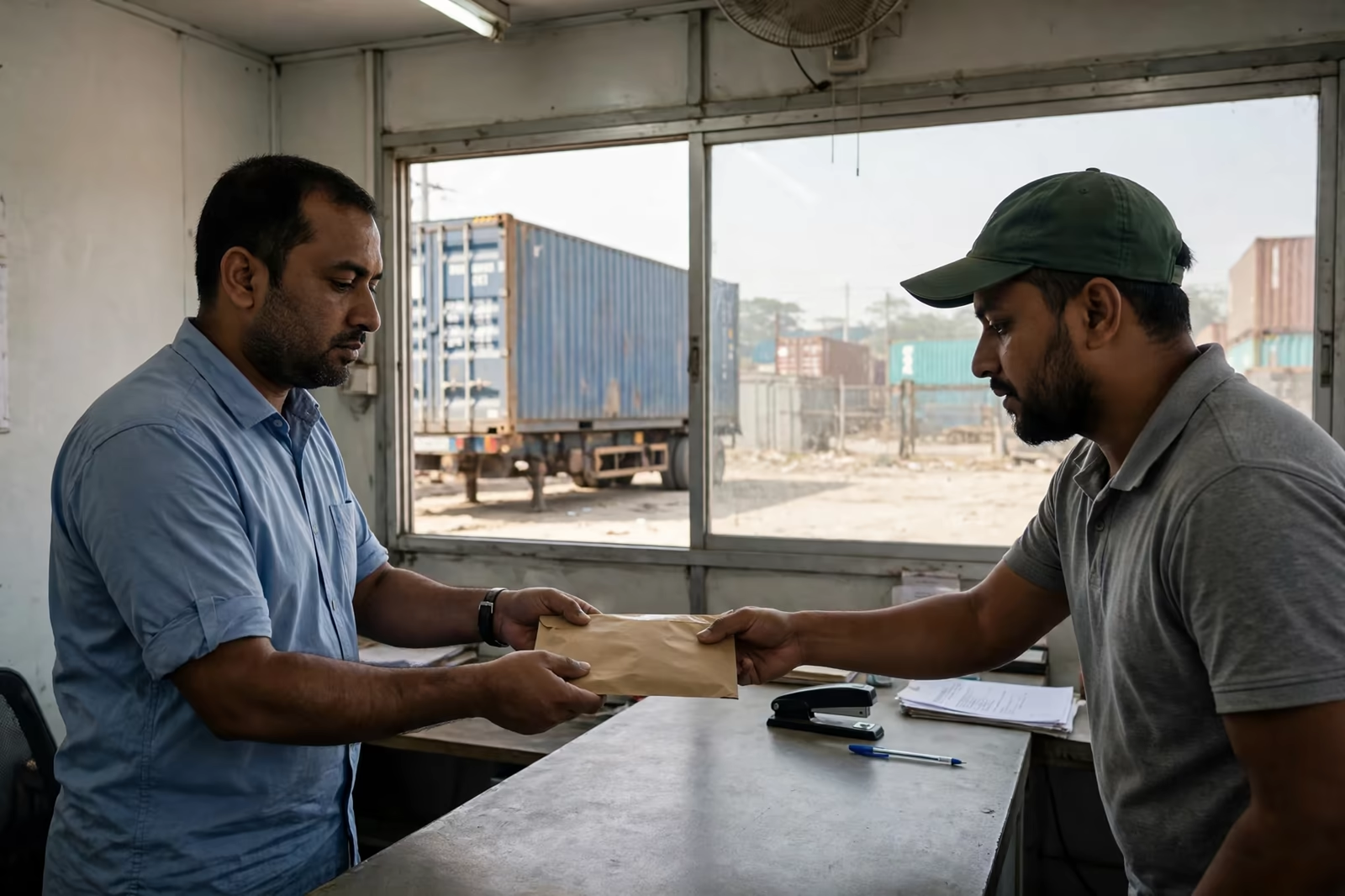
Every document in the set must tell the same story: identical goods descriptions in substance, identical quantities, weights that reconcile between packing list and bill of lading, values matching the invoice, references cross-cited. Banks examine for exactly this consistency, and customs profiling systems flag sets that disagree with themselves.
The practical method is a single source: one shipment file from which every document is generated, checked once by a second pair of eyes against the purchase order and any letter of credit. Document sets assembled document by document, by different hands, disagree in small ways that cost days.
Buyers can help by naming their requirements once, in writing, at order stage: consignee naming for the bill, notify party, the exact documents and copies wanted, and any buyer-specific forms. A good factory’s documentation checklist then carries those requirements to every shipment.
Electronic Documents and Pre-Clearance
Much of the paper envelope is now electronic in practice: invoices and packing lists travel as files, brokers lodge entries from copies before vessels arrive, and origin statements sit on the invoice itself. The legal originals still matter under letters of credit and some routes, but the clearance race is run on the electronic set.
That makes version discipline the new document skill. The file the broker cleared with must be the file that finally issues; a corrected invoice re-sent to the bank but not to the broker is a discrepancy manufactured in the office, not at the border.
One shared shipment folder, one final version of each document, named identically for everyone, is unglamorous and entirely sufficient.
Document Errors That Cost Real Money
The expensive errors are unglamorous: a consignee name spelled one letter off the letter of credit, a port named loosely where the credit names it precisely, weights that differ between two documents by an amount nobody can explain, an invoice total that does not multiply out from its own unit prices.
Each costs the same currency, time under demurrage, bank discrepancy fees, clearance labour, and occasionally the preference claim itself. Almost none of them begin as ignorance; they begin as haste at the checking step, the one step this guide keeps returning to.
Factories that ship weekly build the check into the desk’s rhythm; buyers who ask how documents are checked, not only which documents exist, learn more about a supplier in five minutes than a catalogue teaches in an hour.
Frequently Asked Questions
What are the core documents for importing clothing?
Four documents carry almost every apparel shipment: the commercial invoice for value and duty, the packing list for the cartons’ physical contents, the certificate or statement of origin for preference claims, and the bill of lading or air waybill for transport and release. Around them sit route and product specific extras such as inspection certificates and safety test reports.
What is the most common document error with apparel shipments?
A packing list that describes the order instead of the actual packing: cartons consolidated differently at the end, weights estimated rather than measured. It surfaces at receiving as shortages and extras that do not exist on the ground. The fix is procedural: the list must be built from the loading itself, and buyers should reconcile it against the purchase order on receipt.
Why does origin documentation matter so much?
Because preferential duty depends on it. Duty-free entry under schemes such as Everything But Arms is granted only when origin is proved in the prescribed form, for EU shipments usually a REX statement on origin. An error discovered at destination customs means full-rate duty demanded until the proof is repaired, long after the freight money is spent.
How many copies of each document should I ask for?
Agree the set at order stage rather than assuming: typically originals as the payment terms require, plus copies for your broker, your warehouse and your files, with electronic copies exchanged ahead of the vessel for clearance preparation. Under a letter of credit, the credit itself dictates the document list and copy counts, and that wording governs.