
Sports T-Shirts Made in Bangladesh for USA Teams and Clubs
Siatex Bangladesh works as a manufacturer and supplier of sports t-shirts made to order for buyers in the USA, with regular supply also arranged for the UK, Germany, Canada and Australia. Each order starts from the buyer pattern and specification, so neck shape, panel placement and finishing follow the brief rather than a fixed house style.
Club buyers in Spain often ask for matching team colours across a full squad set, with the same panel layout kept throughout. League organisers in Italy also order this style for seasonal programmes, usually choosing a plain body that leaves room for their own local printing.
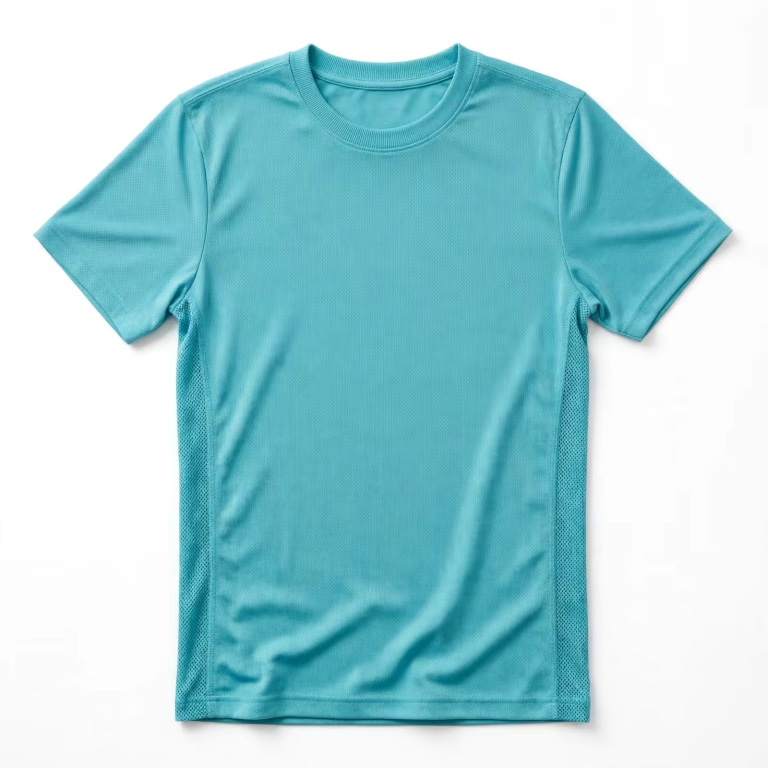
As a wholesaler and exporter from Bangladesh, we focus on how the shirt is built. The body is cut straight with a clean shoulder line, the crew neck sits flat, and darker mesh panels run down the sides as part of the pattern, not as an afterthought added later.
For school teams, local leagues and sports labels, the value lies in consistency. A shirt that looks right in a team photograph also needs seams that lie flat, hems that stay even and colours that match from the first carton to the last.
What buyers can customise on this style:
- Round crew neck with a ribbed collar band
- Set in short sleeves, cut to the buyer pattern
- Mesh panels down the sides in a darker shade
- Flatlock seams at panel joins and armholes
- Straight body with a level, coverstitched hem
- Club colours matched to swatches or references
- Plain finish ready for local print or embroidery
- Woven main labels and size labels sewn in
- Individual polybag packing with carton marks
Every order is sewn as a made to order programme in Bangladesh. Nothing is taken from ready stock, which keeps the pattern, cloth and panel colours tied to one buyer brief from sampling through to packing.
Cut and Construction
The pattern begins with a regular team fit. Shoulders are shaped so the sleeve sits naturally, the chest is cut with ease for movement in training, and the body length follows the size chart supplied or approved by the buyer.
The crew neck uses a ribbed band that is sewn, trimmed and topstitched so the edge stays neat after pressing. Sleeve hems and the bottom hem are finished with coverstitch, giving a flat line that matches the tidy look of the side panels.
Seams and Finishing Details
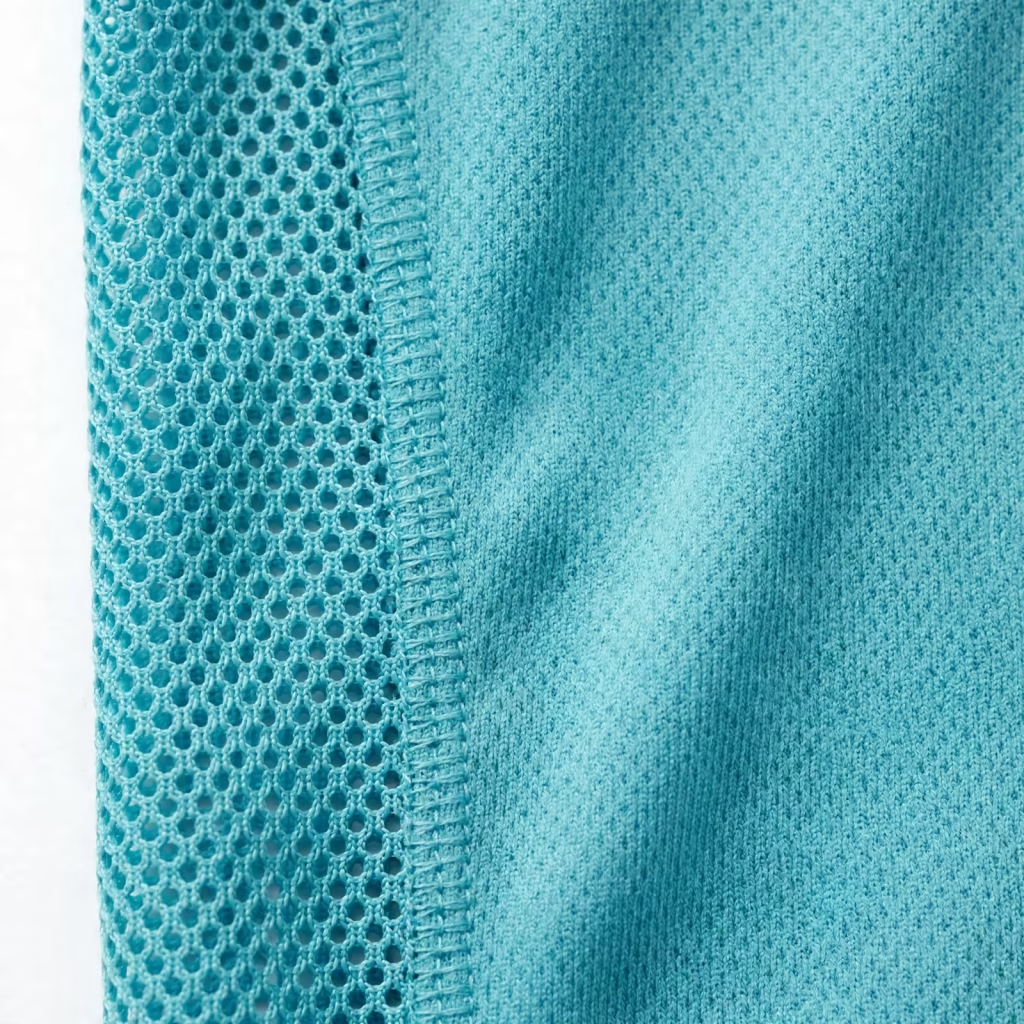
Flatlock stitching is used where panels meet the main body. The seam allowances are laid flat against each other and stitched through, so there is no raised ridge sitting on the inside of the shirt.
- Flatlock joins along both mesh side panels
- Overlocked internal seams, neatly trimmed
- Shoulder seams reinforced with clear tape
- Bar tacks at stress points near panel ends
- Loose threads removed before final pressing
Buyers who work from their own blocks can send measurements for sleeve length, body length and neck width. Our pattern team adjusts the grading across sizes, then returns a sample so the fit can be checked before bulk cutting begins.
Fabrics, Knit Structure and Mesh Panels
The main body is usually knitted as a polyester single jersey with a smooth face and a fine, even stitch. Buyers may also request a polyester and elastane blend cloth, or a textured pique knit, depending on the hand feel and surface they want for their range.
Cloth weight is chosen at sampling stage and held across production. The knitting, dyeing and finishing are checked against the approved sample, so the body cloth and the panel cloth sit well together in tone and in weight.
How the Mesh Panels Are Built In
The side panels use an open mesh knit, cut as shaped pattern pieces rather than straight strips. Each panel is sewn between the front and back body with flatlock stitching, following the curve of the side seam from under the arm down to the hem.
Because the mesh is a separate cloth, it can be dyed a shade darker than the body, matched exactly, or set in a contrast colour. The choice is confirmed on a sample first, under clear light, before any bulk cloth is cut.
Colour and Panel Combinations
Colour planning matters for clubs that return season after season. A home colour, an away colour and a training colour can all share the same pattern, with only the body shade and panel shade changing between them.
Turquoise with a darker turquoise panel, as shown here, gives a calm two tone result. The same layout also works in red with burgundy panels, royal with navy panels, or white with grey panels, always following the buyer colour reference.
Dye lots are compared against the approved swatch before cutting. If a panel colour sits beside a body colour on the shirt, both cloths are viewed together, because a shade that looks right alone can look different once it is sewn in place.
OEM and Private Label Supply
As an OEM manufacturer in Bangladesh, we sew sports t-shirts under the buyer own label. Sports brands, club shops and promotional clothing suppliers can place their branding at the neck, on the hem or on the packing, while the garment itself stays plain.
Private label work is kept separate by order. Labels, tags and bags for one buyer are stored and used only on that buyer work, and the packing team checks the label set against the order sheet before folding begins.
- Woven main labels sewn at the back neck
- Printed size and care labels inside the shirt
- Hang tags attached to buyer instruction
- Hem labels or small side seam labels on request
- Barcoded polybags and custom carton marks
- Plain shirts left ready for local decoration
Checking, Packing and Shipping to the USA
Checking runs through production, not only at the end. Pattern pieces are checked after cutting, panel joins are viewed during sewing, and finished shirts are measured against the size chart before they are pressed and folded.
As a supplier and exporter working from Bangladesh, we keep a clear record for each order: approved sample, colour swatches, measurement chart and packing instruction. The final check compares the finished shirts against that full set of references.
- Measurements checked across chest, length and sleeve
- Panel position and symmetry viewed on every shirt
- Seam quality and stitch density inspected closely
- Shade compared under standard light conditions
- Labels, tags and packing checked by order
- Cartons weighed, marked and listed for dispatch
Finished cartons are shipped from Bangladesh to the USA by the route agreed with the buyer, with documents prepared to match the carton list. Packing is kept firm and tidy, so shirts arrive crease light and ready for sorting by size and colour.
Step by Step Ordering
Samples First
Ordering starts with the buyer brief: a pattern or measurement chart, cloth choice, colour references and panel placement. From that brief we sew a fit sample in the main size, showing the crew neck, side panels and seam finish exactly as planned.
The sample is the time to adjust. Sleeve length can be lengthened or shortened, body length can be moved, and panel width can be changed. Once the buyer approves the revised sample, that approved piece becomes the reference for production.
Pricing and Production
With the sample approved, pricing is worked out from the cloth, panel construction, label set and packing method in the final specification. The price is confirmed in writing before cutting, so the buyer knows the full basis of the order.
Production then follows the approved sample step by step: cloth inspection, cutting, panel sewing, assembly, trimming, checking, pressing and packing. Updates are shared during the work.
Send Us Your Team Colours and Let the Pattern Speak
If you already have a team shirt you like, send clear photos and measurements and we will follow its cut closely in a fresh sample. If you are starting from an idea, a colour sketch and a size chart are enough to begin.
Share the brief when you are ready. As a family business, we will reply with practical questions first, then a sample plan that shows exactly how your sports t-shirts will be built in Bangladesh.
Frequently Asked Questions
Where can mesh panels be placed on this sports t-shirt?
Mesh panels can run down the sides, sit under the arms, or form a yoke across the upper back. Each position is cut as a shaped pattern piece and sewn in with flatlock stitching, and the placement is shown on the sample for approval.
What are flatlock seams and how are they sewn?
In a flatlock seam, the edges of two cloth pieces are laid flat and butted together, then stitched across the join on a flatlock machine. The result is a seam that lies flat on both sides, with neat rows of stitching visible on the panel join.
Can several club colours run in one production order?
Yes. The same pattern can be sewn in different body and panel colour combinations within one order, with each colourway listed separately on the order sheet. Samples or swatches confirm every combination before bulk cutting starts.
Can sleeve length and body length follow our own pattern?
Yes. Send your measurement chart or an existing shirt to follow, and the pattern will be adjusted for sleeve length, body length and grading across sizes. A revised sample is sewn first, so you can check the fit before production.