
Factories do not quote garments; they quote documents. Send a vague enquiry and you receive a vague price, padded with caution or hollowed out with assumptions, and neither version can be trusted. Send a complete request for quotation and the same factory returns a precise, comparable, defensible number. This guide is the checklist professional buyers use, built for sourcing custom apparel from a manufacturer in Bangladesh for the USA, the UK, Germany, Canada and Australia.
Work through it before your next enquiry. Every item you include removes a question the factory would otherwise have to guess at, and every guess in a quotation is paid for by the buyer, one way or another: in a higher price, in a later correction, or in a garment that is not quite the garment in the photograph.
The Garment Itself
Start with the product, defined tightly enough that two factories reading it imagine the same garment. Photographs of a similar style help; measurements and construction details decide.
- Garment type and a clear photograph or sketch of the style
- Construction details: seams, panels, closures, pockets, cuffs, collar style
- Size range and a measurement chart, or the standard you follow
- Fit intention: regular, relaxed, oversized, with a reference if possible
- Any special features: reinforced stitching, bartacks, drawcords, zips
- A physical reference sample or a named style to match, if one exists
Vague style language is the first tax on a quote. “A good quality hoodie” prices every factory’s private interpretation of good, and the interpretations never match.
Fabric, Specified Properly
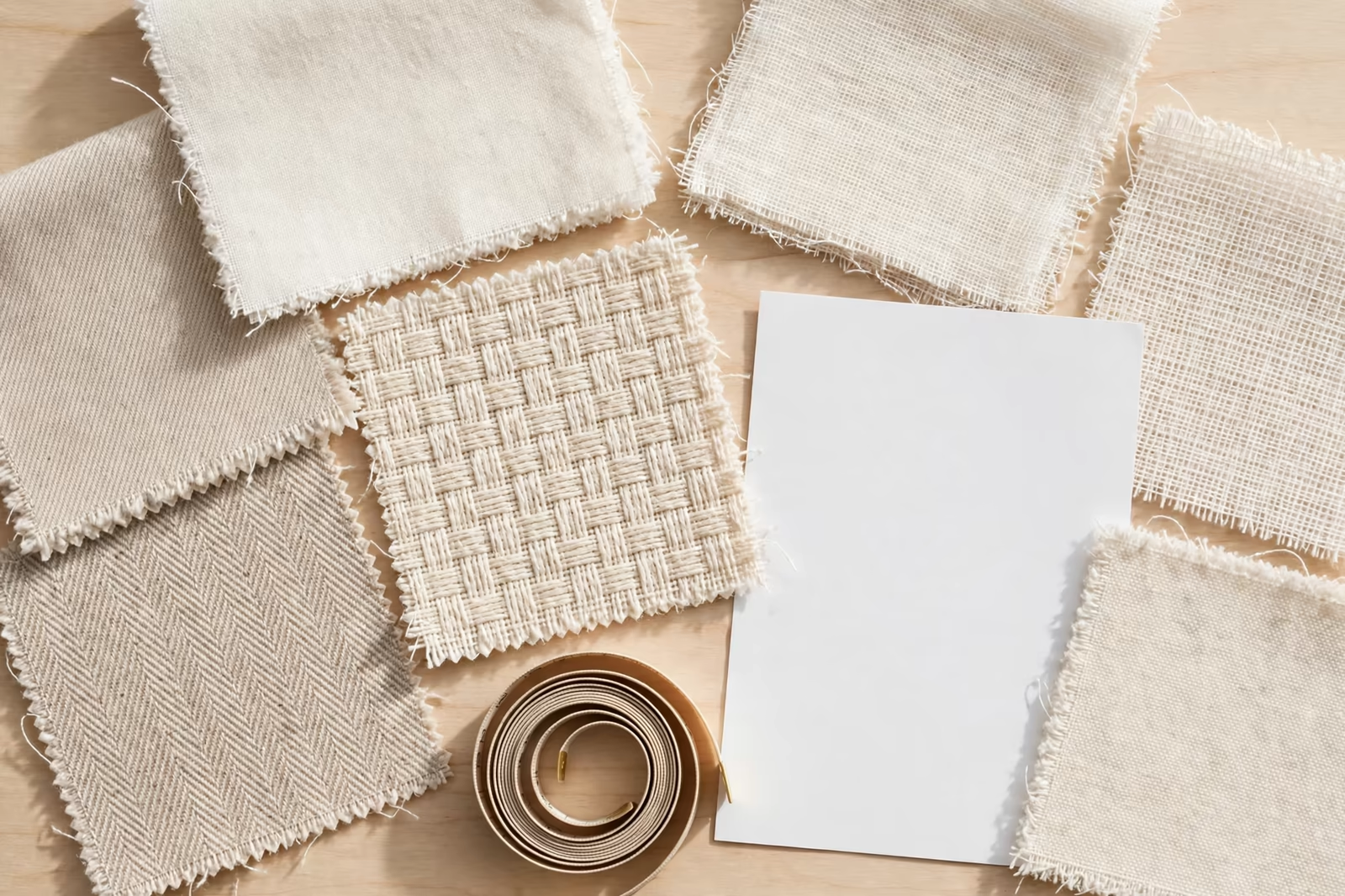
Fabric is the largest cost in most garments, so its specification carries the quotation. A fabric line that names only a fibre forces the factory to choose the weight, construction and quality tier on your behalf.
- Fibre and blend, with percentages where a blend is wanted
- Construction: single jersey, pique, fleece, twill, denim and so on
- Weight in GSM or the equivalent standard for woven fabrics
- Yarn quality where it matters: carded, combed, ring-spun, organic
- Finish requirements: bio-wash, softening, anti-pilling, moisture management
- Colours, each named or referenced to a recognised colour standard
- Any test standards the fabric must meet in your market
State what is fixed and what is flexible. A factory that knows the weight is essential but the exact blend can move will price intelligently; one that knows neither will price defensively.
Decoration and Branding
Artwork decides the decoration cost, and decoration is where under-specified enquiries grow the most between quote and invoice. Send the artwork itself wherever possible, not a description of it.
- Final artwork files in vector format, or the best files you hold
- Print or embroidery technique if you have a preference
- Size of the artwork and its exact placement on the garment
- Number of colours in the design and any special effects
- Label specification: woven or printed, content and placement
- Hang tags, stickers and any retail presentation required
If the artwork is not final, say so and describe its state honestly. A factory can price a near-final design with a stated allowance; it cannot price a surprise.
Quantities, Colours and Sizes
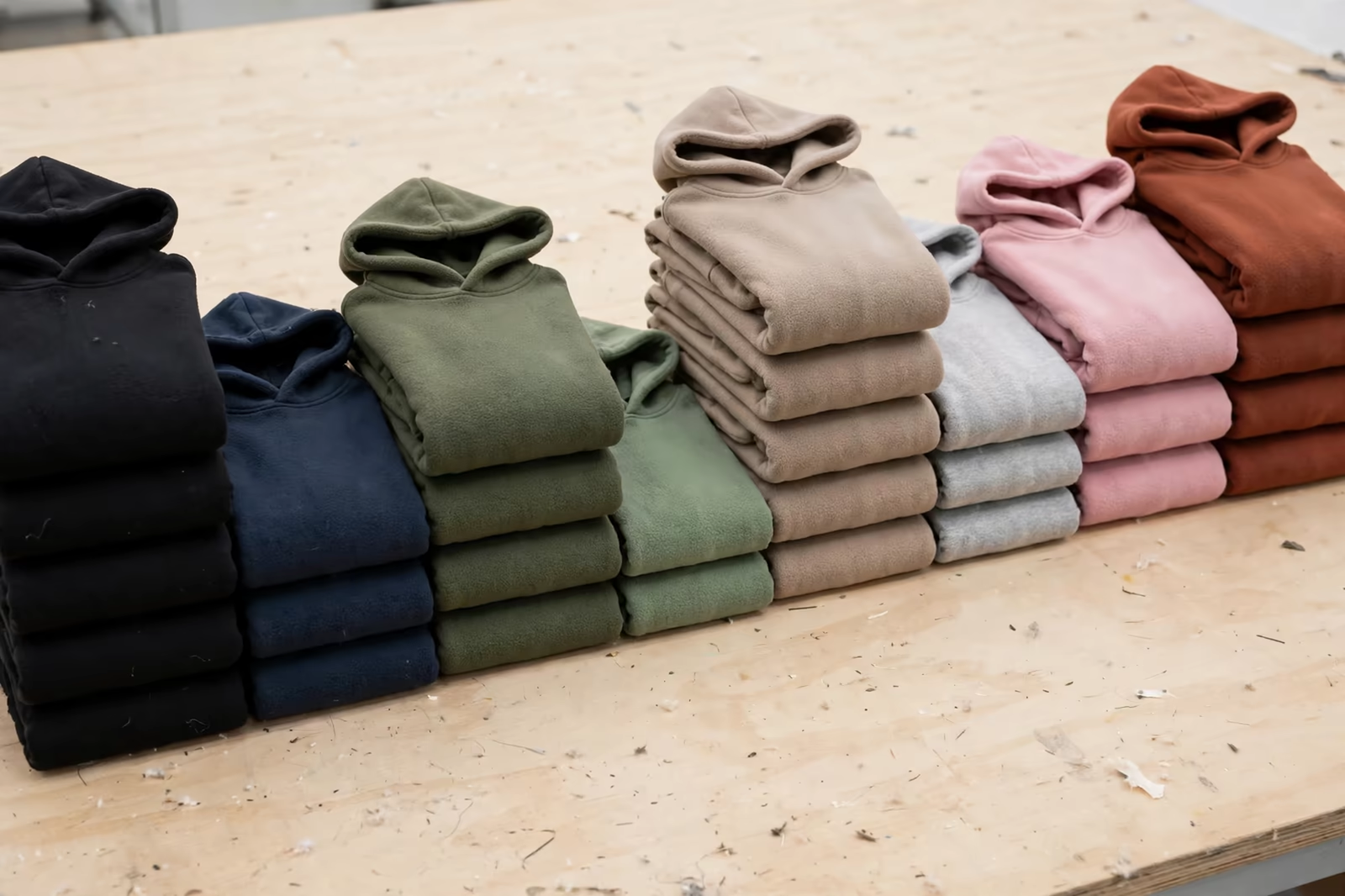
Quantity shapes the price curve more than any other single input, and its shape matters as much as its size. Give the factory the real distribution, not just the headline total.
- Total quantity, and the quantity per colour
- The size ratio you expect across the range
- Whether quantities are firm or indicative, stated plainly
- Repeat potential: whether this is a one-off or a programme
- Our standard minimum of 1,200 pieces per style in up to two colours as your reference point
The framework behind minimums and production planning sits on the MOQ and production page. An RFQ that shows its quantity logic lets the factory find efficiencies instead of defending against unknowns.
Packing and Presentation
How the garment is folded, bagged and cartoned is part of its cost, and part of its arrival condition. Retail-ready presentation and bulk packing are different products at different prices.
- Folding style and whether garments are individually bagged
- Size stickers, barcodes and ticketing requirements
- Assortment method: solid sizes per carton or ratio packing
- Carton standard and any marking or labelling on cartons
- Any inserts, tissue or gift presentation inside the bag
Leaving packing out of the RFQ does not remove its cost; it moves the cost to a later, worse conversation, usually after the price has been announced to your own customers.
Commercial Terms
The final section of a professional RFQ covers the trade itself, so the quotation comes back on the basis you actually intend to buy on.
- Trade basis required: FOB, CIF or another named basis
- Destination port or delivery point
- Payment structure you propose or ask the factory to propose
- Target delivery window and what drives it: season, event, launch
- Inspection arrangements and any third-party testing required
- Validity you need on the price, and your decision timeline
Factories answer complete commercial questions with complete commercial answers. Skip them and the quote arrives floating, attached to no terms, ready to be reinterpreted by both sides later.
What Happens When Items Are Missing
Every gap in an RFQ resolves in one of three ways, and none of them favour the buyer. The factory guesses and prices the guess generously. The factory guesses lean and corrects the price upwards later. Or the factory stops and asks, adding a week of emails to the season. Complete enquiries are not bureaucracy; they are the cheapest speed in the entire process. There is a fourth outcome, worse than the three above: the strongest factories, the ones with full order books and proper costing teams, quietly deprioritise enquiries that cannot be priced. The buyer never hears a refusal. The reply simply arrives after the season has moved on, or never arrives at all.
Assemble the checklist once and reuse it as your standing template. Send it through get a quote for a quotation built on full information, or raise any question about it first through the contact page. The quality of the answer you receive is decided by the quality of the question you send.
How Factories Read Your RFQ
An RFQ is also a portrait of the buyer, and experienced factories read it as one before they price it. The document tells them how the order will behave: whether comments will be clear, decisions quick and payments reliable. That reading quietly affects the sharpness of the pencil applied to your numbers.
- A complete specification signals a buyer who will be decisive in production
- Realistic quantities signal a serious programme rather than price fishing
- Named terms signal a buyer who understands the trade’s mechanics
- Honest artwork status signals comments that can be trusted later
- One contact and one document signal an organised decision process
None of this is favouritism; it is risk pricing. Orders from organised buyers run smoother and cost less to serve, and good factories compete for them. Your RFQ is your first act of production management, and it is free.
The Mistakes That Cost Buyers Accuracy
Certain RFQ habits reliably produce the inaccurate quotes buyers then complain about. Each one transfers a decision from the buyer, who owns it, to the factory, which must guess at it.
- Sending a photograph with no fabric or measurement information at all
- Asking for a price “like this, but better quality” with nothing defined
- Quoting one quantity to the factory and planning to order another
- Splitting the enquiry across emails so no single document is complete
- Changing the specification mid-quotation without flagging the change
- Demanding a price within hours for a garment that takes days to cost
Every one of these is easy to fix with the checklist above and an hour of preparation. The factories you most want quoting for you are the ones whose accuracy your enquiry makes possible.
A Filled Example, in Miniature
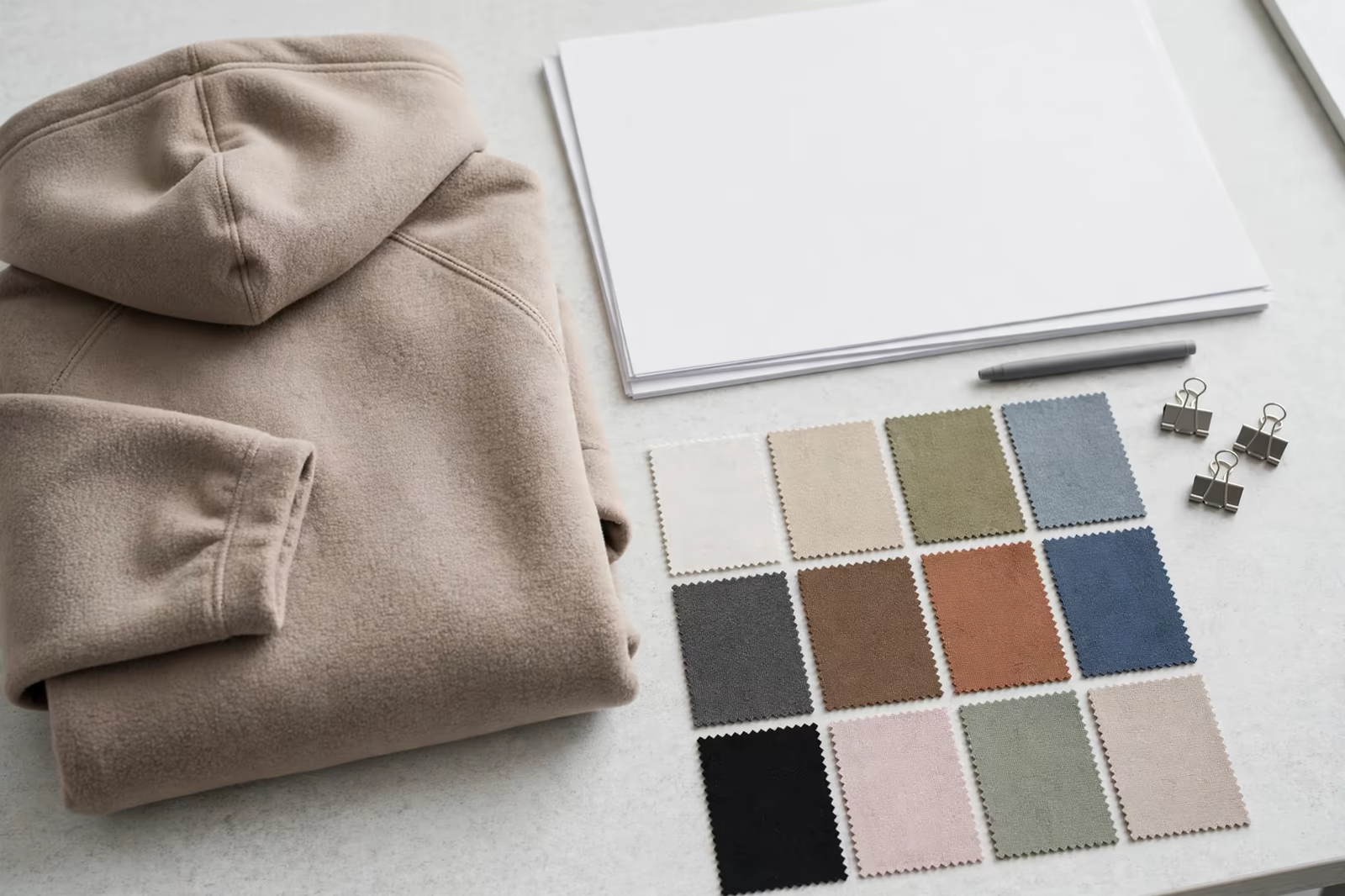
To see the checklist working, picture one enquiry done well. A buyer wants a fleece hoodie for a staff programme: the style is photographed and measured, the fabric is named by fibre, construction and weight with two colours referenced to a standard, and the embroidery artwork is attached as a vector file with size and chest placement marked.
Quantities per colour and the size ratio are stated, packing is specified as individually bagged with size stickers, and the commercial section names the trade basis, the destination port and the delivery window the season needs. That enquiry can be costed properly on the day it arrives, compared fairly against any other factory’s answer, and defended line by line if a number is questioned. It is not longer than a vague enquiry by much. It is simply finished.
Sending It and Following Up
The checklist is assembled; how it travels still matters. A professional RFQ arrives as one self-contained document that a costing team can work from without archaeology through an email thread, and it states what happens next so the factory can plan its answer.
- One document containing the full specification, artwork attached
- A named contact who can answer questions without a committee
- The response deadline you are working to, stated honestly
- What the decision depends on: price, sampling, capacity or all three
- A commitment to answer the factory’s clarifying questions quickly
- Feedback promised to unsuccessful factories, and actually given
That last habit builds the bench of factories who answer your next enquiry first and price it keenly. Sourcing is a repeated game, and the buyers who treat quotation as a professional exchange, complete at both ends, find the whole market works harder for them.
Frequently Asked Questions
What is the single most important item in an RFQ?
The fabric specification, because fabric carries the largest share of the garment’s cost. A precise fabric line, fibre, construction, weight, colour and finish, removes the biggest guessing space in the quotation and makes every factory price the same material.
I do not have final artwork yet. Should I wait before asking for prices?
Ask, but declare the artwork’s state and describe the design’s size, placements and colours as closely as you can. The factory can quote with a stated allowance. What damages accuracy is artwork described as final that changes after screens are made.
Should I include my target price in the RFQ?
You can, and many buyers do. A realistic target tells the factory where the specification must flex if the number is unreachable. An unrealistic one produces either silence or a quietly weakened specification. If you share a target, expect an honest answer about what it buys.
How long should a factory take to answer a complete RFQ?
A complete enquiry deserves a prompt, considered answer; the factory must cost fabric, making and decoration properly rather than guess. Judge the reply on completeness as much as speed: a fast quote missing half your specification is slower, in the end, than a careful one.