
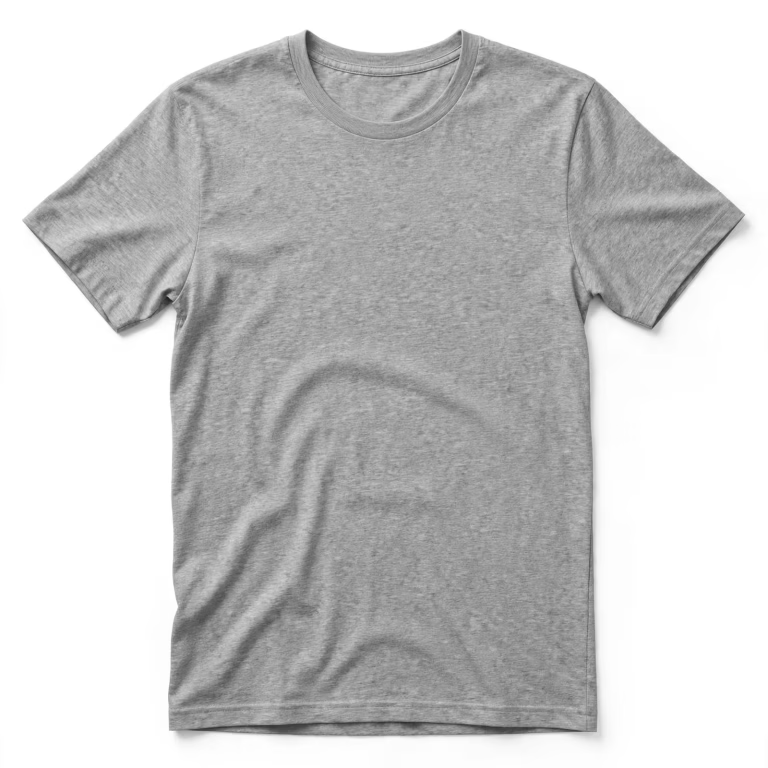
Heather Grey Undershirt T-Shirt Manufacturer in Bangladesh
An undershirt succeeds by disappearing: it has to sit smooth under a shirt, add no ridge at the collar, no bulk at the cuff, and no heat of its own. This heather grey undershirt is cut close in a fine lightweight jersey for exactly that job. As an undershirt manufacturer in Bangladesh, we make it to order for underwear and basics brands that sell base layers in steady multi-pack programmes.
We supply basics brands, apparel importers and private label buyers across the USA, UK, Germany, Canada and Australia. The heather grey is the middle shade of the undershirt family, running on the same pattern as the white and charcoal versions, so a multi-pack programme can mix shades on one fit and one size chart.
Fine jersey is less forgiving than standard tee cloth: every seam and hem is felt through the garment worn over it, so seams are sewn flat, hems are kept narrow, and the whole garment is checked for smoothness by hand at finishing.
- Undershirt t-shirt in heather grey fine jersey
- Close base-layer fit that sits smooth under a shirt
- Flat seams and narrow hems that leave no ridge
- Your woven label, hang tag and multi-pack packing
A Fine Collar That Hides Under a Shirt
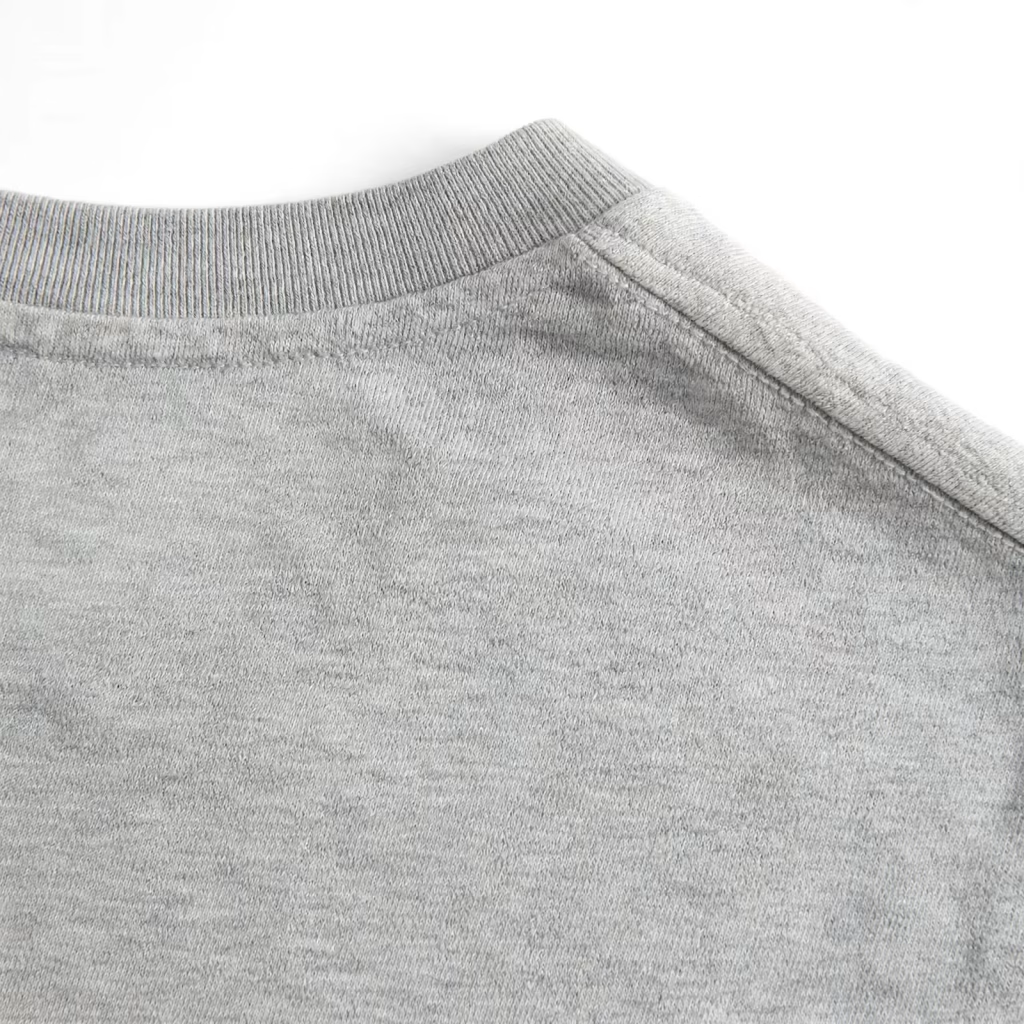
The close view shows the collar and shoulder built for layering: a fine, narrow ribbed band that lies flat and stays below the collar line of a shirt worn over it, and shoulder stitching sewn flat so no ridge prints through. The neck opening is cut to sit close without pulling, because an undershirt collar that peeks or sags is the first thing a customer rejects.
- Fine, narrow collar band that lies flat under a shirt
- Flat shoulder stitching, no ridge to print through
- Neck opening cut close, without pulling or sagging
Fine Heather Jersey, Light on the Skin
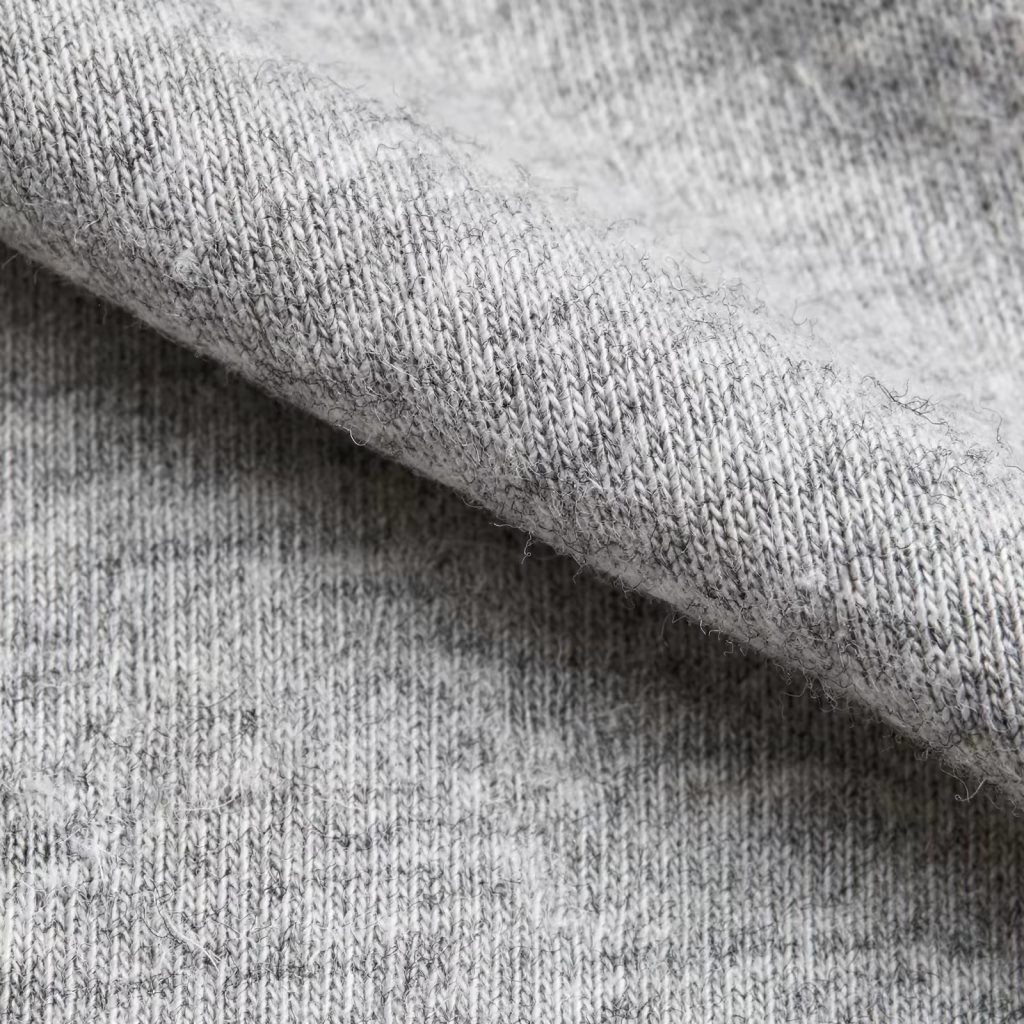
In the close view the heather grey jersey is fine and light, its yarns a mix of grey tones that give the heather its depth. The cloth is a step lighter than day-tee jersey, chosen so the layer adds warmth without weight. It is washed before cutting, so the close fit approved on the sample is the fit that returns from the wash, and the heather tone is held evenly across a size run.
- Fine, lightweight knit a step lighter than day-tee jersey
- Heather tone mixed evenly and held across sizes
- Fabric washed before cutting, so the close fit stays true
A Close Fit, Graded as a Base Layer
The undershirt body is graded as a base layer, not as a small day tee: it follows the body without clinging at the stomach, the sleeves sit close so they do not bunch inside a shirt sleeve, and the body is long enough to stay tucked. Each of those points is a pattern setting, checked on the sample in the way the garment will actually be worn, under a shirt.
- Base-layer grading, close without clinging
- Sleeves cut close so they sit smooth inside a shirt
- Body length set to stay tucked through the day
Product Details
| Item | Heather Grey Undershirt T-Shirt |
| Category | T-Shirts |
| Fabric | Cotton single jersey, fine lightweight knit |
| Neckline | Crew neck with fine ribbed band |
| Sleeves | Short sleeves, narrow double-needle hems |
| Sizes | XS to 3XL, graded to your size chart |
| Colours | Heather grey as shown, white and charcoal on the same pattern |
| Branding | Private label, hang tag, print, embroidery, packing |
| Minimum order | Our standard minimum of 1,200 pieces per style in up to two colours |
| Made in | Bangladesh |
Read More
Pattern Making and Size Grading
Undershirt patterns are drawn for the order and graded as base layers: close through the body without squeezing the larger sizes into a compression fit. The approval sample is tried under a shirt before it is signed off, because an undershirt judged flat on a table has not yet been judged at all.
- Base-layer patterns made from your chart or our undershirt block
- Close fit held in proportion from XS to 3XL
- Sample approved worn under a shirt, as customers wear it
Private Label and OEM Production
Your basics branding is applied the way your range already does it: your label at the back neck in your format, size and care labels in your layout, and a garment body kept completely free of anyone else’s marks, which is exactly how a base layer should leave production.
- Woven or printed main label, plus size and care labels in your layout
- No outside branding on the garment body
- Hang tags, barcode stickers and multi-pack packing to your format
Bulk Production and Quality Control
Production follows the approved sample operation by operation. On fine jersey the checks lean on touch as much as sight: seams are run between finger and thumb for flatness, hems are checked for narrowness, and finished garments are measured so the close fit is the same at the end of the run as at the start.
- Fabric and trim checks before cutting begins
- Seams checked by hand for flatness on fine cloth
- Final check of measurements, stitching and pressing before packing
Packaging for Retail and Online Sales
Undershirts are sold in packs, so the folding is built for it: garments are rolled or folded flat to a uniform pack size, in the combination of shades your programme sells, with the size marked on the pack. Single retail bags and wholesale cartons follow the same size-sorted discipline as the rest of the range.
Shipping and Worldwide Delivery
Sea freight through Chattogram carries the finished cartons to the ports serving your market, and air freight is available when a programme date is fixed. The export file, fibre declaration and labelling papers are prepared for your broker as routine, and the three undershirt shades are planned into one shipment as a family.
How Ordering Works
Begin with a tech pack, artwork files or the undershirt you want reproduced, sent through the quote page. We reply with a per-piece price at your quantity and the fabric options for the style. Quantities and terms are written plainly on the MOQ and production page and payment terms page. A sample is approved first, and bulk production follows that approval.
Why Brands Source T-Shirts From Bangladesh
Every stage of this garment, from spinning the fine yarn to sewing the flat seams, sits inside one country, which is how basics programmes get fine jersey at multi-pack volumes. American and German basics brands anchor their underwear walls on this supply base, UAE buyers favour grey because it works under white and coloured shirts alike, and Argentine importers run the three shades as one family.
- Full local chain, from yarn and knitting to the finished garment
- Fine jersey sewing handled as a specialist operation
- Export paperwork and labelling handled as routine
Care and Wash Performance
Undershirts are washed more than any other garment a man owns, so the cloth is washed before cutting and the fit is settled before sewing. The fine collar band is knitted to return flat after washing, and the heather tone is mixed through the yarn, so it does not fade in patches the way a printed grey would.
Frequently Asked Questions
Can the undershirts be packed as mixed-shade multi-packs?
Yes. White, heather grey and charcoal run on the same pattern and size chart, so packs can be built in the shade mix your programme sells, folded or rolled to one pack size with the size marked on the outside of each pack.
Will the collar show above a shirt collar?
The band is cut fine and narrow and sits close at the base of the neck, so under a standard shirt collar it stays out of sight. If your programme uses open-collar shirts, the sample can be checked against the collar style your customers wear most.
Is the fit the same as your regular t-shirts in a smaller size?
No. The undershirt is its own base-layer pattern: closer through the body, closer in the sleeve, and longer to stay tucked. Ordering a regular tee a size down gives a short, tight day shirt, not an undershirt, which is why the two patterns are kept separate.
Can the undershirt be made with a V-neck instead?
Yes. A V-neck version runs on the same base-layer block for programmes where the undershirt is worn under open-neck shirts. The V depth is set on the sample, kept modest so the band stays hidden, and the rest of the garment is unchanged.