
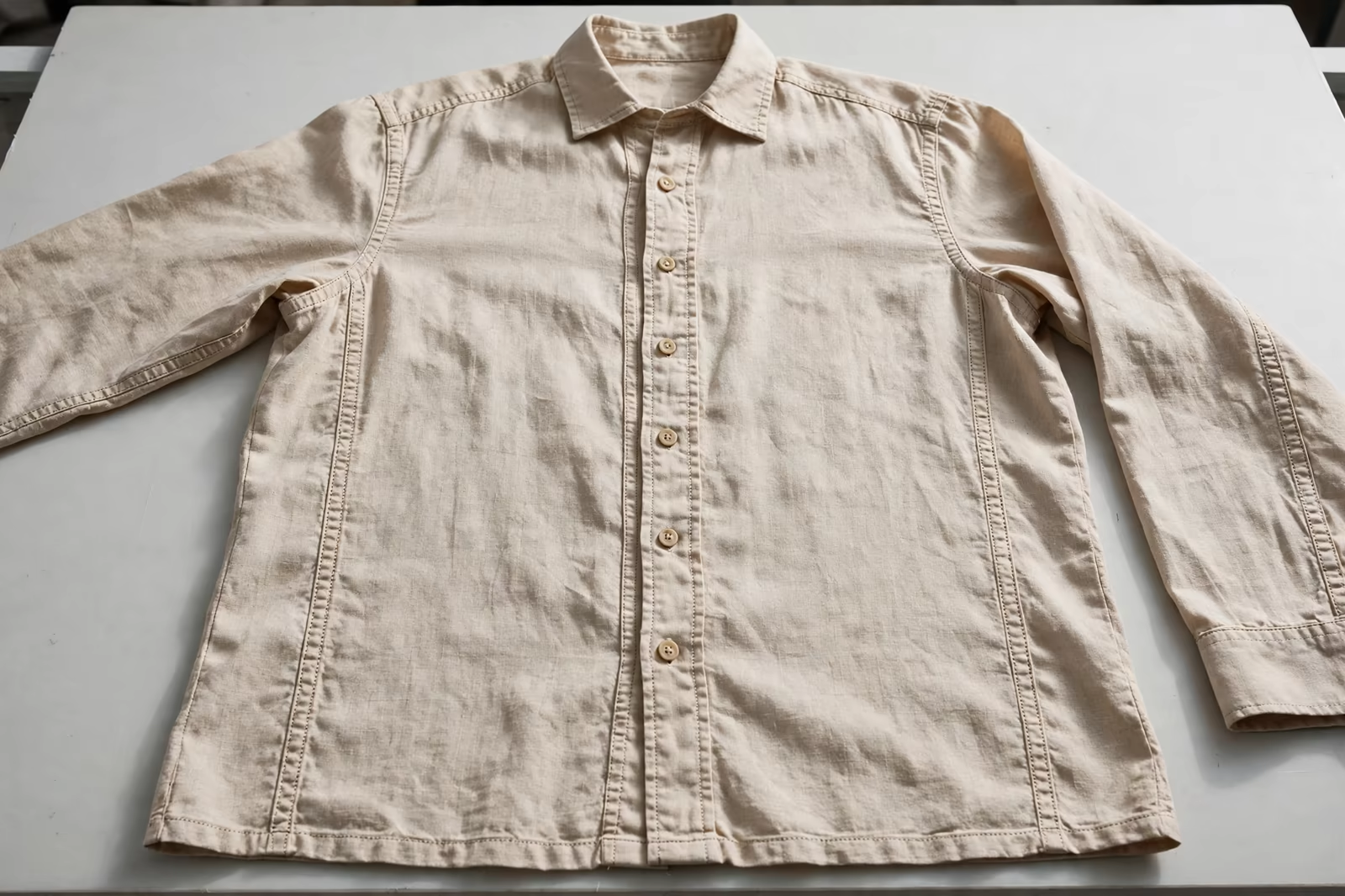
A garment sample is a promise made physical, and the buyer’s job is to interrogate it before the promise is multiplied by thousands. Professional evaluation is a method, not an impression: the sample is measured, stressed, washed, compared with its own specification and read for what it reveals about the factory that made it. This guide teaches that method, for buyers in the USA, the UK, Germany, Canada and Australia working with a clothing manufacturer in Bangladesh.
Everything below happens at a table, with a tape, a specification and a notebook. The glamour is in the rigour, and the rigour is what bulk production will be judged against for years.
Before the Sample Arrives: The Evaluation Setup
Evaluation begins before the parcel does, with the standard the sample will be judged against made explicit. A sample assessed against memory is a compliment machine; assessed against documents, it becomes evidence.
- The tech pack and measurement chart printed and on the table
- The fabric standard or approved swatch beside it
- A measuring tape, a ruler and a seam gauge you trust
- The evaluation form prepared: construction, measurements, fabric, trims, finish
- Photographs planned: front, back, details, faults, before anything is washed
- Enough time protected; a sample rushed is a sample wasted
Our standard minimum of 1,200 pieces per style in up to two colours, set out on the MOQ and production page, is the multiplication factor standing behind every sample decision. Evaluate as if the order depends on it, because it does.
First Reading: Construction and Workmanship
The first pass is visual and tactile: how the garment is built, and what the building reveals about the hands and habits behind it. Workmanship at sample stage is the factory’s honest signature, written before anyone knew you would read it closely.
- Seams straight, even and appropriate to the fabric and the stress they carry
- Stitch density consistent, with no skipped, loose or wandering lines
- Collars, cuffs and plackets symmetrical and lying as designed
- Hems level, corners finished, no raw edges hiding inside
- Buttonholes clean, buttons secure, fastenings aligned under tension
- Inside finish as considered as the outside; quality hides nowhere
Turn the garment inside out early. Factories dress the outside for the photograph; the inside is where their standards live when they think nobody is grading them. Grade them anyway; the habit is the whole difference between buying and hoping.
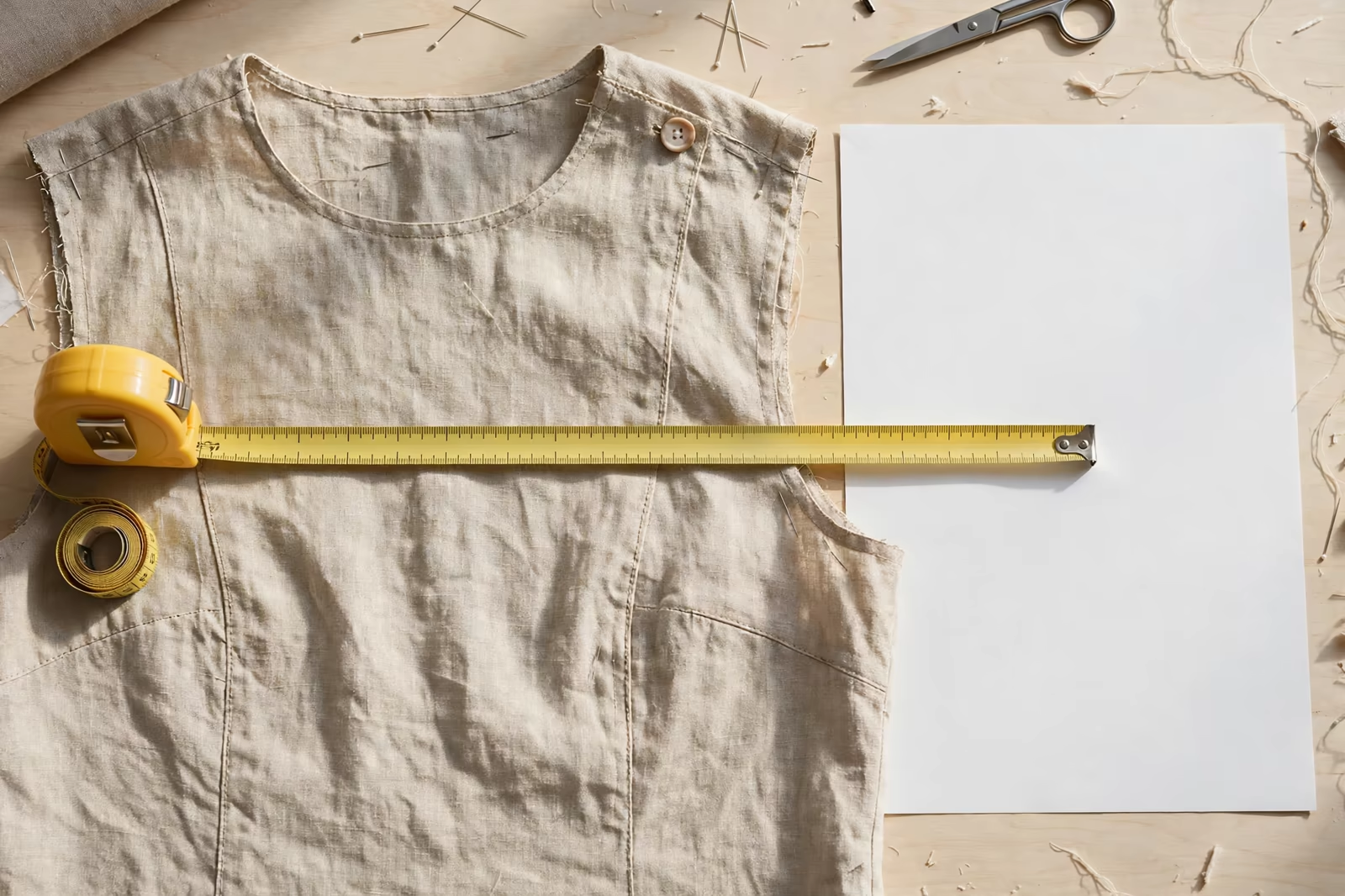
Measurement: The Tape Against the Chart
The second pass is arithmetic. Every key measurement on the chart is taken on the garment, recorded beside its tolerance, and judged as a pattern: single misses are accidents, systematic misses are information.
- Measure flat, relaxed, exactly as the chart’s method describes
- Record actuals, not verdicts; the numbers argue later
- Check both sides of paired measurements for symmetry
- Note where the sample sits inside tolerance, not only whether it passes
- Flag any measurement achieved by distortion elsewhere
- Repeat critical measurements after washing; movement is data
A sample at the edge of tolerance everywhere is a warning written in numbers: bulk production will drift, and drift from the edge is failure. Centre-seeking samples are the ones that survive factories.
Fabric and Trims: The Materials on Trial
The third pass judges the substance: whether the fabric is what was specified and behaves as the garment’s life requires, and whether the trims are partners or weak points.
- Hand feel, weight and drape compared against the approved standard
- Fibre and construction checked against the specification’s claims
- Colour against the standard under more than one light
- Stretch and recovery tested by hand where the design depends on them
- Trims handled roughly: zips cycled, snaps pulled, elastic stretched and released
- Labels and branding examined for accuracy, placement and durability
The services a factory offers, set out on pages like services, frame what can be specified; the evaluation exists to prove that what was specified is what arrived.

The Wash and Wear Test
A sample that has not been washed has only been introduced, not evaluated. Washing is where fabrics confess: shrinkage, twisting, colour behaviour, print durability and the garment’s manners after the honeymoon.
- Wash exactly as the care label instructs the customer to wash
- Measure again and compare against the pre-wash record
- Check seams for pucker, prints for crack, colours for bleed and fade
- Wear it, or have it worn, through a real day of the garment’s real life
- Judge drying behaviour and whether pressing restores the intended look
- Repeat for a second cycle if the garment’s life is wash-intensive
Record the verdicts against the original scores. The delta between new and washed is the single most predictive number in sample evaluation, and factories respect buyers who bring it to the conversation.
Wash the sample the way the harshest reasonable customer will, because that customer exists and buys early. A garment that survives your honest worst case will survive the market’s average case with its reputation intact, and the ones that fail in your laundry have failed at the cheapest possible address: yours, before the order.
Writing the Evaluation
The final pass is the document: a structured verdict the factory can act on and both sides can file. Vague feedback produces vague corrections; an evaluation written like an engineer produces a second sample that answers the first one’s faults.
- Score or comment per section, with measurements quoted
- Photographs of faults, marked, beside photographs of the standard
- Corrections stated as requirements, questions stated as questions
- Priorities ranked: what blocks approval, what merely matters
- The approved elements protected explicitly, so revision keeps them
- One document, one version, sent once, through get a quote channels or your usual thread
Keep the evaluated sample itself, tagged, as the physical half of the document. When bulk arrives, it is judged against this garment and this paper, and disputes end quickly in the presence of both.
What the Sample Says About the Factory
Every sample is two evaluations in one object: the garment’s, and its maker’s. Professional buyers read the second one deliberately, because it predicts everything the first one cannot, including how the factory will behave at bulk, under pressure, in your absence.
- Accuracy against the specification shows instruction-following, the core factory virtue
- Finish inside and out shows standards that survive without supervision
- Faults volunteered by the factory show honesty you can build on
- Faults hidden or argued show the relationship’s future weather
- Speed and care of the sample’s packing show respect for the product
- The accompanying documents show whether the office matches the floor
Score these as deliberately as the stitching. A beautiful sample from a factory that hides its faults is a worse bet than a flawed sample from one that flags its own, because production is long and unsupervised, and character scales better than luck.
From Evaluation to Approval
The evaluation ends in one of three verdicts, and professionalism consists of making the verdict unmistakable: approve, approve with corrections, or reject with reasons. Each carries a different next step, and confusing them is how bad bulk gets made from good intentions.
- Approval stated in writing, naming the sample and its date as the standard
- Corrections listed as conditions, with a revised sample required or waived deliberately
- Rejection explained by section, so the factory learns rather than guesses
- The sealed approved sample retained by both sides where the stakes justify it
- Bulk judged against the approval, never against a memory of it
That sealed-sample discipline is the quiet machinery behind every consistent reorder you have ever admired. The garment in the sealed bag is the contract’s most honest page, and it settles arguments that emails would run for weeks.
The Traps Around the Table
Even rigorous buyers fall into a handful of evaluation traps, each with the same shape: a shortcut that feels like experience and behaves like negligence. They are worth naming because naming is most of the defence.
- The beautiful light trap: approving colour in one flattering light only
- The founder trap: judging the sample by the relationship’s warmth
- The deadline trap: converting evaluation into approval because production is waiting
- The photograph trap: signing off from images of a garment never handled
- The comparison trap: grading against the last supplier instead of the specification
- The silence trap: assuming unmentioned details will be made as imagined
That last trap deserves its sentence: whatever the evaluation does not mention, production will decide alone. The written document is therefore not a record of the evaluation. It is the evaluation, in the only form the factory can actually use.
Evaluating as a Team, and Keeping the Skill
In larger buying organisations the sample passes several desks, and the method must survive the journey: designer, technician, merchandiser and quality lead each grade their own territory against the same document, so the factory receives one verdict instead of four opinions.
- One evaluation form, sections owned by named specialists
- Disagreements settled against the specification, not by seniority
- A single consolidated document sent to the factory, internally complete
- The file kept across seasons, so standards outlive staff changes
- Juniors trained on real evaluations, with verdicts reviewed before sending
That file is an asset with a quiet compounding value: within a few seasons it contains the organisation’s entire practical knowledge of what its garments must be. Businesses that keep it buy measurably better every year almost entirely by accident.
Frequently Asked Questions
How long should sample evaluation take?
Long enough to measure, wash, wear and write properly, which for most garments is a focused session plus the washing cycle, not a glance across a desk. The sample is the cheapest quality gate in the entire order; starving it of time is the most expensive economy in buying. Protect the session in the calendar the way production protects the line: visibly, and against all comers.
What are the most common sample faults buyers miss?
Inside finish, measurements at the edge of tolerance, and wash behaviour. Buyers look at the front, approve the colour, and skip the three examinations that predict bulk quality. The inside, the tape and the washing machine are where professional evaluation earns its name.
Should I reject a sample for one fault?
Judge the pattern, not the incident. A single fault with an obvious cause is a correction; the same fault class appearing across construction, measurement and finish is a capability verdict. Score by section, rank by severity, and let the written evaluation make the decision visibly fair.
How many sample rounds are normal?
As many as the corrections honestly require, with each round answering the previous round’s document. Rounds multiply when feedback is vague or the specification moves; they converge quickly when the evaluation is precise. The count is a symptom, and the document is the cure. Keep each round’s sample with its document and the convergence becomes visible as a row of garments improving in order, for anyone to read.