
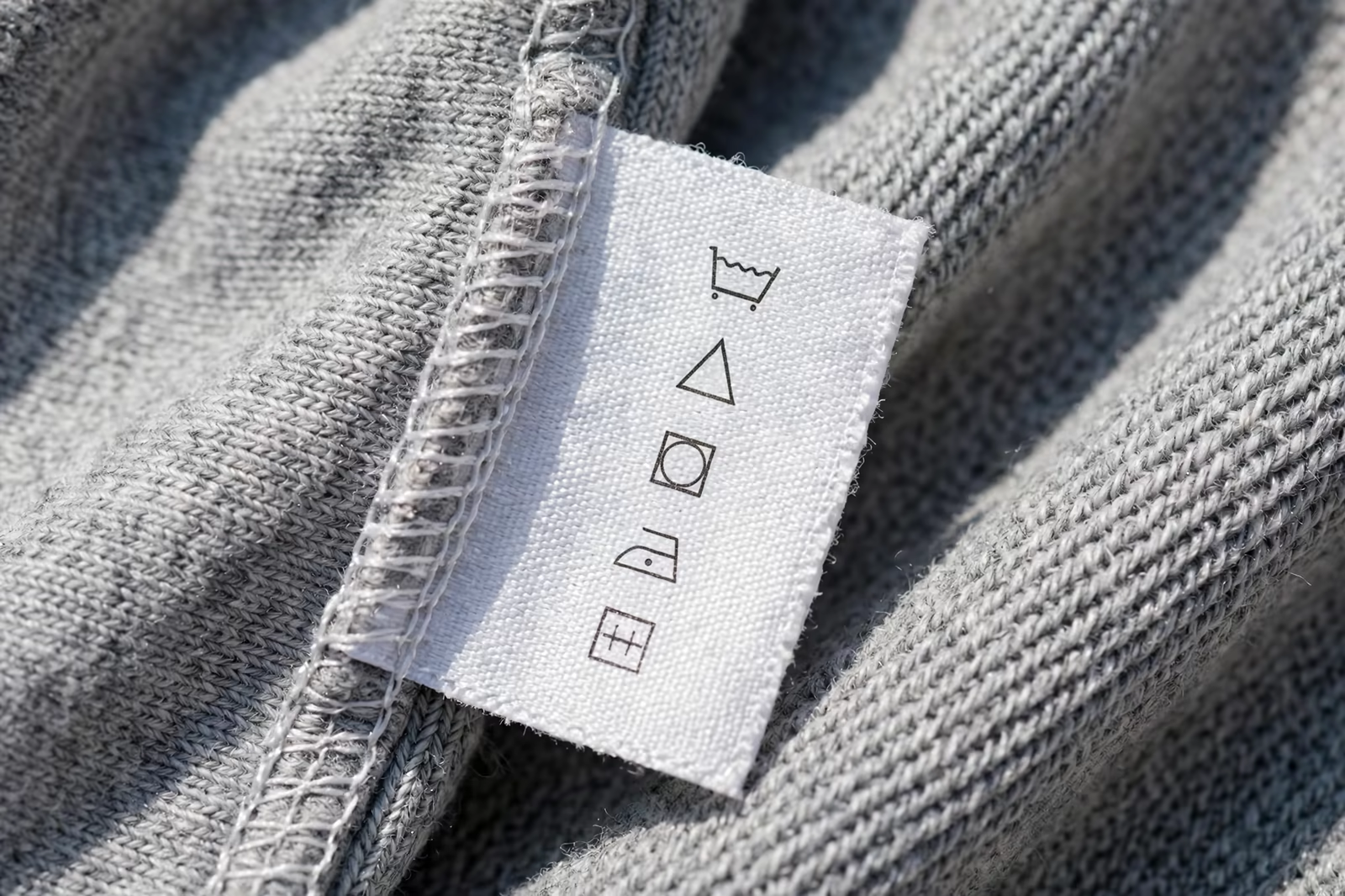
Every garment carries a small printed treaty between the maker, the seller and the law: the care and fibre label. It looks like the least important part of the product, a sliver of ribbon in a side seam, and it is in fact one of the most regulated. Three of the world’s great clothing markets, the United States, the United Kingdom and the European Union, each dictate what that label must say, in what words, in what order and in what language, and they do not agree with each other. This guide sets out the rules plainly, so a brand can label once, correctly, per market.
Label content is agreed inside our brands programs, mapped against the destinations in our market area, and confirmed with buyers through contact before production.
What Every Label Must Answer
Strip the three systems to their shared skeleton and five questions appear. What is the garment made of, in the fibre names the law recognises? How must it be washed, dried, ironed and otherwise cared for? Where was it made? Who stands behind it in the market where it is sold, the brand, importer or responsible company? And is any special warning owed, for coatings, flammability or treatments? A label that answers all five, in the destination’s own legal dialect, passes; a label missing any one of them is a shipment waiting for an argument.
The brand owns the answers, because in law the product is the brand’s; the factory owns the faithful printing and sewing of them, garment after garment, and the checking that the label in the seam is the label that was approved. Both halves matter: perfect artwork sewn into the wrong style is still a mislabelled garment.
Fibre Content: Names Are Legal Words
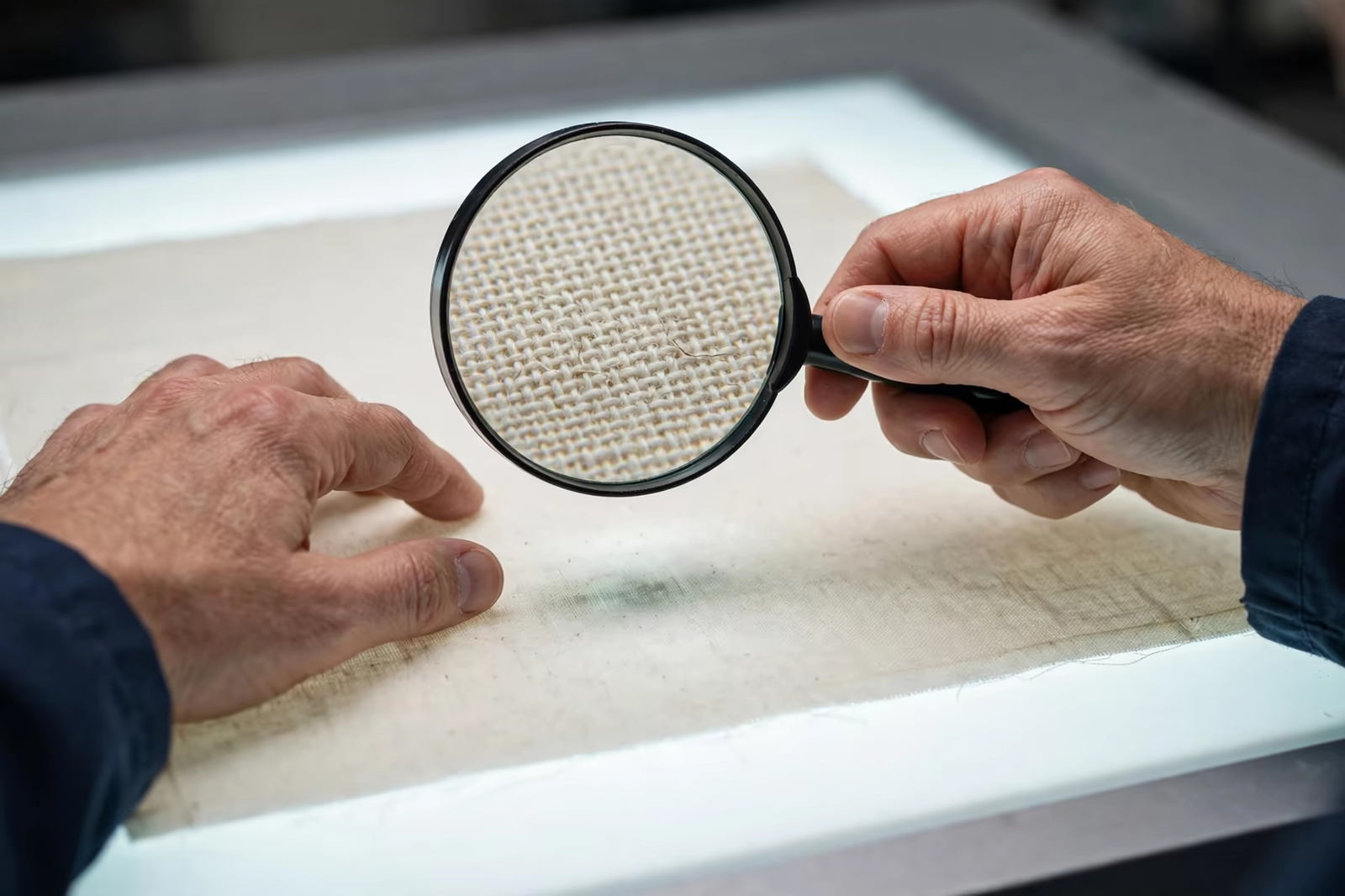
Fibre names are not descriptions, they are legal terms. Each market keeps its own list of permitted generic names, and a fibre must be declared by its official name in that market, in descending order of weight, with percentages. The same fibre can carry different official names across systems, which is why a global label is drafted market by market rather than translated word by word.
Tolerances exist for the honest small variations of manufacturing, but they are tolerances, not rounding habits, and blends must be tested, not estimated from the yarn invoice. Parts of a garment that differ, a lined jacket, a reinforced knee, an elasticated cuff, follow their own rules about separate declaration, and trims below set thresholds may be excluded, each system drawing those lines in its own place. The working rule for brands: the fibre statement comes from a test or a verified specification, and it is the last thing approved, after the fabric itself is final.
Care Instructions: Symbols and Words
Care labelling splits the markets by philosophy. The United States requires care instructions in words, with symbols permitted alongside; the European and British approach leads with the standardised symbol system, the tub, triangle, square, iron and circle that cross languages without translation. A brand selling into both worlds commonly carries words and symbols together, provided both say the same thing, because a symbol that contradicts the sentence beside it is worse than either alone.
The instructions must be true for the most delicate part of the garment, the print, the trim, the embellishment, not only the base cloth, and they must be the care the garment actually needs, neither braver nor more timid: a wash instruction harsher than the garment survives is a defect, and one needlessly restrictive is a quiet tax on the product’s usefulness. Care content is therefore set after wash testing, by the people who read the test results.
Country of Origin: Made In, Stated Plainly
Origin marking follows its own logic in each system: the country where the garment was made, declared in the prescribed form, permanently, near the fibre and care information. For garments made in Bangladesh, the declaration is simple and non-negotiable in its accuracy: the origin is where the substantial making happened, not where the fabric was woven, the brand is headquartered or the goods were inspected.
Origin interacts with trade rules and marketing alike, and errors here are the classic border stoppage. The label artwork states it once, plainly, in the form the destination expects, and it never migrates between styles without checking, because two products in one range can honestly carry different origins when their making differs.
The United States: FTC Rules in Brief
American labelling rests on federal textile law administered by the Federal Trade Commission: fibre content by official generic name and percentage, the manufacturer’s registered identification or the responsible company’s name, and the country of origin, with care instructions required under the separate care labelling rule. Labels must be permanent, legible and present at the point of sale, and the information must match the advertising and the invoice trail.
For importers, the discipline is documentary as much as physical: the fibre and origin story told on the label is the same story told to customs, and discrepancies between the two are what draw examinations. Brands entering the United States build one source of truth for composition and origin per style and let every document, label, listing and entry, quote from it.
The UK and EU: Textile Regulation in Brief
The European system, which the United Kingdom’s rules closely parallel, is built on the textile names and labelling regulation: fibre composition by the regulation’s official names, in the Union’s languages for the market of sale, with special provisions for multi-component garments, linings and animal-derived parts, which must be declared in words. Care symbols follow the international standard under licence, and the responsible economic operator’s identity anchors traceability.
Two practical consequences follow for brands. Language is a production variable: a range sold across several European markets may need its composition in several languages on one label, which is a design and legibility problem solved at artwork stage, not at the sewing line. And the rules move: fibre names, recycled-content claims and digital labelling proposals evolve, so the label file for a continuing style is reviewed each season rather than inherited blindly.
Size, Language and Legibility: The Physical Label
A label can be legally perfect and practically useless. Regulations assume the information is legible and permanent: lettering that survives the garment’s own washing life, print that does not crack off the ribbon, a label that does not dissolve, fade or detach before the product does. Durability is tested the same way the garment is, through its stated care cycle, because a care label destroyed by its own instructions is a small irony with legal weight.
Multilingual composition lines crowd the available space, which makes label size a design decision with compliance consequences: too small, and the type fails the customer even where it passes the regulation; too large, and comfort and cost complain. Experienced brands set a house label architecture per market group, sizes, layouts and language order fixed, so each new style fills a proven frame instead of reinventing the ribbon.
Warnings, Treatments and Special Cases
Beyond the core five answers, particular products owe particular words. Children’s sleepwear meets flammability regimes in several markets. Coated, bonded or water-repellent garments carry their construction in the composition story. Real fur and leather components trigger their own declaration duties in the European system. Down, feather, wool and recycled claims each stand on definitions a brand must actually satisfy before printing them.
The safe pattern is a checklist per style: core content, then the special-case scan, signed off before artwork. It is unglamorous work with an outsized return, because almost every labelling failure in the trade is not a forged claim but a forgotten category, the one style in the range that owed an extra line nobody remembered to add.
Where the Rules Are Heading: Claims and Digital Information
Two currents are reshaping the little label. The first is claims discipline: recycled, organic and other environmental statements on labels increasingly sit under green-claims rules that demand evidence and precise wording, so the label file now travels with substantiation, not just artwork. The second is digital: QR codes and product passports are moving part of the information load off the ribbon and onto a page the brand maintains, in some proposals carrying composition, care and traceability together.
Neither current abolishes the sewn label in the major markets today, and brands should be wary of any plan that treats the physical label as already optional. The prudent course is a label that fully complies on its own, with digital layers added as enrichment, and a file discipline that can absorb new required fields without an artwork crisis each season.
From Artwork to Side Seam: Execution
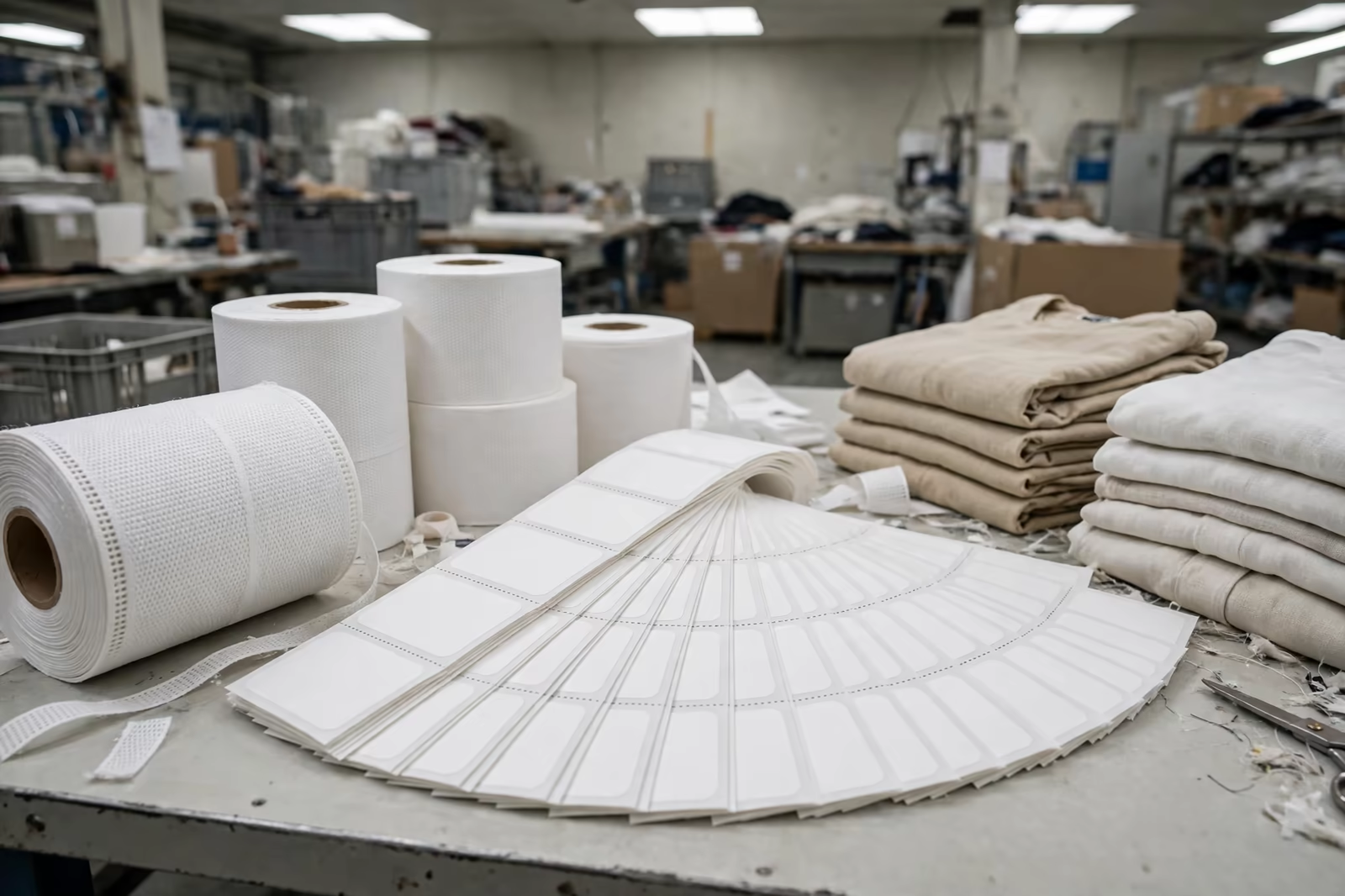
Approved content still has to survive production. Label artwork is proofed character by character, because a percentage transposed at the printer is a mislabelled production run; the printed labels are checked against the proof on arrival; the sewing position, side seam, centre back, waistband, follows the destination’s permanence and visibility rules; and the first finished garments are audited label against spec before bulk proceeds.
Our programs run at a standard minimum of 1,200 pieces per style in up to two colours, and every piece carries its label. The audit habit scales the same way the sewing does: golden garment checked, first pieces checked, random pieces checked, so that the ten-thousandth label says what the first one promised.
Frequently Asked Questions
Can one label design serve the US, UK and EU together?
Often, yes, if it is designed as a combined label from the start: fibre names that satisfy each system’s official list, care given in both words and symbols that agree, origin stated plainly, and the responsible parties for each market identified. Where a name or a duty collides between systems, the label splits by destination. The design question is asked at artwork stage, where the answer is still cheap.
Who is legally responsible for label accuracy, the brand or the factory?
The party placing the product on the market, the brand or importer, carries the legal responsibility for the content’s accuracy in each system. The factory is responsible for executing the approved content faithfully: printing what was proofed and sewing it into the right garments. Sensible programs make both duties explicit, with the brand signing the content and the factory proving the execution.
Do fibre percentages have to come from laboratory testing?
They have to be true within each system’s tolerance, and testing is the reliable way to know. Yarn and fabric specifications are a starting point, but finishing, blending variation and multi-component construction move real composition. Brands supplying major retailers test per style and season, and keep the reports with the label file as the evidence behind the printed numbers.
When in development should label content be finalised?
After the fabric and construction are final, and before pre-production: composition depends on the finished fabric story, care on wash testing, and origin and responsibility lines on the selling plan. Labels finalised earlier get revised; labels finalised later delay packing. The style’s compliance checklist, not the calendar’s optimism, decides the moment.