
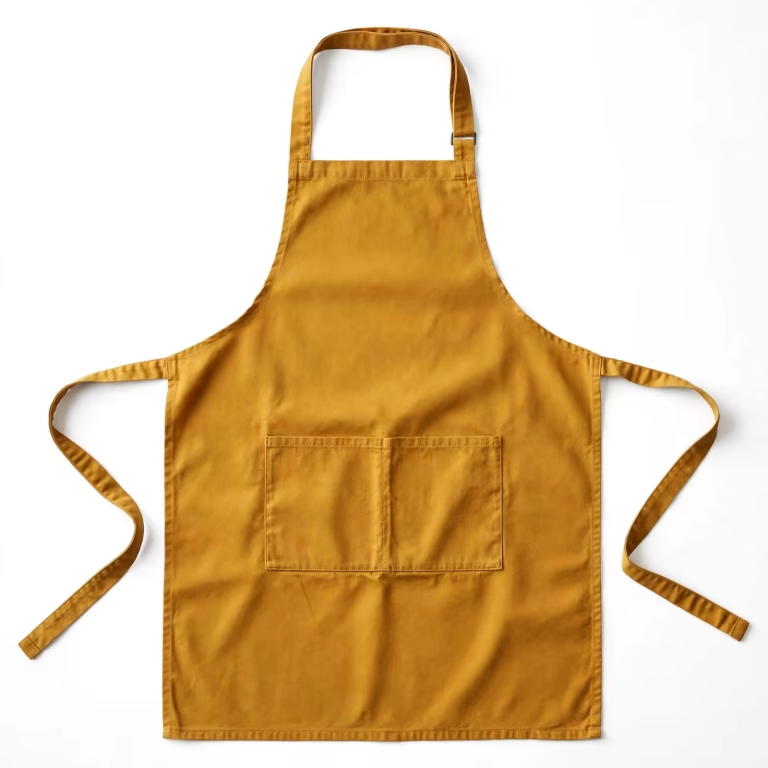
Sturdy Bib Aprons From Bangladesh for German Restaurants and Retail
German buyers set a high bar for workwear, and aprons are no exception: seams must sit straight, cloth must hold its colour, and the hundredth apron must match the first. Siatex Bangladesh manufactures aprons in Bangladesh for German restaurant groups, bakery chains, butchers and workwear retailers, and also exports to the USA, UK, Canada and Australia for buyers who sell one range across several countries.
Our apron work begins with precision. Give us a measurement chart, a technical drawing or an original apron from your current range, and our pattern team rebuilds it exactly, then sews a sample that your own quality people can measure, wash and wear before bulk production is released.
German apron programmes usually confirm the following points with us first:
- Cross back straps that take weight off the neck entirely
- Classic neck strap versions for traditional service styles
- Divided pockets with bar tacked corners for heavy daily use
- Canvas cloth for grill and butcher work, twill for service
- Embroidery placed with millimetre accuracy on the bib
- Thread colours matched to the buyer’s own shade references
- Long ties with cleanly finished ends that knot securely
- Reinforced stitching where straps meet the bib corners
- Your woven labels, care labels and hangtags fitted in house
- Cartons packed by colour and size for fast warehouse intake
Once a style passes sampling, its chart, cloth and trims are locked into an order file that every repeat order follows. A workwear retailer in Austria building a matching apron line for Alpine hotels can begin from the same specification, and Swiss buyers often adopt the identical chart for their own ranges.
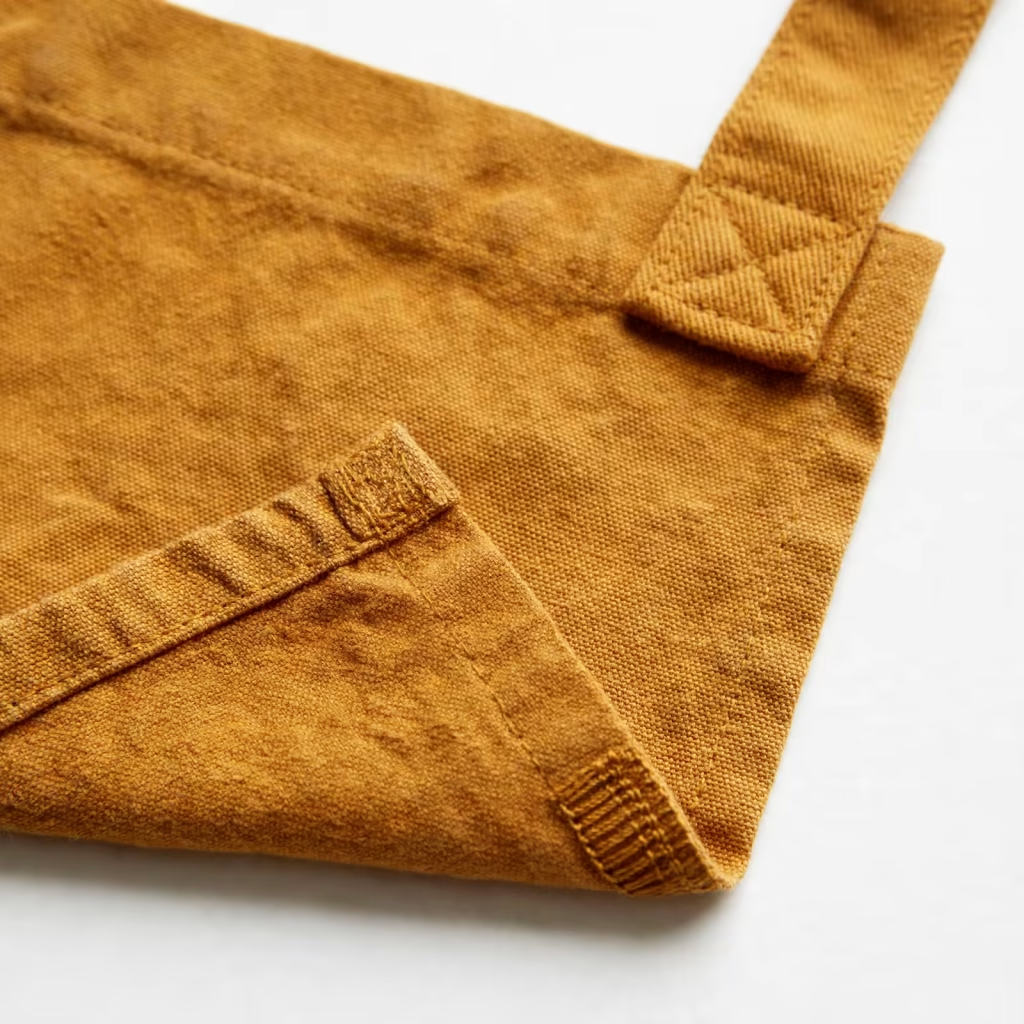
Canvas for Heavy Work, Twill for Daily Service
No single cloth serves every German kitchen well. Grill stations and butcher counters destroy light fabrics, while a sommelier’s apron should fall smoothly and carry fine embroidery without puckering. We therefore quote most apron styles in two cloth families and let the buyer place each where it belongs.
How the Two Cloth Families Behave
Canvas is a plain, tight weave with real body. It resists abrasion, holds a divided pocket upright under tools and weight, and keeps its shape through industrial washing. Cotton twill shows a fine diagonal line, drapes closer to the body and presents printed or stitched branding on a calmer surface. Both accept the same straps, pockets and labels, so a mixed order still reads as one range.
- Tight canvas weave for grill, butcher and workshop aprons
- Cotton twill for dining room and retail counter service
- Cotton rich blends where faster drying is a priority
- Cloth weights recorded on the order sheet for every style
Shrinkage is tested on the actual production cloth, and the pattern allowance is set from that result rather than a generic figure.
Cross Back Straps and Other Wearer Comforts
Neck ache is the complaint behind many apron redesigns. A full bib hanging from a thin neck strap concentrates weight exactly where staff feel it by the end of a long shift. Cross back straps move that load onto the shoulders, with the straps crossing behind and joining the waist ties, so nothing presses on the neck at all.
Details That Decide Whether Staff Keep the Apron On
We set strap width, crossing point and tie length from the wearer trials on your sample. Pocket depth is matched to what your team carries, from tasting spoons to order pads, and pocket corners receive bar tacks because that is where aprons tear first. Edges are bound or hemmed cleanly so the apron looks as disciplined as the kitchen it serves.
Waist aprons deserve a mention for buyers building a full service range. Many German restaurants pair a long bib apron in the kitchen with a short waist apron at the counter, sharing cloth, colour and branding across both. We cut the waist version from the same cloth book, with its own pocket layout sized for pads and pens at hip level, so the two garments read as one uniform family.
Seasonal programmes are planned the same way. A bakery chain that changes apron colour for a Christmas range, or a brewery dressing staff for a summer festival, works from the locked pattern and simply books a new cloth colour against it. The fittings, measurements and branding positions do not move, which keeps photography, staff training and replacement ordering simple across the year.
OEM Apron Production for German Workwear Brands
Workwear brands and catalogue retailers in Germany buy aprons under their own names, and we sew them as an OEM manufacturer and exporter working strictly to the buyer’s documents. Your pattern, your cloth, your labels and your packing rules govern every stage.
- Pattern work from your chart, drawing or original garment
- Itemised prices showing cloth, straps, branding and packing
- Private label production with your labels fitted during sewing
- Packing to your warehouse or direct to your retail partners
- Inspection access for your staff or a nominated agency
- Order files kept so repeat runs match the first exactly
Brands frequently add matching pieces over time, such as waist aprons for service staff, and those follow the same charts and cloth book.
Documentation travels with the goods. Each order file closes with the final measurement record, the dye lot references and a packing summary, so your quality team can check a delivery against the same numbers our table used, without a chain of emails.
Colour and Measurement Control Before Dispatch
German quality teams ask two questions of every shipment: are the measurements inside tolerance, and does the colour match the approved standard? Our final checks answer both with records. Finished aprons are measured at bib width, body length, strap and tie length, and a colour sample from each dye lot is compared against your approved swatch.
- Key measurements recorded for every production batch
- Dye lot shades compared with the approved colour standard
- Embroidery position measured against the pattern coordinates
- Stitching density and bar tacks inspected at strain points
Shipping Aprons to Germany and Further Markets
Orders travel from Bangladesh through Chattogram port to German warehouses, and the same export routine serves our customers in the USA, UK, Canada and Australia. Carton contents, ratios and labels are fixed when the order is confirmed, so goods arrive ready for your intake checks.
Aprons pack densely, which keeps the freight cost per piece modest even for canvas weights. Retail buyers choose individually folded and tagged aprons, while uniform suppliers usually take folded sets sorted by colour. Clear carton faces listing style, colour and quantity help your team verify the delivery the day it lands.
A Measured Process From Chart to Carton
Precision work starts with complete documents, and we will help you complete them. A finished chart is best, yet a dimensioned sketch or one apron sent to us also works, and we will list precisely what remains open before the sample is sewn.
Sampling Checked Against Your Own Chart
The first sample is normally ready within seven to ten days of cloth and trims arriving. Measure it against your chart, wash it under your laundry conditions and mark any correction directly on the garment. Corrections are entered into the pattern file before cutting begins.
Transparent Pricing for Every Element
Each quotation separates cloth, straps and fittings, embroidery or print work, labels and packing. If a target price must be met, that breakdown shows which element can change, and by how much, without touching the quality points your customers notice.
Send Us Your Apron Specification
Charts, drawings, photographs or a single apron in the post all give us enough to begin. You will receive a costed sample plan, honest notes on cloth behaviour and a clear route to bulk production, explained before you place any commitment with our factory lines in Bangladesh.
Frequently Asked Questions
Can we choose cross back straps instead of a neck strap?
Yes. Cross back straps carry the apron’s weight on the shoulders and leave the neck free, which staff prefer on long shifts. The crossing point and strap width are set on your sample and then held for bulk.
Should we pick canvas or twill cloth for our aprons?
Canvas suits grill, butcher and workshop wear where abrasion is heavy, while twill drapes better for dining room service and shows embroidery neatly. Many buyers run both under one style, split by department.
How do you check apron colours before the order ships?
A cutting from each dye lot is compared with your approved swatch under standard light, and any lot outside tolerance is held back. Finished aprons are also shade sorted before folding and cartons are packed by lot.
Can several apron colours run under one style in a single order?
Yes. The pattern, fittings and branding stay identical while the cloth colour changes, and the order sheet records the ratio per colour so packing and cartons arrive sorted the way you asked.