
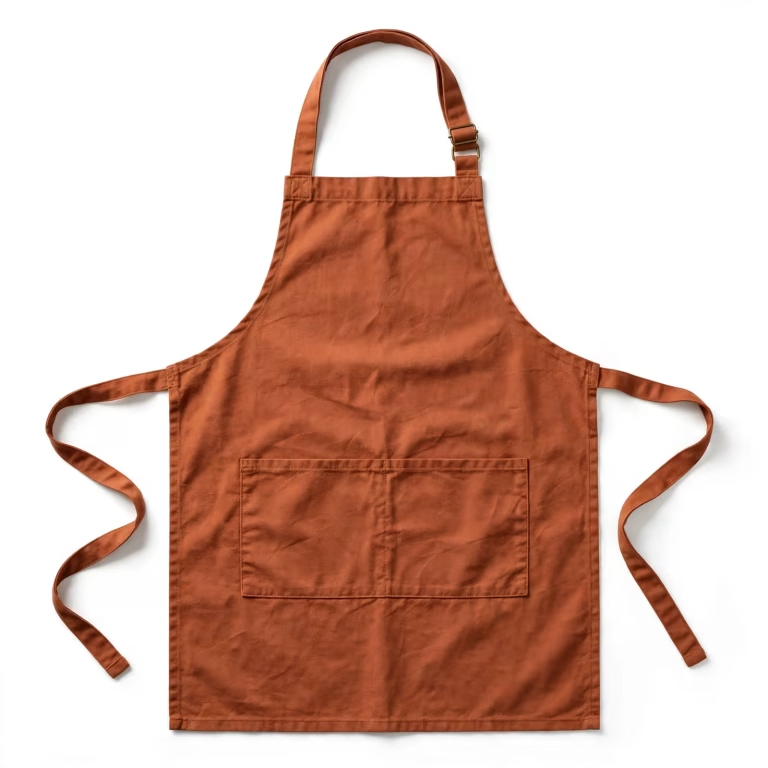
Aprons Sewn in Bangladesh for Canadian Restaurants and Food Retail
From Toronto bistros and Vancouver coffee bars to prairie butcher shops and east coast seafood kitchens, Canadian food businesses dress their teams in aprons that work as hard as the people wearing them. Siatex Bangladesh is the aprons manufacturer and exporter many of those buyers order from, and our lines in Bangladesh also supply the USA, UK, Germany and Australia for groups trading on both sides of the border.
Canadian buyers usually arrive with a practical brief: an apron that survives a double shift, a laundry that runs hot, and a winter delivery schedule that leaves no room for surprises. Share your pattern, a dimension list or the apron your team currently wears, and we shall sew a sample for real kitchen trials before bulk production is booked.
The points Canadian apron buyers most often confirm with us at the outset are:
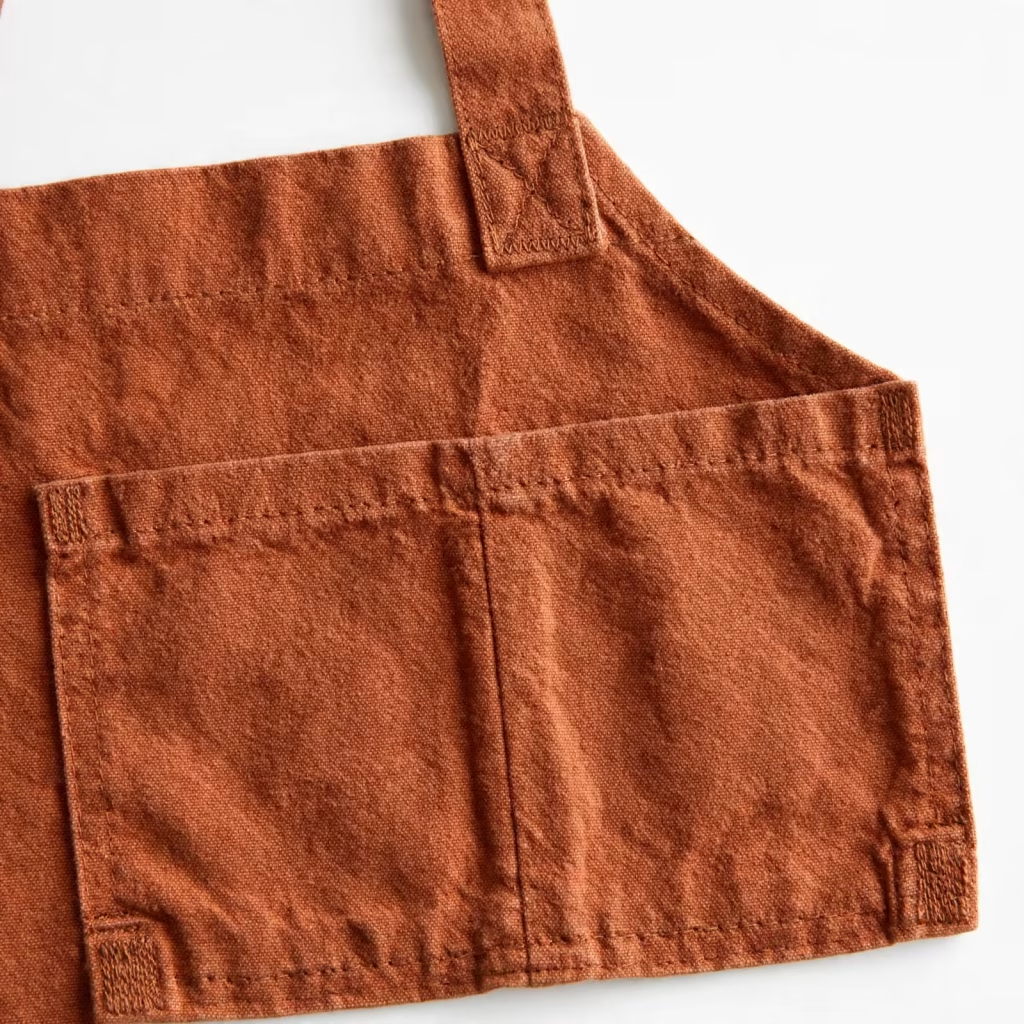
- Reinforced bar tacks where pockets and straps take the strain
- Denim look cloth for casual dining and brewery taprooms
- Classic twill in house colours for fine dining rooms
- Divided pockets sized for order pads, thermometers and pens
- Long ties that wrap fully and knot at the front
- Smaller apron sizes for young helpers and family businesses
- Embroidery of restaurant names in matched thread shades
- Printed logos that stand up to hot commercial washing
- Your own neck labels, hangtags and single bagged packing
- Cartons sorted by size and colour for each location served
With the style approved, multi location groups can reorder for a new opening and receive the identical apron their first site opened with. A cafe chain in France rolling out Canadian style service aprons can adopt this same pattern file, and buyers in Japan have used it for compact kitchen teams.
Cloth Choices for Busy Canadian Kitchens
Aprons in a Canadian kitchen meet everything from fryer splash to maple glaze, and many are washed daily at high temperatures. Cloth for that life needs a tight weave, honest weight and colour that stays true through repeated hot cycles. We match cloth to the station the apron will work, not to a generic catalogue page.
Twill, Drill and Denim Look Fabrics
Cotton twill remains the all rounder, softening with age while keeping the bib flat and presentable. Drill weaves give a smoother, slightly firmer hand that suits printed branding. Denim look cloth, woven as a lighter twill with a denim face, gives taprooms and casual restaurants the workwear character they want without the weight of full denim around a hot line.
- Cotton twill for all round restaurant and cafe service
- Smooth drill where printed logos need a calm surface
- Denim look twill for breweries and casual dining rooms
- Cotton rich blends for venues laundering on site daily
Weight and shrinkage are confirmed on production cloth at sampling, so the apron you trial is the apron your whole team receives.
Reinforcement Where Aprons Actually Fail
Aprons rarely wear out evenly. They fail at the pocket corners where hands drag in and out a hundred times a day, at the strap joins that carry the bib’s weight, and at the tie roots pulled tight at every shift start. Our construction puts the strength exactly at those points.
Bar Tacks, Pocket Geometry and Strap Joins
Every pocket corner and strap join is bar tacked, a short dense stitch block that spreads the load across the cloth. Pocket openings are cut and stitched so a hand enters at a natural angle without catching, and divisions are placed so a thermometer probe and an order pad do not fight for the same space. Ties are sewn into the side seam with a reinforced root rather than surface stitched as an afterthought.
Winter deserves a planning note for Canadian buyers. Aprons are light freight, yet holiday closures and severe weather can stretch any delivery calendar, so groups opening a location in the new year usually place the apron order alongside the autumn uniform work. We flag realistic dispatch windows at quotation stage, and the packing list separates each location’s cartons so a single shipment can be split on arrival without sorting loose garments.
Colour discipline matters in open kitchens, where the apron is part of the room’s design. We dye to the buyer’s reference and hold a cutting from the approved lot with the order file, then compare later dye lots against it. If a repeat order lands a fraction off shade, it is caught at our checking table rather than under your dining room lights.
OEM Apron Supply for Canadian Uniform and Retail Buyers
Uniform suppliers, restaurant groups and kitchen retailers across Canada sell and issue aprons under their own names, and we manufacture as an OEM supplier and wholesaler behind those labels. Your pattern, cloth and branding rules are the only ones our sewing lines follow.
- Development from your pattern, measurements or shipped apron
- Prices set out line by line for cloth, fittings and branding
- Private label sewing with your labels and tags fitted in house
- Packing for wholesale cases, store shelves or online orders
- Inspection by your team or a nominated agency if you wish
- Pattern files retained so repeat orders match the original
Groups often add waist aprons and other uniform pieces later, and those are developed inside the same order system for simpler buying.
Quality Checks Built Around Daily Wear
Our final inspection treats the apron as a tool of the trade. Pockets are filled and lifted, ties are pulled at their roots, strap joins are flexed, and each finished piece is measured against the approved sample for bib size, length and pocket position. Branding is checked for placement and colour on every batch.
- Bar tack presence and stitch quality checked at strain points
- Pocket size, division and position measured on finished aprons
- Tie length and strap adjustment verified garment by garment
- Shade compared across the full run before folding begins
Shipping Aprons From Bangladesh to Canada
Export orders leave Bangladesh packed for Canadian distribution centres and restaurant group warehouses, and the same routine covers our deliveries to the USA, UK, Germany and Australia. Quantities per carton, size ratios and carton labels are settled at quotation, which keeps receiving simple when stock lands.
Flat folded aprons stack tightly, so even heavier cloth ships at a sensible cost per piece. Uniform suppliers usually take colour sorted bulk folds, while retail buyers choose single bagged aprons with hangtags fitted. Carton faces name the style, colour and count, letting your team verify and shelve a delivery quickly.
Ordering Aprons Without Production Surprises
Begin with what you have at hand. A full pattern is welcome, but a worn apron in the mail or a photograph with honest measurements gives our pattern team a working start, and we shall tell you plainly what else is required before any sample is cut.
Trials on Real Shifts, Not Just a Mirror
A first sample normally takes seven to ten days once cloth and trims are in hand. Give it to your hardest working station, run it through your laundry, and send back the garment with your notes marked. Fit and pocket changes are inexpensive at this stage and costly later.
Quotations That Separate Every Cost
The price we return divides cloth, straps and fittings, embroidery or printing, labels and packing into clear lines. If the total must come down, you can see exactly which element to adjust, and what that adjustment changes on the finished apron.
Start With the Apron Your Team Complains About Least
Every kitchen has one apron style the staff quietly prefer. Send us that one, or describe what your team wishes it did better, and we shall return a costed sample proposal with straight notes on cloth and construction. No bulk commitment is needed to hear the numbers.
Frequently Asked Questions
Are the pocket corners and strap joins reinforced?
Yes. Both points are bar tacked as standard on our aprons, because they carry the heaviest daily strain. The reinforcement is visible on your sample, and it is checked again on finished goods before packing.
Can you sew smaller aprons for children in the same style?
Yes. Family restaurants and cooking schools often order junior sizes alongside adult ones. The pattern is scaled down properly, with shorter ties and a smaller bib, rather than simply cutting an adult apron short.
How should printed aprons be washed so the print lasts?
Wash them inside out in warm water with similar colours and avoid bleach on the print area. Our print samples are wash tested before approval, and we share the care guidance used in that testing with your order.
Can the first sample be sewn in a fabric we supply?
Yes. If you already hold the cloth you want, send a length with your brief and we shall sew the trial apron from it. We will also report honestly how that cloth behaved in cutting and sewing.