
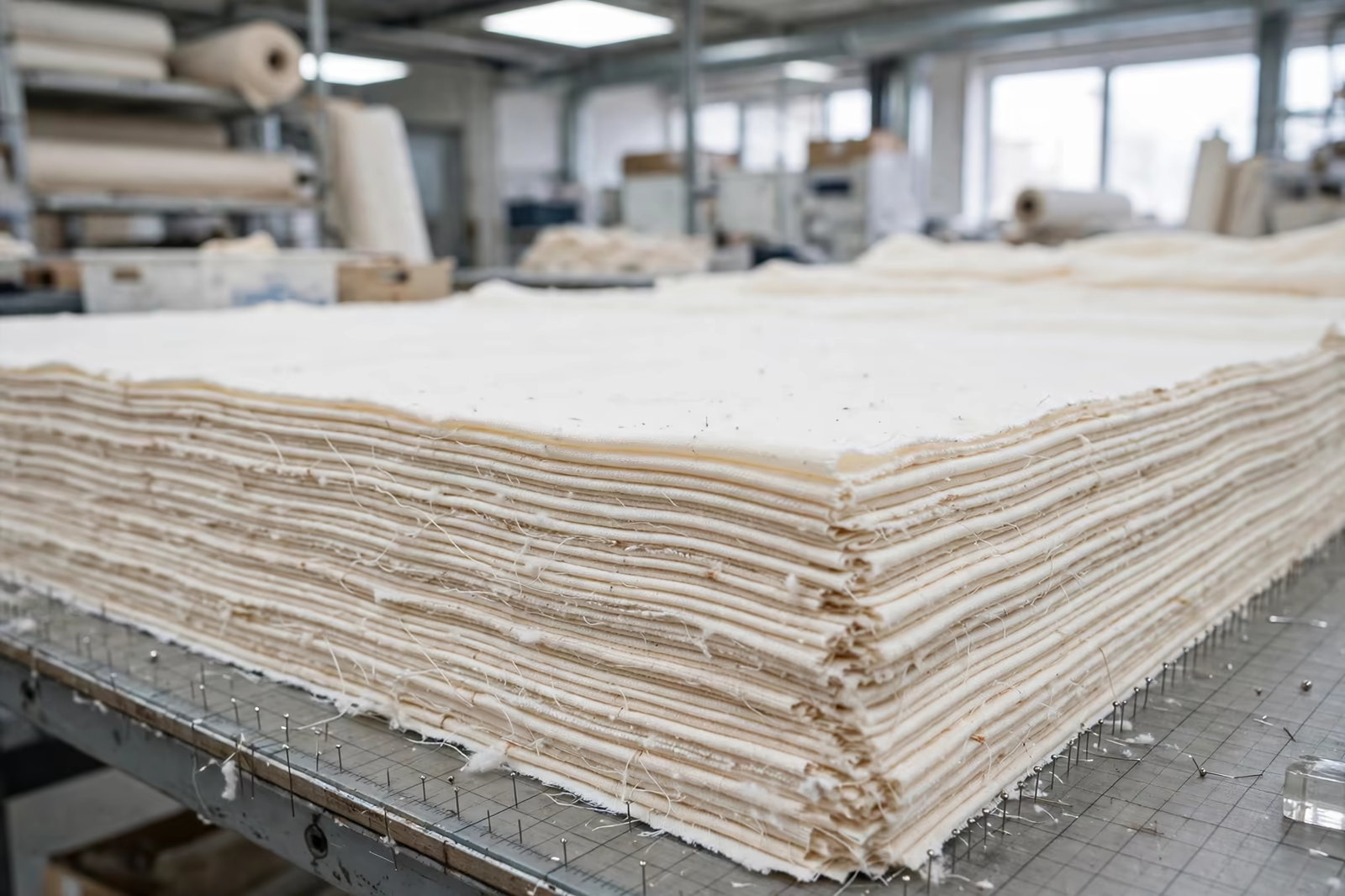
Ask any clothing factory for a price and the first question back is always the same: how many pieces? Quantity is the single strongest lever on unit price in garment production, stronger than negotiation, stronger than specification tweaks. This guide explains why quantity breaks exist, what actually changes inside the factory as an order grows, and how buyers sourcing from a manufacturer in Bangladesh for the USA, the UK, Germany, Canada and Australia can use the curve honestly instead of fighting it.
The principle is simple: some costs in garment production are fixed per style, and some grow with every piece. Unit price is where those two families meet, and quantity decides how the meeting goes.
The Two Families of Cost
Every order carries costs that do not care how many garments you make, and costs that scale with each garment. Separating them explains the entire price-break curve.
- Fixed per style: pattern making, grading and marker preparation
- Fixed per style: print screens or embroidery digitising for the artwork
- Fixed per style: sampling, approvals and pre-production work
- Fixed per style: machine setting, line balancing and first-piece approval
- Variable per piece: fabric, trims and decoration materials consumed
- Variable per piece: sewing minutes, checking, pressing and packing
On a small order, the fixed family dominates and each garment carries a heavy share of it. On a large order the same fixed costs spread thin, and the variable family, which no quantity can remove, sets the floor under the price.
What Changes at Each Scale
As quantity grows, the factory itself works differently. The price break is not a discount invented by the sales team; it is the accounting shadow of a different production reality.
- Fabric buying: full rolls and mill quantities replace expensive part cuts
- Cutting: longer lays and better marker efficiency waste less cloth per garment
- Sewing: a balanced line reaches rhythm and speed a short run never finds
- Decoration: screens and setups serve thousands of prints instead of hundreds
- Supervision: quality staff time spreads across far more garments
- Packing and logistics: full cartons and consolidated shipments cost less per piece
This is why our standard minimum of 1,200 pieces per style in up to two colours sits where it does: it is the point where the production reality turns genuinely efficient, and below it the same garment is honestly more expensive to make. The framework is set out on the MOQ and production page.
Colour and Size Splits Eat Quantity
Buyers often discover that their headline quantity is not the quantity the factory prices. An order split across many colours and a wide size range behaves, for costing, like several smaller orders wearing one purchase order number.
- Each colour needs its own dyeing, its own cutting lay, its own line segment
- Each colour change in printing means screens washed and reset
- Small colour quantities lose the fabric-buying advantage of the whole
- Extreme sizes at the ends of the range consume disproportionate fabric
- Ratio packing across many sizes complicates cutting and bundling
The practical answer is not to abandon variety but to concentrate it: fewer colours carried deeper, sizes weighted toward the middle of the curve where your customers actually are. A range planned this way buys like a larger order than it is.
Why the Curve Flattens
New buyers sometimes expect price to keep falling forever as quantity rises. It does not, and the reason protects buyers from fantasy pricing: the variable costs, fabric above all, never shrink below the cost of the materials themselves.
- The early growth removes setup waste: steep savings, honestly earned
- Middle growth improves efficiency: real but smaller gains
- Large scale reaches the materials floor: fabric and labour minutes remain
- Beyond that floor, a lower price can only come out of the garment
- Quotes that keep diving past the floor are describing a different product
Reading the curve this way turns it into a diagnostic tool. A supplier whose price falls sensibly and then levels is showing you real costing. One whose price collapses at any quantity you name is showing you something else.
There is a second lesson in the flattening curve: the biggest wins sit at the beginning. Moving from a token quantity to a serious one transforms the price; moving from serious to very large improves it politely. Buyers with limited budgets should therefore spend their effort reaching the first real break cleanly, through concentration and planning, rather than straining for the last step of a ladder whose top steps barely move the number.
Using Breaks in Your Buying Plan
Quantity breaks reward planning more than pressure. The buyers who pay the best prices are usually those who shape their ranges and calendars so the factory’s efficient quantities and their own commercial quantities become the same numbers.
- Consolidate colours and styles instead of fragmenting the same budget
- Repeat proven styles across seasons rather than restarting development
- Combine team, event and retail demand for the same garment into one run
- Ask where the next break sits and what it would take to reach it
- Weigh the break saving against the stock risk of ordering deeper
- Lock quantities early so fabric books at the better rate
That last balance matters. A price break is only a saving if the extra garments sell; stock that clears at a discount returns the saving with interest. Buy deep where your demand is proven, and stay lean where it is guessed.
Breaks, Terms and the Total Picture
Quantity also interacts with the rest of the order’s economics. Larger orders justify the stronger payment instruments, spread sample and courier costs across more garments, and fill containers efficiently, each of which trims the true cost per piece beyond the factory’s quoted figure. The details sit with the payment terms, and they belong in the same conversation as the quantity decision, not after it.
When you are ready to price a range, send the full specification and your target quantities through get a quote. The quotation will show where your quantities sit on the curve and what the next break would need, so the decision is yours, made with the numbers open.
A Range-Planning Example
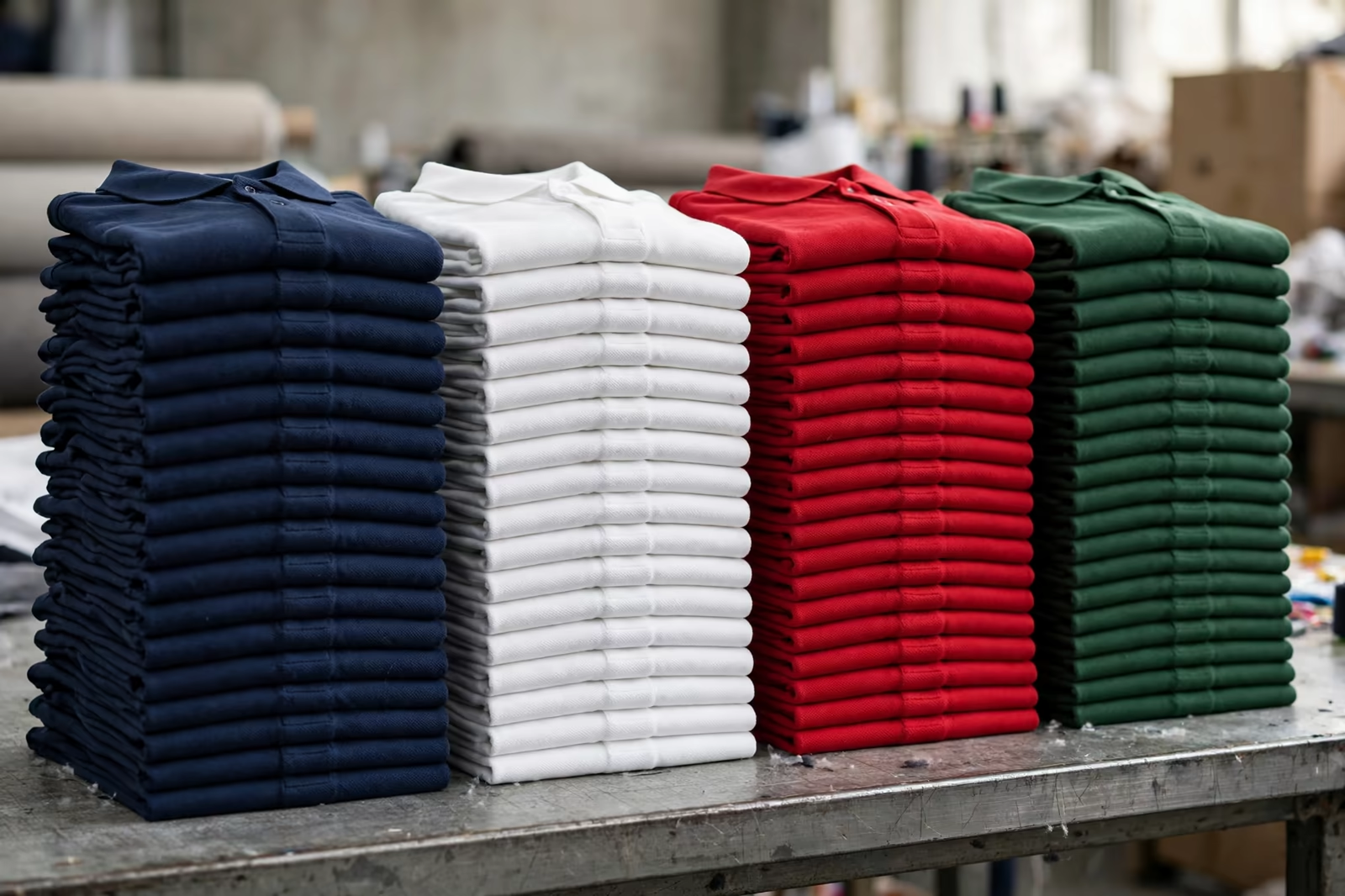
Consider a workwear buyer planning a season of polo shirts. The first sketch spreads the budget across eight colours in modest depth each, because the catalogue looks richer that way. Priced honestly, every colour is a small run, and the unit price reflects it: eight dyeings, eight cutting lays, eight sets of print screens for the embroidered chest mark.
The revised plan keeps the same garments and nearly the same budget but concentrates it: four core colours carried deep, with the remaining colours rotated in the following season. The priced result is a visibly better unit price on every shirt, better fabric rates, and a line that runs long enough to reach its rhythm.
The buyer’s customers see a slightly narrower colour wall and considerably better value; the buyer’s margin sees the rest. Nothing about the garment changed. Only the shape of the quantity did, which is precisely the lever this guide is about. The same thinking applies beyond workwear: uniforms, event merchandise and retail ranges all price off the shape of their quantity long before they price off its size.
The Shape of a Break Is Negotiable
Buyers often treat price breaks as fixed steps published by the factory. In practice their shape responds to how the order is built, and several legitimate levers move a buyer to a better point on the curve without simply ordering more.
- Sharing one fabric across several styles, so the cloth buys at volume
- Running two styles on one line in sequence, keeping the line in rhythm
- Standardising trims, labels and packing across the whole range
- Placing seasonal orders together so cutting plans combine
- Committing to a repeat programme the factory can plan capacity around
Each lever removes real cost rather than pressing the factory’s margin, which is why factories respond to them gladly. Negotiation that hunts for removable cost ages far better than negotiation that hunts for margin.
The Hidden Break: Repeat Orders
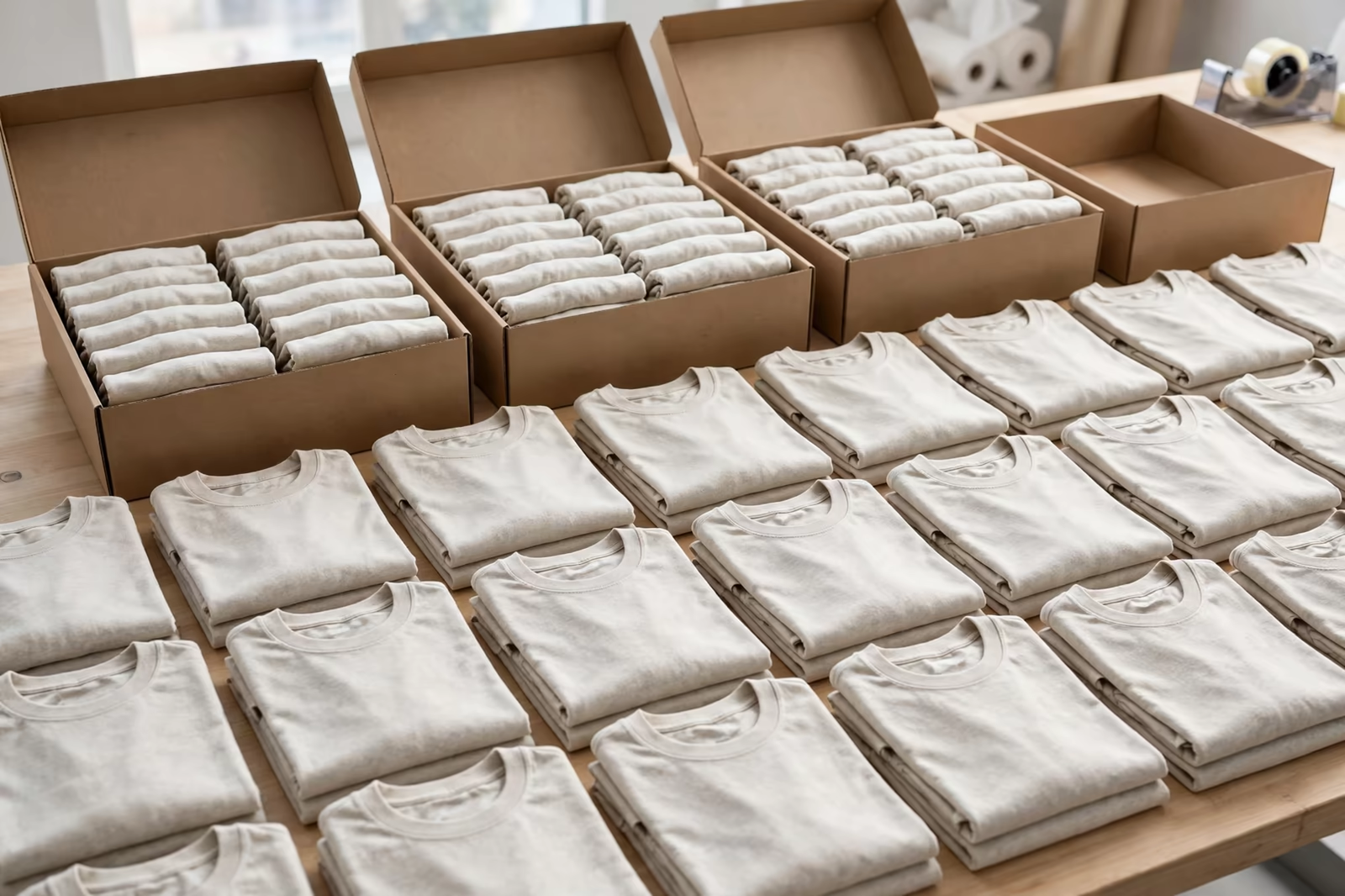
The best price break in garment sourcing never appears on a quotation. A repeat order of a proven style skips most of the fixed family entirely: the pattern exists, the screens exist, the approvals are history and the line already knows the garment.
- No new pattern, grading or marker development
- Artwork, screens and embroidery files already made
- Samples reduced to a confirmation piece
- A line that starts at speed instead of learning the style
- Fabric rebooked on known consumption, with little waste allowance
This is why experienced buyers build core ranges and repeat them, ringing the changes with colour and artwork rather than reinventing garments each season. The repeat discount is the reward, and it compounds: every season the style runs, its true cost per piece falls a little further behind the price of starting something new.
What Breaks Never Change
For balance, some lines of the cost sheet ignore quantity almost completely, and knowing them stops buyers chasing savings that do not exist at any scale.
- The fabric inside one garment: the same cloth, the same consumption
- The sewing minutes one garment needs at standard quality
- The inspection each garment deserves before it ships
- Freight per kilogram, set by carriers rather than factories
- Compliance and testing duties your market imposes
A quotation that respects these constants while moving sensibly on the rest is describing reality. That, in the end, is what a good price break is: reality, itemised and shared.
Frequently Asked Questions
Why is the unit price so much higher on a small order?
Because the fixed costs of the style, patterns, screens, sampling and line setup, are divided by fewer garments. The fabric and sewing in each piece cost the same; it is the shared development and setup burden that makes small runs expensive per piece.
Does doubling the quantity halve the price?
No. Doubling removes much of the setup burden per piece and improves efficiency, so the price falls noticeably, but fabric and sewing minutes set a floor the price cannot cross. Expect a real saving, then a flattening curve, not a straight line down.
Why does splitting my order into many colours raise the price?
Because each colour behaves like its own smaller production run: separate dyeing, separate cutting lays and separate print setups. The factory prices the runs it actually has to make, so concentrating quantity into fewer, deeper colours buys a better unit price.
How do I find out where the price breaks are?
Ask directly, with your specification in hand. A factory costing honestly can show the price at your quantity and at the next level, and explain what changes between them. Vague answers to a precise question are themselves information about the costing behind the quote.